 Aura: Looksmaxxing
 Minoxidil on Eyelashes: Does It Work?
Can minoxidil on eyelashes actually boost lash growth? We break down the evidence, risks, and better alternatives including Latisse and rosemary oil.
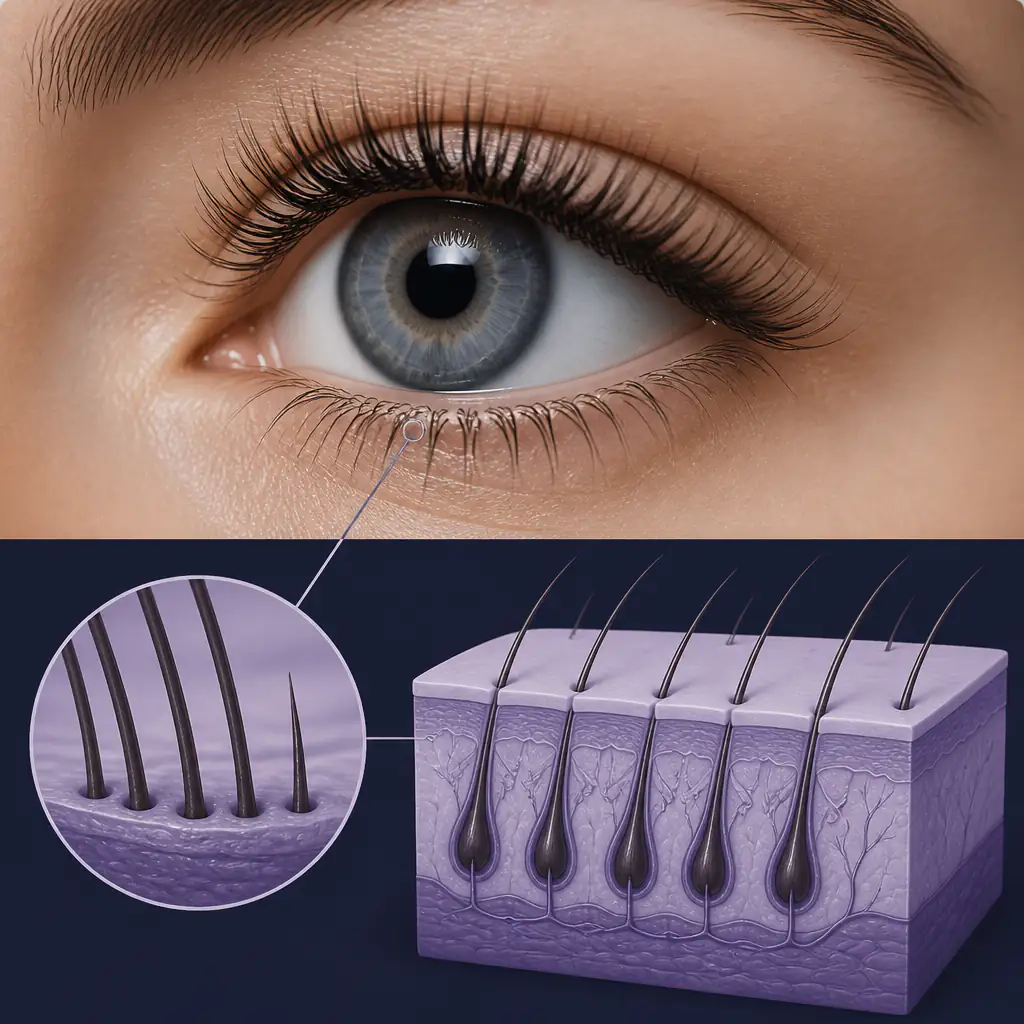
Longer, thicker eyelashes change how your eyes read on your face. They add definition, make the eye appear larger, and create contrast that draws attention upward toward your features. For men especially, fuller lashes can soften or sharpen a look depending on natural face structure.
So it is no surprise that people are reaching for whatever works, including repurposing hair-growth treatments like minoxidil. But before you start applying anything near your eyes, it is worth understanding exactly what you are dealing with.
What Is Minoxidil and How Does It Work on Hair?
Minoxidil was originally developed as an oral medication for high blood pressure. Researchers noticed a consistent side effect: increased hair growth. That observation led to the topical formulations now sold for scalp hair loss.
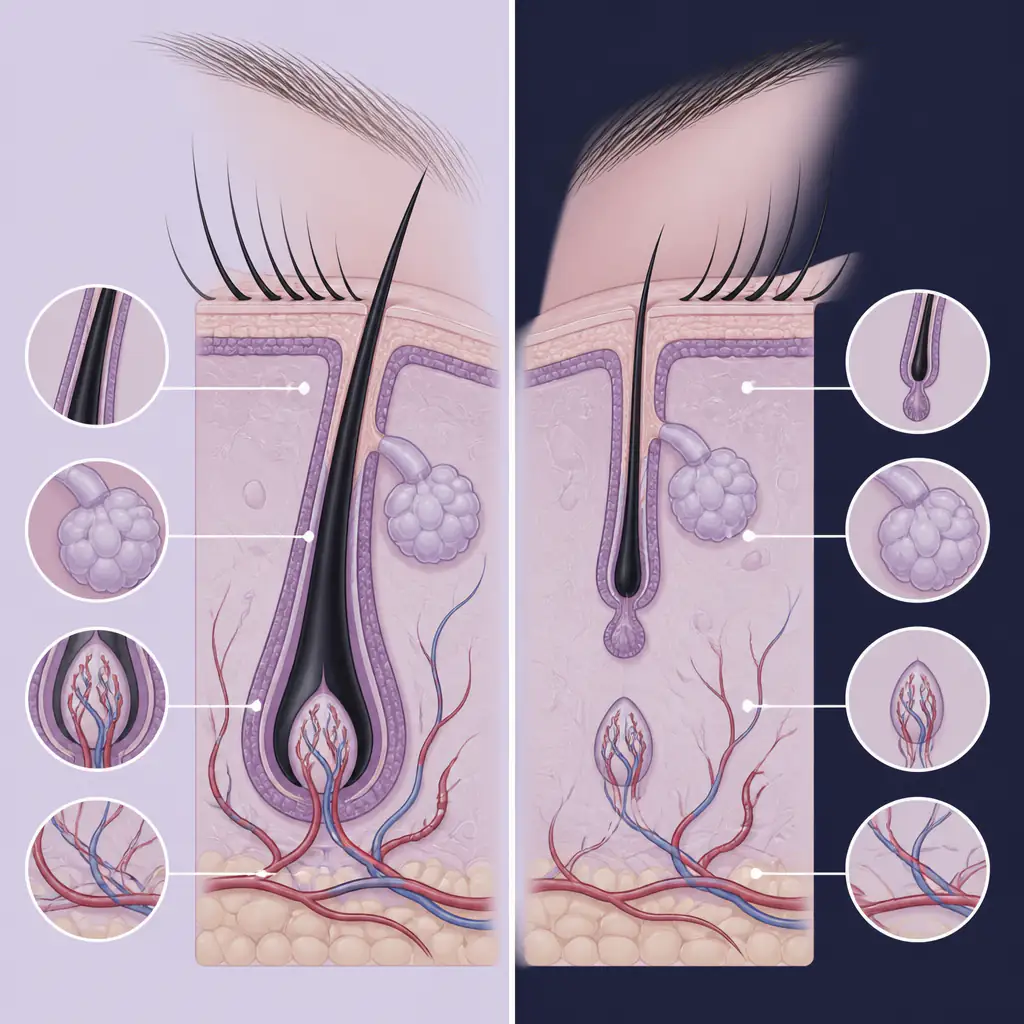
It works by prolonging the anagen phase (the active growth phase) of the hair follicle cycle and by widening blood vessels around follicles, which may improve nutrient delivery. Most studies focus on scalp application, but the same follicle biology applies elsewhere on the body, including the eyelid margin where eyelash follicles sit.
Oral Minoxidil and Eyelashes
Low-dose oral minoxidil (typically 0.625 mg to 2.5 mg daily) is increasingly prescribed off-label for diffuse hair thinning. A notable side effect reported across multiple dermatology case series is hypertrichosis, meaning increased hair growth in areas beyond the scalp. Eyelashes are frequently mentioned. Some users report noticeably longer and denser lashes within a few months of starting oral minoxidil, even when that was not the intended goal.
If you are already taking oral minoxidil for scalp hair and noticing lash changes, that mechanism explains it. Talk to a qualified medical professional before starting or adjusting any oral minoxidil regimen.
Can You Use Minoxidil on Eyelashes Directly?
This is where things get complicated. Applying topical minoxidil directly to the eyelid area is not standard practice, and no topical minoxidil product is FDA-approved for eyelash use. The formulations designed for the scalp contain concentrations (2% to 5%) and carrier solvents like propylene glycol and ethanol that can cause significant irritation if they contact the eye.
That said, some people do apply diluted minoxidil to the lash line using a fine brush or a cotton swab, taking care to avoid the eye itself. The theoretical basis is sound: follicles respond to the same signaling pathways regardless of their location. The practical risks are what make this approach difficult to recommend without professional guidance.
Risks associated with applying minoxidil near the eyes:
- Eye irritation and redness from the alcohol or propylene glycol base
- Potential absorption into the eye affecting intraocular pressure
- Skin sensitization on the thin eyelid skin
- Uneven application leading to patchy results
- Systemic absorption, though minor, from a highly vascular area
If you are seriously considering this route, consult a dermatologist first. They can advise on appropriate concentration and formulation, or redirect you toward something better suited for periorbital (around-the-eye) use.
Latisse: The Only FDA-Approved Eyelash Treatment
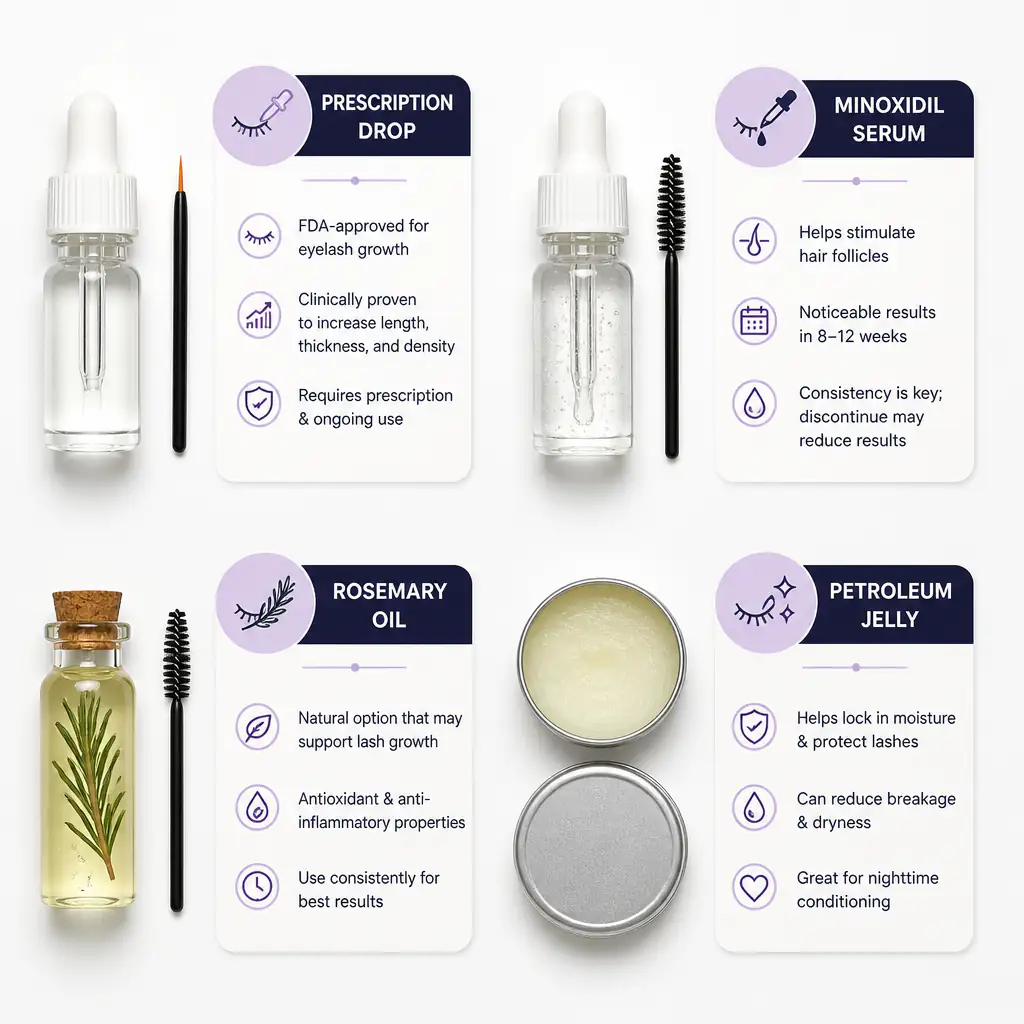
Bimatoprost (brand name Latisse) is the only topical treatment with FDA approval specifically for eyelash growth, technically called hypotrichosis of the eyelashes. It is a prostaglandin analog originally developed as a glaucoma eye drop, where increased lash growth was again noticed as a side effect.
Latisse works by extending the anagen phase and increasing the number of hairs in that active growth phase. Clinical trials showed meaningful increases in lash length, thickness, and darkness over a 16-week treatment period.
Does Latisse Cause Orbital Fat Loss?
This concern comes up frequently and deserves a direct answer. Prostaglandin analogs used as glaucoma drops, applied directly into the eye, have been associated with periorbital fat atrophy, meaning a reduction in the fat pads around the eye socket. This gives some glaucoma patients a hollowed or sunken appearance around the eyes over time.
For Latisse applied to the lash line (not dropped into the eye), the concentration and absorption profile is different. However, some ophthalmologists and dermatologists do note that orbital fat loss with Latisse is a real, if uncommon, concern with long-term use. The effect may be partially or fully reversible after stopping treatment.
If you notice any changes in periorbital fullness while using Latisse, stop and consult your prescribing doctor. The question of whether Latisse causes orbital fat loss is one you should raise directly with a qualified professional before starting.
Will Latisse Change Eye Color?
Another common concern: prostaglandin analogs can increase the deposition of melanin (pigment) in the iris, which can permanently darken light-colored eyes. This effect is documented primarily with direct ocular application (glaucoma drops) and is considered rare with lash-line application of Latisse. Nonetheless, it is a known risk. People with blue, green, or hazel eyes in particular should be aware of this possibility and discuss it with a doctor before use.
Natural Alternatives Worth Considering
Not everyone wants to start with prescription treatments or off-label drug use. There are gentler options with lower risk profiles, even if the evidence for them is less robust.
Rosemary Oil for Eyelashes
Rosemary oil contains rosmarinic acid and other compounds that may support follicle activity. A small study comparing rosemary oil to minoxidil for scalp hair found comparable results at six months, which has driven broader interest in the ingredient. Research specifically on rosemary oil for eyelashes is limited, but the mechanism is plausible and the risk profile is favorable compared to drug-based options.
To use it, dilute rosemary essential oil in a carrier oil (castor oil and jojoba oil are common choices) at roughly a 1:10 ratio and apply a small amount to the lash line with a clean brush before bed. Avoid getting it into the eye directly.
Can You Put Vaseline on Your Eyelashes?
Petroleum jelly (Vaseline) does not stimulate hair growth at the follicle level. What it does is coat the lash shaft and reduce breakage by sealing in moisture. Lashes that break less may appear longer and fuller over time simply because they are retaining more of their natural length. It is safe for use near the eye, inexpensive, and non-irritating for most people. Just keep it off the waterline to avoid blurring vision.
Castor Oil
Castor oil is frequently mentioned alongside rosemary oil in lash growth discussions. It contains ricinoleic acid, which has some anti-inflammatory properties. Direct evidence for follicle stimulation is thin, but its occlusive properties are similar to Vaseline, and many people find it a useful base for diluting other actives.
Eyelash Appearance: Beyond Growth
Growth treatments address density and length, but the way your lashes look day-to-day is also shaped by texture and styling. This matters more than people realize.
Men with Curly Eyelashes
Some men naturally have curly eyelashes, and the curvature actually works in their favor aesthetically. Curled lashes lift away from the eye, making the eye appear more open and defined. Straight or downward-pointing lashes can obscure the eye and flatten the overall look.
Using an Eyelash Curler as a Man
Curling eyelashes for men is more common than it used to be, and for good reason. A heated or mechanical eyelash curler takes roughly 30 seconds per eye and can meaningfully open up the eye area without any product. For men with straight or downward-growing lashes, this alone can change how the eye reads in photos and in person.
Basic technique: clamp at the base of the lash line (as close to the lid as you can without pinching skin), hold for 10 to 15 seconds, then release. Heated curlers produce a longer-lasting curl than mechanical ones.
Dyeing Your Eyelashes at Home
If your lashes are light-colored and seem sparse partly because they are hard to see, tinting can make them appear dramatically fuller without any growth at all. Learning how to dye your eyelashes at home involves using a dedicated lash tint kit (not regular hair dye, which contains chemicals that can damage eyes). Apply petroleum jelly around the eye as a barrier, work the tint in with a wand or small brush, leave it for the time specified on the product, and rinse thoroughly. Results typically last three to six weeks.
Always patch-test a lash dye before full application, and avoid any product not specifically formulated for periorbital skin.
Tracking Your Baseline Before You Start
Before committing to any growth or grooming routine, it helps to understand how your eye area currently reads and what changes would have the most visual impact. Features like lash density, eye openness, and hunter-eye versus soft-eye appearance all interact.
Aura provides facial analysis that includes eye-area assessments, which can give you an objective starting point before experimenting with growth treatments or styling changes. That way you are not guessing at whether something worked.
Practical Summary: Which Route Makes Sense for You?
| Goal | Best Option | Notes |
|---|---|---|
| Maximum medically-supported growth | Latisse (bimatoprost) | Prescription only; discuss orbital fat and pigment risks |
| Growth via systemic treatment | Oral minoxidil | Off-label; requires medical supervision |
| Topical growth experiment | Rosemary oil in carrier | Lower risk; less evidence |
| Reduce breakage, improve condition | Vaseline or castor oil | No follicle stimulation; maintenance only |
| Immediate appearance improvement | Eyelash curler + tint | No waiting; accessible |
If you want to pursue Latisse or minoxidil, make that conversation with a dermatologist or physician your first step, not your last.
A Note on Expectations
Eyelash growth treatments work gradually. Most users on Latisse see meaningful changes after 12 to 16 weeks of consistent use. Oral minoxidil effects on lashes are typically noticed incidentally after two to four months. Natural oils show more variable results and require patience.
The goal is not dramatic transformation on a short timeline. It is consistent, low-risk application of whatever approach fits your tolerance for cost, time, and medical involvement. Small improvements in lash density and curl can shift how the eye reads considerably, particularly in photos, which increasingly shapes how people perceive your appearance.
Frequently asked questions
Can you use minoxidil on eyelashes safely? +
There is no FDA-approved topical minoxidil product for eyelash use, and standard scalp formulations contain solvents that can irritate the eyes. Some people do apply diluted minoxidil to the lash line, but this should only be done under dermatologist guidance. Oral minoxidil at low doses is a safer route for incidental lash growth and requires a prescription.
Does Latisse cause orbital fat loss? +
Periorbital fat atrophy is a documented concern with prostaglandin analogs used as glaucoma eye drops directly in the eye. With Latisse applied at the lash line, this risk exists but is considered less common. Some users report a slightly sunken appearance around the eye with prolonged use. Discuss this specific concern with your prescribing doctor before starting.
Will Latisse change my eye color? +
Prostaglandin analogs can increase iris pigmentation, potentially darkening light-colored eyes permanently. This effect is more documented with direct ocular drops than with lash-line application of Latisse, but it is a real risk, especially for people with blue, green, or hazel eyes. Your prescribing doctor should review this before you begin treatment.
Does rosemary oil actually help eyelash growth? +
Direct clinical evidence for rosemary oil on eyelashes is limited. The interest comes from a small scalp study where rosemary oil performed comparably to minoxidil over six months. The active compound rosmarinic acid may support follicle activity, and the risk profile is low. Results vary and tend to be modest compared to prescription options.