 Aura: Looksmaxxing
 Compact Midface: What It Means and How to Address It
Learn what a compact midface is, how it affects facial aesthetics, and practical steps you can take to assess and improve your facial balance.
What Is a Compact Midface?
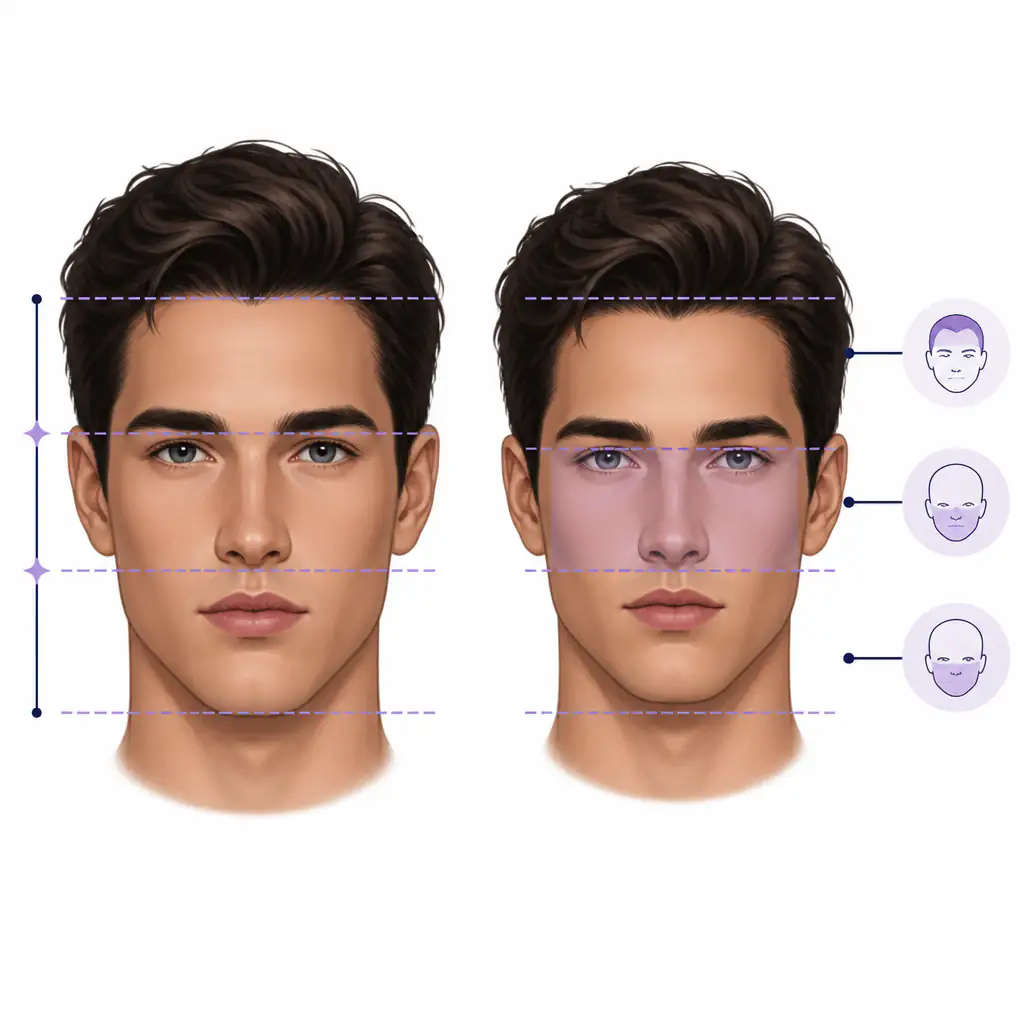
The term compact midface refers to a facial structure in which the vertical height of the middle third of the face is relatively short compared to the upper and lower thirds. This creates a face where the nose, cheekbones, and the space between the eyes and mouth appear condensed, giving an impression that the features are clustered closely together rather than spread across a longer vertical span.
To understand this properly, it helps to think of the face as divided into three horizontal zones:
- Upper third: from the hairline to the brow ridge
- Middle third (midface): from the brow ridge to the base of the nose
- Lower third: from the base of the nose to the chin
A compact midface specifically means the middle third is shorter relative to the others. This is a structural characteristic, not a defect. Many people considered highly attractive by conventional standards have compact midface ratios. But it does affect overall facial harmony, and understanding it is the first step toward working with it.
The Anatomy Behind It
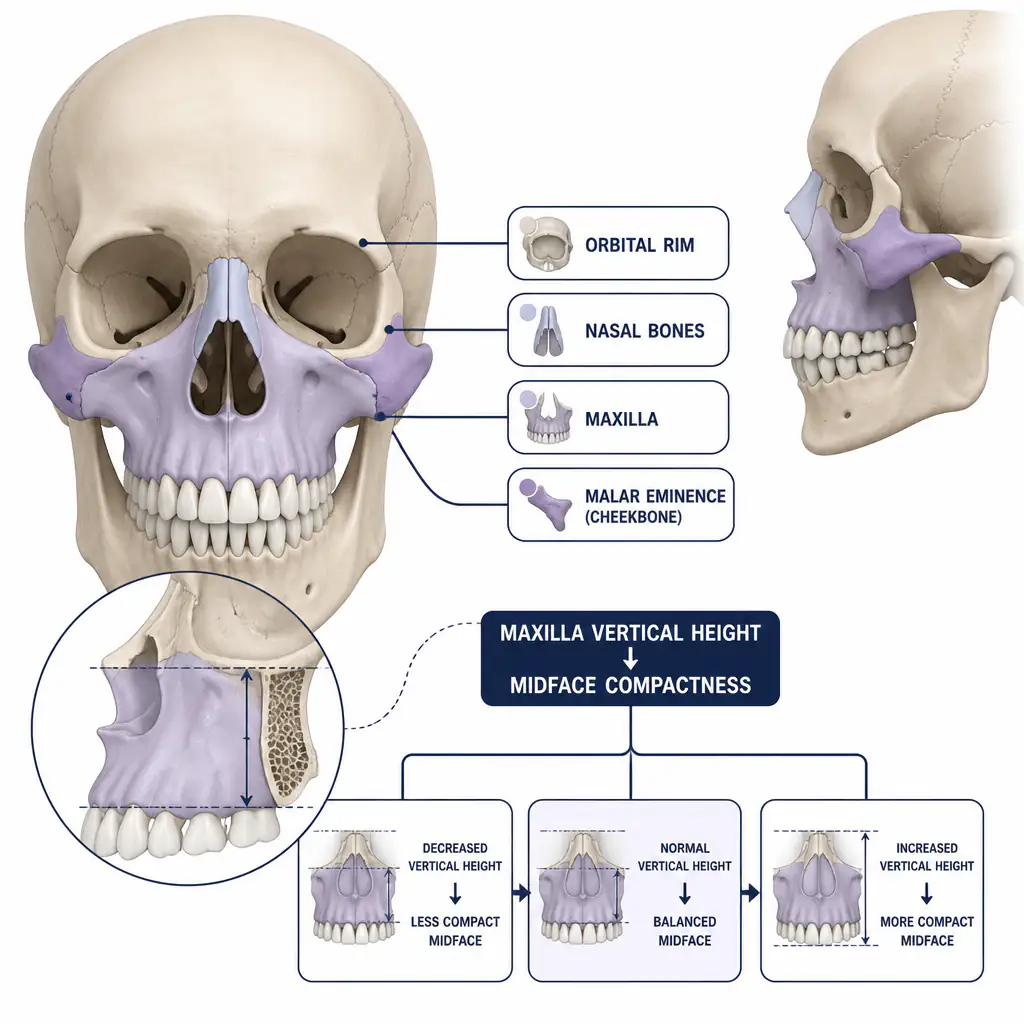
The midface is anchored primarily by the maxilla, the large bone that forms the upper jaw, supports the nose, and defines much of the cheek structure. The position, forward projection, and vertical height of the maxilla directly determine how compact or elongated the midface appears.
Several anatomical factors contribute to a compact midface:
- Vertical maxillary deficiency: A shorter-than-average maxilla reduces the vertical height of the midface
- Reduced nasal height: A shorter nose compresses the apparent length of this zone
- High cheekbone position: When the malar eminence (the prominent part of the cheekbone) sits relatively high and close to the orbital rim, the midface visually shortens
- Reduced nasolabial distance: A short distance between the base of the nose and the upper lip is a hallmark feature
It is worth noting that the maxillary forward projection also plays a role. Retrusive maxilla (where the upper jaw sits further back than ideal) often coincides with a compact midface, since both stem from the same underlying bone structure.
Is a Compact Midface Attractive?
This is where things get nuanced. A compact midface is not inherently unattractive. In fact, research in facial attractiveness suggests that shorter midface height relative to total face height is frequently associated with youthfulness and perceived attractiveness, particularly in women. The reasoning is partly biological: as people age, soft tissue descends and the midface appears to lengthen, so a naturally compact midface can read as a youthful trait.
In men, the picture is slightly different. Strong forward projection of the midface with defined cheekbones often reads as masculine, and a compact midface paired with good projection can still achieve a high aesthetic score. The problem arises when a compact midface is accompanied by:
- Flat or recessed cheekbones (lack of forward projection)
- Insufficient orbital support (the lower orbital rim does not adequately support the under-eye area)
- A weak or recessive chin, which shifts the proportional balance further
In those cases, the compactness amplifies the effect of other features that reduce overall facial harmony.
How to Assess Your Own Midface
Self-assessment can be tricky because mirrors distort perception, and most people evaluate themselves at close range under unfavorable lighting. A more reliable approach involves taking a standardized photo: straight-on, neutral expression, hair pulled back, at eye level, in natural diffuse light.
Once you have that photo, you can measure the three facial thirds manually using a photo editing app or simply by eye. If the distance from your brow ridge to the base of your nose is noticeably shorter than the distance from your nose base to your chin, and similar observations hold for the upper third, you likely have a compact midface.
For a more structured and objective evaluation, tools like Aura use AI to analyze facial proportions including midface metrics, giving you a PSL-based score alongside specific feedback on zones like cheekbone projection, orbital support, and overall facial thirds balance. This kind of baseline measurement is useful before making any changes, so you can track progress rather than guess.
The Phi Ratio and Facial Thirds
Many aesthetics frameworks reference the phi ratio (approximately 1:1.618) and the idea of equal facial thirds. In practice, strict mathematical equality is rare in attractive faces. Research suggests that a slightly shorter middle third, rather than strict equality, may actually correlate with higher attractiveness ratings. So if your midface is compact, this does not automatically put you outside the range of conventional attractiveness.
Practical Non-Surgical Approaches
If you have a compact midface and want to improve the visual balance of your face, there are several non-surgical avenues worth considering.
Hairstyling and Grooming
One of the most underutilized tools is simply how you frame your face. For a compact midface:
- Add height at the top of your hair to lengthen the visual upper third and reduce the proportional dominance of any facial thirds imbalance
- Avoid heavy side parts that draw horizontal lines across the face, emphasizing compactness
- For men with beards: a longer chin beard adds lower-third length, which can improve the sense of vertical balance
- For women: hairstyles with volume at the crown rather than width at the sides tend to elongate the overall face shape
Mewing and Oral Posture
Mewing refers to the practice of maintaining correct tongue posture against the palate. The claim is that consistent tongue pressure may, over time, encourage forward and upward maxillary development, particularly in younger individuals whose sutures are not fully fused.
Research on this is limited, and most evidence is anecdotal. However, correct oral posture does have documented benefits for breathing, jaw alignment, and potentially for preventing further midface recession. It is unlikely to dramatically change an adult midface, but some users report subtle improvements in midface fullness and cheekbone definition over months of consistent practice.
Facial Exercises and Muscle Tone
The midface is partly defined by the zygomaticus major and minor muscles, the levator labii superioris, and the infraorbital fat compartments. While bone structure is fixed in adults, soft tissue volume and muscle tone contribute to how the midface looks.
Facial exercises targeting the cheeks and upper lip area may help restore some fullness to a flat-looking midface, though results are modest and require consistency.
Skincare and Volume Preservation
Collagen loss accelerates midface deflation, which makes a compact midface appear more hollow rather than just compact. A skincare routine that includes retinoids, vitamin C, and SPF may help slow this process by maintaining skin thickness and elasticity.
Cosmetic and Medical Options
For those interested in more significant changes, there are cosmetic and medical interventions specifically suited to the compact midface.
Note: Always consult a qualified medical professional before considering any cosmetic procedure. The following is informational only.
Dermal Fillers
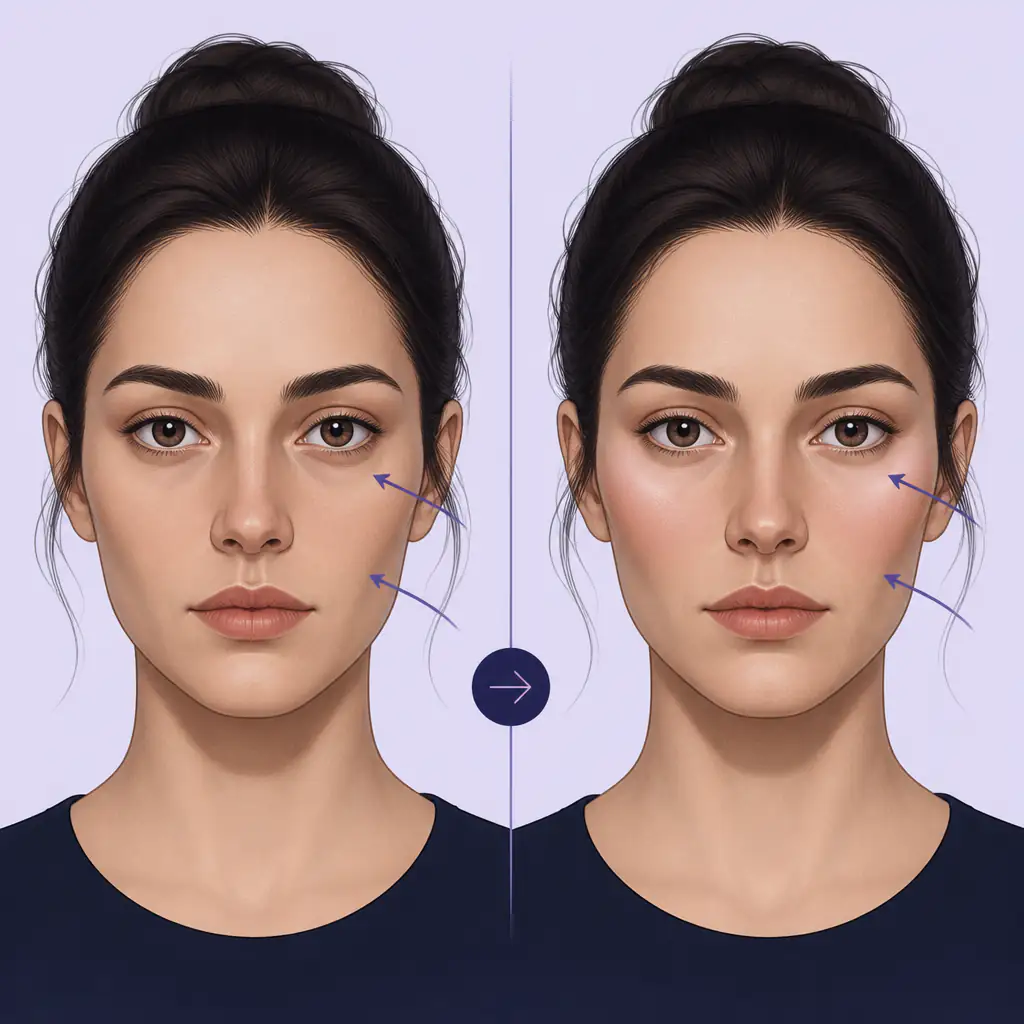
Hyaluronic acid fillers placed in the malar (cheekbone) region or along the infraorbital hollows can add forward projection and subtle vertical lift to the midface. This does not lengthen the midface vertically, but it increases the apparent depth and structure of this zone, which addresses the flatness that often accompanies a compact midface.
Results typically last 9 to 18 months depending on the product and placement. Fillers are one of the more accessible entry points for people who want to see how added midface volume changes their overall appearance.
Orthognathic Surgery
For significant maxillary deficiency, Le Fort I osteotomy is a surgical procedure that repositions the maxilla forward and sometimes downward, addressing the root cause of a compact or retrusive midface. This is a major surgical intervention used primarily for functional reasons (bite correction, airway issues) but has aesthetic outcomes as well.
This is not a procedure to pursue for cosmetic reasons alone without careful consultation and evaluation by a board-certified maxillofacial or craniofacial surgeon.
Cheek Implants
Silicone malar implants placed over the cheekbone structure can provide permanent forward and lateral projection to the midface. Unlike fillers, implants do not dissolve and do not require repeat treatment. The trade-off is surgical risk, recovery time, and the permanence of the change.
Putting It All Together
A compact midface is a structural characteristic defined by the relative vertical shortness of the middle facial third. It is neither universally attractive nor unattractive. Context matters: the midface needs to be read in relation to cheekbone projection, orbital support, lower-third length, and overall facial harmony.
The most practical path forward starts with an honest assessment of your current proportions. From there, non-surgical adjustments in grooming and posture offer a low-risk starting point. For people motivated to explore further, cosmetic options exist on a spectrum from reversible fillers to permanent surgical correction.
If you want a detailed breakdown of your specific facial proportions before committing to any plan, Aura provides AI-driven analysis of midface metrics, cheekbone projection, and overall facial harmony, giving you a clear, data-based picture of where you stand.
Knowing your baseline is the most useful thing you can do before changing anything.
Frequently asked questions
What causes a compact midface? +
A compact midface is primarily caused by the vertical dimensions and forward position of the maxilla, the central bone of the midface. Genetics determine most of this structure, but factors like mouth breathing during development, low tongue posture, and early childhood oral habits may also influence how the midface develops.
Can mewing fix a compact midface? +
Mewing is unlikely to dramatically change a compact midface in adults whose facial sutures are fully fused. In younger individuals still in development, correct tongue posture may support healthier maxillary growth. For adults, the effects, if any, are subtle and appear over a long timeframe.
Is a compact midface unattractive? +
Not necessarily. A compact midface is a proportional characteristic, and some research suggests a shorter middle facial third correlates with perceived youthfulness and attractiveness. The overall aesthetic impact depends on accompanying features like cheekbone projection, orbital support, and lower-third balance.
What cosmetic procedures address a compact midface? +
The most common options include hyaluronic acid fillers placed in the malar region, cheek implants for permanent projection, and in cases of significant maxillary deficiency, orthognathic surgery such as a Le Fort I osteotomy. Always consult a qualified medical professional before pursuing any of these procedures.