 Aura: Looksmaxxing
 Malar Bones: Anatomy, Aesthetics & Improvement Guide
Learn what malar bones are, how they shape your face, and what you can do to enhance cheekbone prominence. Practical, evidence-backed guide.
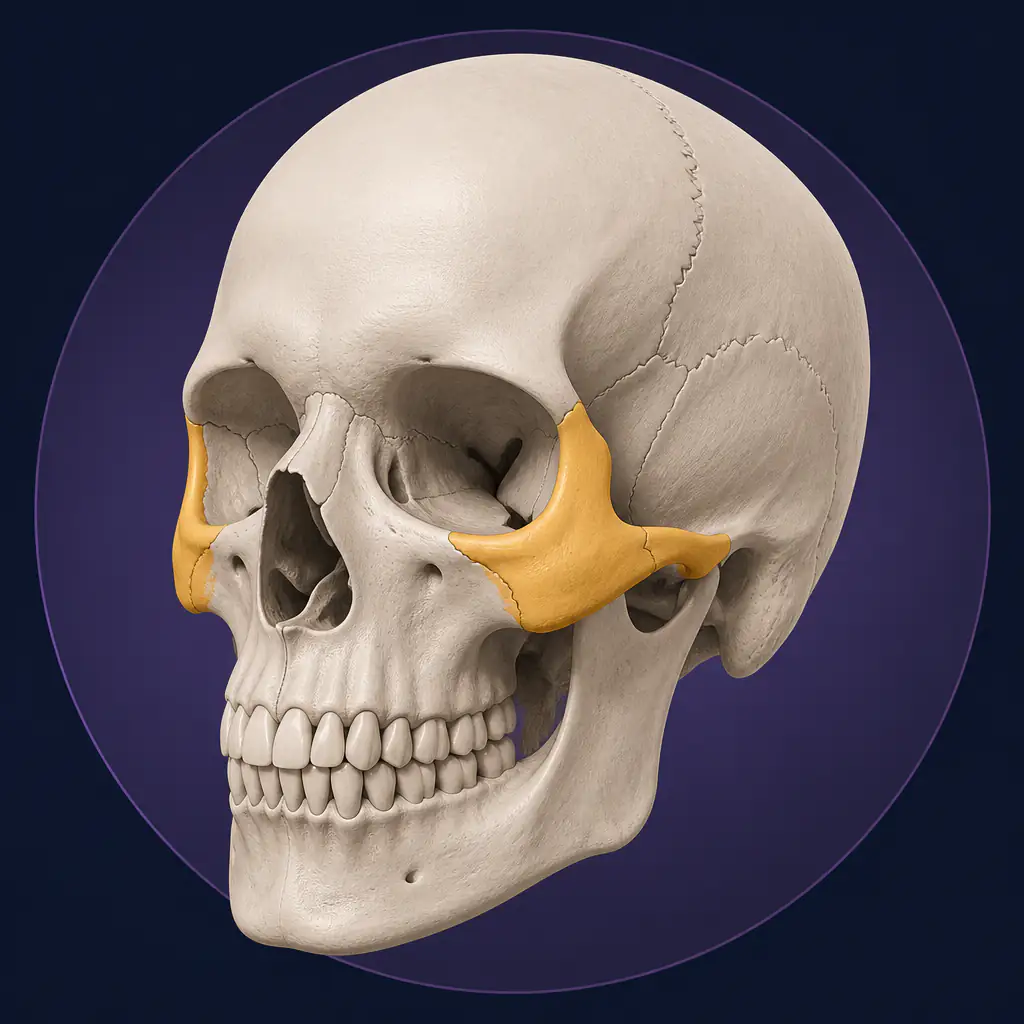
Your cheekbones are one of the most discussed features in facial aesthetics, and for good reason. The malar bones (also called zygomatic bones or “zygos”) define the lateral width of your face, influence how light falls across your features, and signal certain traits that humans have been found to associate with health and symmetry. Whether you have prominent zygos or recessed cheekbones, understanding the anatomy and your options is the first step toward making informed decisions.
This guide covers the anatomy of the malar region, what research says about attractive cheekbone structure, the difference between high-set and low cheekbones, and what you can realistically do to improve your midface appearance.
What Are the Malar Bones?
The malar bone is the formal anatomical term for the zygomatic bone, a paired bone that forms the prominence of your cheek on each side of the face. The word “malar” comes from the Latin mala, meaning cheek. Anatomists and surgeons use both terms interchangeably, though “zygomatic” tends to appear more often in clinical literature.
Each malar bone has four processes (extensions) that articulate with surrounding bones:
- Frontal process: connects upward to the frontal bone near the outer eye socket
- Temporal process: extends backward to form part of the zygomatic arch (cheekbone ridge)
- Maxillary process: connects downward and inward to the upper jaw
- Orbital process: forms part of the lateral and inferior orbit (eye socket)
The area where all these processes converge is the malar eminence, the visible bump you can feel when you press your finger firmly against the highest part of your cheekbone. This is the landmark that most people refer to when they talk about “prominent zygos” or chiseled cheekbones.
Bizygomatic Width
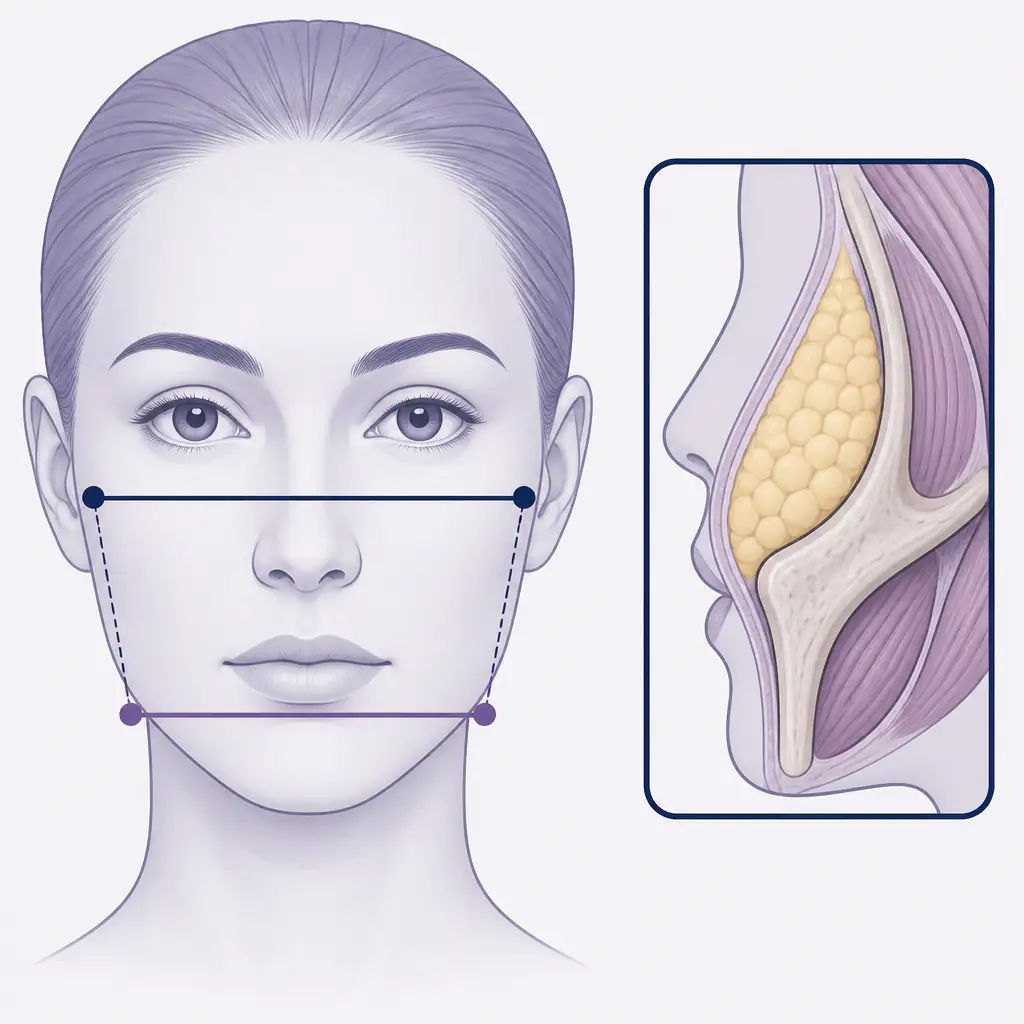
Bizygomatic width refers to the horizontal distance between the two malar eminences. It is one of the standard measurements in facial anthropometry and is frequently used in attractiveness research. A wider bizygomatic measurement relative to lower face width tends to correlate with what many observers rate as a strong midface structure, though the ideal ratio varies by sex, ethnicity, and individual proportions.
High-Set Cheekbones vs. Low Cheekbones
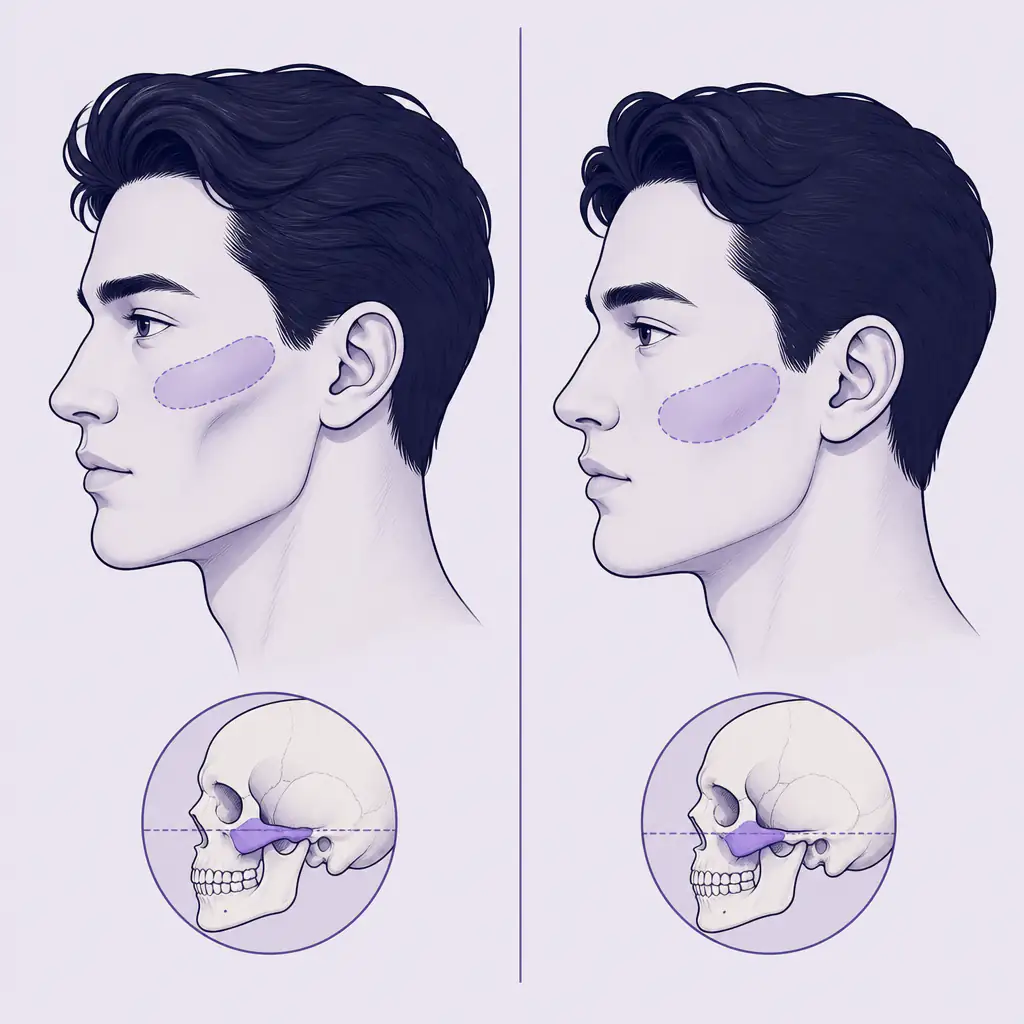
Not all prominent cheekbones are the same. The vertical position of the malar eminence on the face matters as much as how far it projects outward.
High-Set Cheekbones
High-set cheekbones sit closer to the infraorbital rim (the lower edge of the eye socket). Features associated with this placement:
- Creates a natural shadow or hollow beneath the cheekbone
- Tends to make the midface look longer and more sculpted
- Often associated with an angular, defined appearance
- Common in facial types described as having strong “hunter” aesthetics
Low Cheekbones in Men and Women
Low cheekbones sit lower on the face, often at or below the midpoint between the eye and the mouth. This placement tends to:
- Reduce visible shadow beneath the cheek
- Create a rounder, fuller midface appearance
- Be more common in certain ethnic groups, including some East Asian facial structures
- Produce less visible hollow beneath the cheekbone even when body fat is low
For low cheekbones in men specifically, the concern is often that the midface looks soft or undefined, particularly in photos. This is not inherently unattractive, but many men seeking a sharper appearance focus on this area.
Are Hollow Cheeks Attractive?
The question of whether hollow cheeks are attractive comes up frequently, and the honest answer is: it depends on the context and degree.
Mild hollowing beneath the malar eminence (the submalar hollow) is generally considered attractive because it creates a visible shadow that emphasizes the cheekbone above it. This is the effect makeup contouring tries to replicate. Research on facial attractiveness suggests that faces with visible bone structure and moderate facial fat distribution tend to be rated highly by both male and female observers.
Extreme hollowing, often seen in very low body fat or certain health conditions, tends to read as gaunt rather than defined. The sweet spot is a visible but not exaggerated depression beneath a prominent malar bone.
If you are unsure where your own midface falls on this spectrum, tools like Aura can give you an objective breakdown of your facial proportions, including midface analysis, so you have a concrete baseline before deciding whether any changes are worth pursuing.
Asian Cheekbones: Structure and Context
Discussions of cheekbone aesthetics often treat a single Western standard as universal, which is inaccurate. Asian cheekbones vary widely across different ethnic groups, but some common structural patterns appear in East Asian faces:
- Higher bizygomatic width relative to biogonial width (jaw angle width), creating a diamond or oval silhouette
- Malar eminence that is sometimes positioned more anteriorly (forward-projecting) rather than laterally
- Flatter orbital rims and a less pronounced infraorbital hollow
In East Asian cosmetic surgery markets, malar reduction (shaving or repositioning the zygomatic bone to reduce facial width) is one of the most performed facial bone procedures, because a wide bizygomatic width is sometimes considered unflattering in certain cultural contexts. This is the opposite concern from Western markets, where many patients seek augmentation.
The takeaway: there is no single “correct” malar bone structure. Evaluation should always be relative to the rest of your facial skeleton, your soft tissue coverage, and your own aesthetic goals.
Zygo Pulling and Mewing: What the Evidence Says
Online communities have popularized concepts like zygo pulling, zygo push, and related manual techniques that claim to remodel the malar bones through applied pressure or specific tongue postures. These ideas are often discussed alongside mewing (tongue posture for palate and midface development).
Does Zygo Pushing Work?
The honest answer is that there is no peer-reviewed evidence confirming that manual zygo pushing or pulling produces measurable changes in adult malar bone position. Bone remodeling in adults requires sustained mechanical force over long periods, and the forces achievable by hand pressure are unlikely to meet that threshold.
What may have a modest effect over time, according to some researchers, is oral posture (tongue resting on the palate, teeth in light contact, breathing through the nose). This is because the maxilla and zygomatic bone are structurally connected, and forward maxillary development during growth is associated with more projected, anteriorly positioned cheekbones. In skeletally mature adults, however, the growth plates are fused, and the scope for change is limited.
Some users report that improving their overall posture, particularly forward head posture correction, changes how their midface appears, likely because head tilt significantly affects perceived malar prominence in photos and in person. This is worth addressing regardless of its effect on bone.
Talk to a qualified professional before considering any physical manipulation technique or clinical procedure targeting facial bone structure.
Practical Ways to Improve Malar Bone Appearance
Even without surgery, there are several evidence-informed strategies that may improve the perceived prominence of your malar bones.
1. Reduce Overall Body Fat
Facial fat sits in distinct compartments, and the malar fat pad sits directly over the zygomatic bone. At higher body fat percentages, this pad obscures the underlying bone structure. Reducing body fat (particularly in the 10 to 15 percent range for men, slightly higher for women) often reveals cheekbone definition that was previously hidden. This is frequently the most impactful single change available.
2. Optimize Facial Posture
Keep your tongue resting on the palate, teeth lightly together, and breathe through your nose. While this will not reshape adult bone, it keeps the soft tissues of the midface supported and prevents the slight facial elongation associated with chronic mouth breathing. It also affects how your midface photographs.
3. Address Forward Head Posture
When your head sits forward of your shoulders, the face tilts slightly downward in neutral resting position, which can flatten the apparent projection of the cheekbones. Correcting head posture through targeted exercises (chin tucks, deep cervical flexor strengthening) may improve how your malar bones appear from a frontal angle.
4. Contouring and Grooming
Makeup contouring, when done well, mimics the shadow cast by a prominent malar bone. For men, a well-placed beard line or kept facial hair can draw attention to the midface. These are not permanent solutions but they are low-risk and immediately effective.
5. Consider Getting a Facial Baseline Assessment
Before investing time in any protocol, it helps to know your actual starting point. Aura provides AI-based facial scoring that includes jaw and midface proportions, which can tell you whether your malar region is already strong relative to your other features, or whether it is genuinely a limiting factor. Starting with data makes your efforts more targeted.
6. Clinical Options (Consult a Professional First)
For those with genuinely recessed cheekbones who have already optimized non-surgical options, clinical interventions exist:
- Dermal fillers (hyaluronic acid) injected into the malar region can add projection and volume. Results are temporary, typically lasting 12 to 18 months.
- Malar implants are solid silicone implants placed over the zygomatic bone through small incisions inside the mouth or below the lower eyelid. Results are permanent.
- Fat grafting transfers your own fat to the malar region for a more natural augmentation.
All of these carry real risks including asymmetry, nerve damage, infection, and implant displacement. Consult a board-certified maxillofacial surgeon or plastic surgeon before pursuing any of these options.
Recessed Cheekbones vs. Prominent Zygos: How to Tell the Difference
A straightforward self-assessment:
| Feature | Recessed Cheekbones | Prominent Zygos |
|---|---|---|
| Lateral face shadow | Minimal | Visible, defined |
| Submalar hollow | Absent or filled | Present |
| Bizygomatic width | Narrow relative to jaw | Equal to or wider than jaw |
| Appearance in photos | Flat midface | Structural, angular |
| 3/4 view profile | Cheek merges with jaw | Clear cheekbone ridge visible |
Keep in mind that lighting, camera angle, and lens focal length all affect how cheekbones read in photographs. A 50mm or longer lens at eye level with natural side lighting from a window is the most accurate way to assess your own structure.
Key Takeaways
- The malar bones (zygomatic bones) form the structural foundation of the cheek and define lateral facial width.
- High-set cheekbones with a visible submalar hollow are broadly considered aesthetically strong, but there is no universal standard.
- Bizygomatic width is a measurable dimension that research links to perceived facial attractiveness and dominance.
- Zygo pulling and similar manual techniques lack scientific support for producing bone changes in adults.
- The most accessible improvements come from body fat reduction, posture correction, and facial fat distribution.
- Clinical augmentation options exist but carry meaningful risks and require professional evaluation.
Frequently asked questions
What are malar bones and where are they located? +
Malar bones are the zygomatic bones, the paired bones that form the prominence of your cheeks on either side of the face. They sit between the eye socket, the temporal bone, and the upper jaw, and their most visible point is the malar eminence, the firm bump you can feel at the highest point of each cheekbone.
Does zygo pulling actually change the shape of your cheekbones? +
There is no peer-reviewed clinical evidence that manual zygo pulling or pushing produces measurable changes in malar bone position in skeletally mature adults. Bone remodeling requires sustained, precisely applied mechanical force over time, and hand pressure alone is unlikely to achieve this. Focus on evidence-backed approaches like body fat reduction and posture correction first.
Are high-set cheekbones always more attractive than low cheekbones? +
Not universally. High-set cheekbones with a submalar hollow tend to rate well in Western attractiveness research, but aesthetic preferences vary significantly across cultures. In some East Asian beauty contexts, for example, a wide bizygomatic face is considered unflattering, and malar reduction surgery is commonly sought. Attractiveness is always relative to the full facial composition.
What is the fastest non-surgical way to make cheekbones look more prominent? +
Reducing body fat is typically the most impactful non-surgical approach, since the malar fat pad sits directly over the zygomatic bone and obscures definition at higher body fat levels. Beyond that, correcting forward head posture and using side lighting in photos can immediately improve how your cheekbone structure reads. These changes require no equipment and carry no risk.