 Aura: Looksmaxxing
 Buccal Fat Removal Gone Wrong: Risks & What to Know
Buccal fat removal gone wrong can cause lasting facial changes. Learn the real risks, red flags, and how to make a more informed decision before surgery.
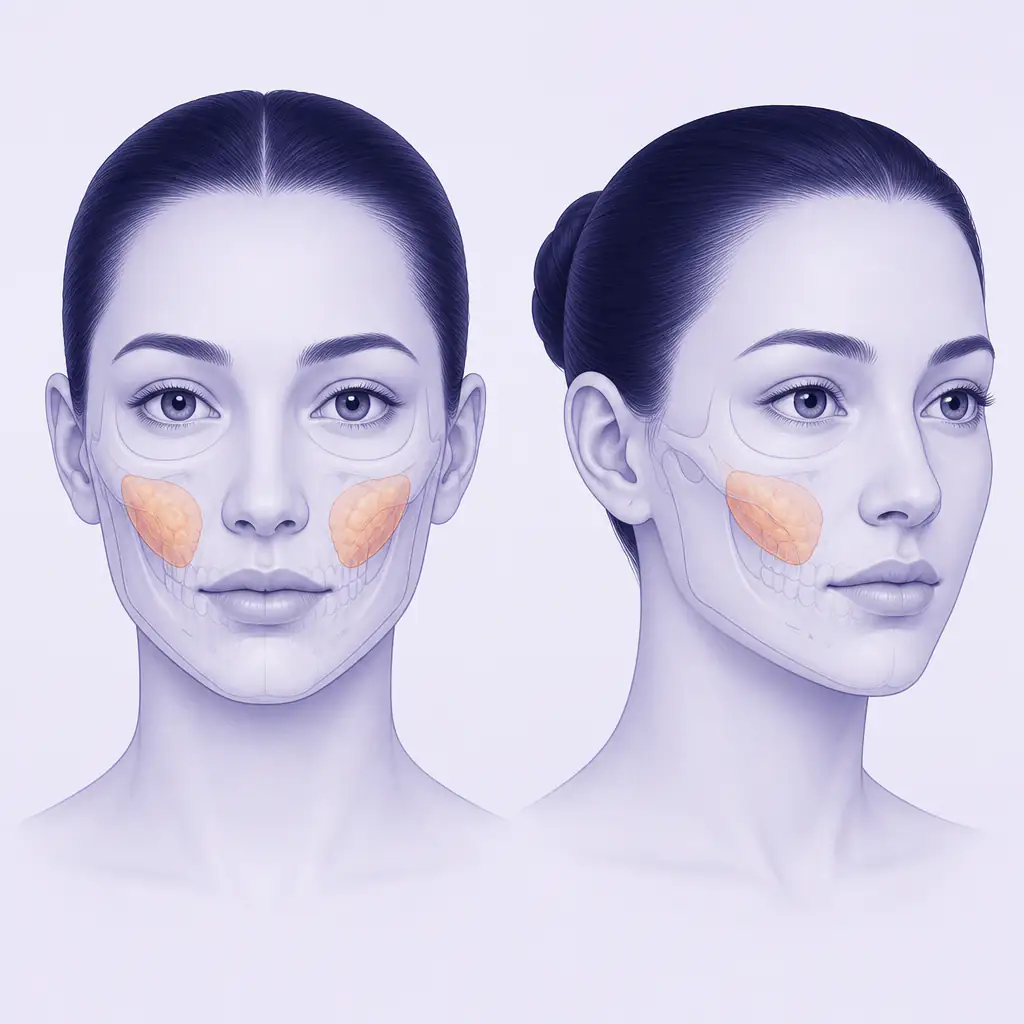
Buccal fat removal sits in an unusual position among cosmetic procedures. It promises a more sculpted, angular midface with a relatively short recovery window. For a certain face shape and age range, that promise sometimes holds. But for many patients, the outcome is the opposite of what they wanted, and the results are permanent.
This article covers what actually goes wrong, why it goes wrong, and what you can do to protect yourself before making any decisions. If you are researching this procedure seriously, read all of it, not just the before-and-after section.
Important disclaimer: Nothing in this article constitutes medical advice. Talk to a board-certified plastic surgeon or oral and maxillofacial surgeon before considering any facial procedure. Outcomes vary significantly based on anatomy, surgeon skill, and patient age.
What Buccal Fat Removal Actually Does
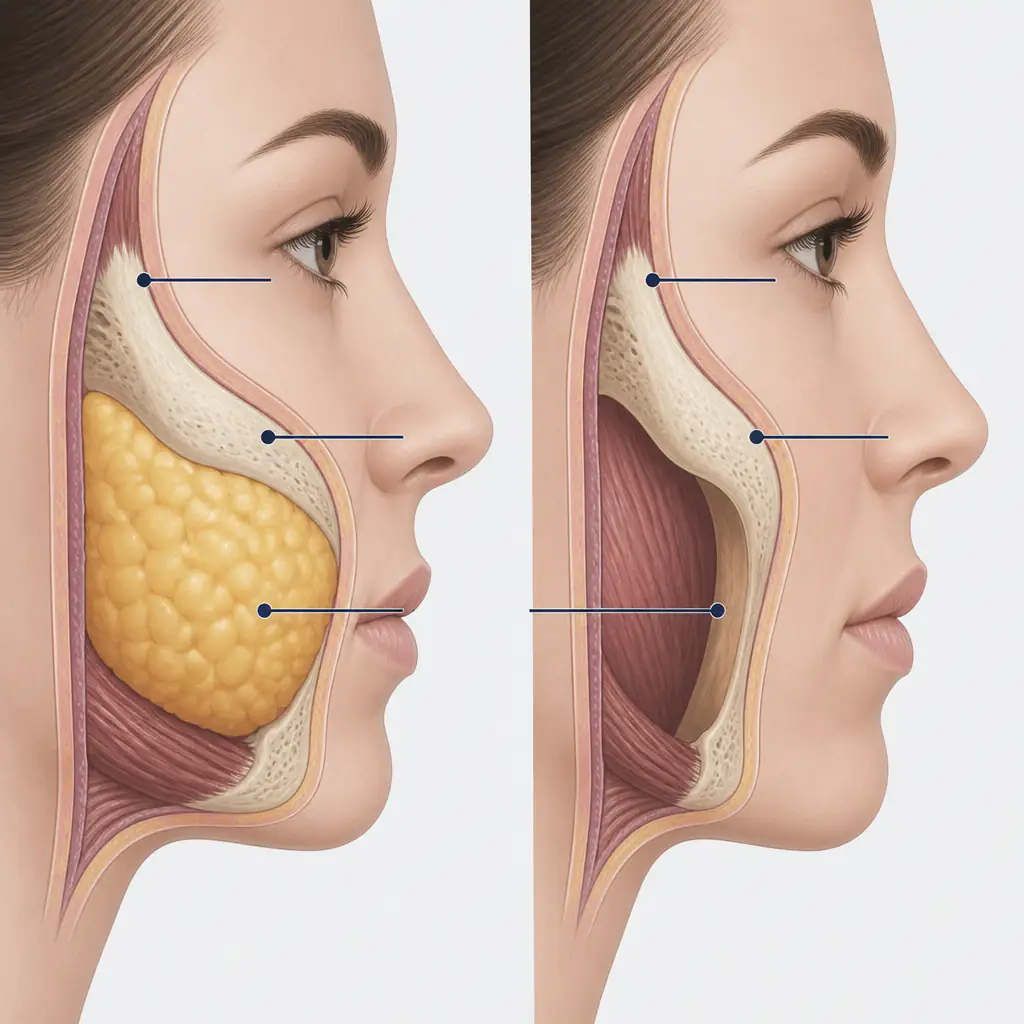
The buccal fat pad (formally, the corpus adiposum buccae) is a distinct pocket of fat located deep in the cheek, behind the cheekbone and in front of the masseter muscle. Unlike subcutaneous fat that responds to diet and exercise, this pad is largely structural. It gives the midface volume and contributes to the rounded appearance many people associate with a “baby face.”
During the procedure, a surgeon makes a small incision inside the mouth, applies gentle pressure to the cheek, and the fat pad prolapses (pushes through) the opening. The surgeon then removes a portion of it. The incision is sutured closed. There is no external scarring.
The appeal is obvious: a slimmer midface, more visible cheekbones, and a more defined lower face, all through a same-day outpatient procedure.
The problem is that this fat pad does something else too. It supports the overlying facial soft tissue. Remove it, and you change the long-term scaffold of your midface, permanently.
The Most Common Ways Buccal Fat Removal Goes Wrong
Excessive Hollowing
This is the most frequently reported regret. Patients who looked great immediately post-op find that, as they move into their 30s and 40s, their face continues to lose volume naturally through aging. Without the buccal fat pad to buffer that loss, the midface can collapse inward, creating a gaunt, hollow, or “skeletonized” appearance.
Faces naturally lose roughly 1 to 2 percent of their subcutaneous fat volume per year after the mid-20s. The buccal fat pad partially compensates for this. Remove it at 22, and you are borrowing against a facial account that will come up short later.
Asymmetric Removal
The buccal fat pad is not a uniform structure. It has extensions (temporal, pterygoid, and buccal extensions) that vary considerably from person to person. If a surgeon removes unequal amounts on each side, even by a small margin, the result is visible facial asymmetry. Correcting this typically requires fat grafting, which carries its own set of variables.
Nerve Damage
The facial nerve (cranial nerve VII) has branches that run close to the buccal fat pad. The parotid duct, which carries saliva from the parotid gland to the mouth, also passes through this region. An experienced surgeon knows to avoid both structures, but complications do occur. Temporary numbness is relatively common. Permanent motor weakness, though rare, has been reported.
Wrong Candidate Selection
Some surgeons, and some patients, push for this procedure when the face is simply not the right shape for it. People with already-angular, lower-fat faces gain almost nothing cosmetically and risk the hollow outcome described above. People with facial fullness that is primarily due to masseter hypertrophy (enlarged jaw muscles) or parotid gland enlargement will see no improvement from buccal fat removal, since those are separate structures entirely.
Overestimating the Aesthetic Gain
Buccal fat removal produces a subtle change in most patients, not a dramatic transformation. When patients go in expecting a dramatically different face and receive a modest one, disappointment follows, even without a technical complication. Managing expectations before the procedure is part of the surgeon’s responsibility, and a failure to do so is a form of things going wrong.
Why Some Surgeons Still Recommend It (and Why That Matters)
Not every buccal fat removal case is a cautionary tale. For patients who are:
- Over 30, with stable facial volume
- Already carrying visible fat in the buccal region specifically, not globally
- Treated by a high-volume facial plastic surgeon with demonstrated results in this procedure
- Not expecting dramatic structural change
…the procedure can deliver the intended result. The issue is not that the procedure is inherently flawed. The issue is that it became fashionable quickly, was marketed aggressively by some clinics, and was performed on patients who were not good candidates.
The trend toward very sculpted, angular faces driven by social media aesthetics created demand that outpaced careful patient selection. Many surgeons who perform high volumes of these procedures report that a meaningful percentage of their revision consultations involve patients who had buccal fat removed by someone else.
How to Assess Your Own Face Before Going Further
One of the most common mistakes people make is not having an accurate, objective understanding of their current facial structure before deciding on any intervention.
If you want a data point beyond your own mirror, Aura offers AI-based facial analysis including cheekbone prominence, facial width-to-height ratio, and midface proportions. This kind of baseline assessment does not replace a surgical consultation, but it can help you understand which features are actually driving your concerns before you commit to an irreversible procedure.
Understanding whether your midface fullness is structural, adipose-driven, or an artifact of lighting and photography can change the calculus significantly.
Red Flags When Researching Surgeons
If you are still considering the procedure after understanding the risks, surgeon selection is the single highest-leverage decision you will make. Watch for these warning signs:
- No in-person consultation or a very short one. A surgeon who agrees to remove your buccal fat without extensively reviewing your facial anatomy and age-related risk is not doing their job.
- Before-and-after portfolios with only young patients. Ask to see results on patients who are your age now, photographed several years post-op.
- Guarantees about results. No ethical surgeon guarantees cosmetic outcomes.
- Bundling the procedure into a package without discussing your specific anatomy. Buccal fat removal should be a deliberate, individualized decision.
- Pressure to book quickly or discounts tied to same-day commitments.
Verify board certification through the American Board of Plastic Surgery (ABPS) or the equivalent body in your country. Read independent reviews, not just those hosted on the clinic’s own website.
What Patients Who Regret It Have in Common
Looking at reported cases of buccal fat removal regret, a few patterns emerge consistently:
- They were under 25 at the time of surgery. Younger faces tend to carry the fat pad in a way that looks proportionate, and they have decades of aging ahead during which the deficit will become more visible.
- They were influenced by a specific aesthetic trend. Trends in facial aesthetics change. Surgical anatomy does not.
- They did not fully understand the procedure was irreversible. Fat grafting can partially restore lost volume, but it is an additional procedure with its own recovery and unpredictability.
- They chose based on price. Lower-cost providers are not always less skilled, but the correlation between undercutting and shortcuts is real enough to warrant skepticism.

If Something Already Went Wrong: Options for Correction
If you have already had buccal fat removal and are unhappy with the result, you are not without options, though none of them are simple.
Autologous Fat Grafting
Fat is harvested from another area of the body (typically the abdomen or thighs) via liposuction, processed, and injected into the hollowed midface region. Results vary because a portion of grafted fat is always reabsorbed by the body. Multiple sessions may be needed.
Dermal Fillers
Hyaluronic acid fillers (such as Restylane or Juvederm) can temporarily restore midface volume. These are not permanent, require repeated treatments, and carry their own risk profile if injected near facial vasculature. They can, however, serve as a useful preview of what restored volume would look like before committing to fat grafting.
Structural Implants
In cases of significant hollowing, some surgeons recommend cheek implants to restore the underlying scaffold. This is a more involved procedure and is generally considered a last resort for buccal fat revision.
Waiting and Monitoring
Some patients find that swelling and tissue settling in the first 6 to 12 months post-op changes their perception of the result. Significant hollowing that appears immediately may soften slightly as surrounding tissue adapts. This does not apply to cases with true over-resection, but it is worth giving the face time before pursuing revision.
Practical Steps Before Making a Decision
If you are still in the research phase, here is a reasonable sequence:
- Get an honest assessment of your current facial proportions. This includes understanding your facial thirds, the relationship between your cheekbones and jaw, and how much of your midface fullness is actually buccal fat versus other tissue.
- Consult at least two board-certified surgeons. Compare their recommendations and their reasoning. If both say you are a good candidate, that carries more weight than one opinion.
- Ask your surgeon to show you age-progressed simulations of how your face may look in 10 to 20 years with the fat removed.
- Consider whether non-surgical options (masseter Botox for jaw slimming, subtle contouring with makeup, or facial muscle exercises for definition) might address your concern without permanent consequences.
- Give yourself a mandatory waiting period of at least 3 months between your first serious research session and any booking decision. This filters out impulsive choices.
Using a tool like Aura to track your facial analysis over time can also help you notice whether your concerns are stable or shifting, which matters when you are evaluating a permanent intervention.
The Bigger Picture
Buccal fat removal gone wrong is not a rare anomaly. It is a predictable outcome when the procedure is performed on the wrong patient, by an underqualified surgeon, or without adequate informed consent. The procedure itself is technically straightforward. The judgment required to use it appropriately is not.
The most important thing you can do is slow down. The demand for this procedure grew faster than the clinical evidence supporting broad use. That gap between popularity and scrutiny is where most cosmetic surgery regret lives.
Understand your face. Understand what the procedure actually does. And make sure you are choosing based on anatomy and long-term outcomes, not on a trend that may look different in five years.
Frequently asked questions
How common is buccal fat removal gone wrong? +
Exact complication rates are difficult to quantify because outcomes are underreported and "gone wrong" can mean technical complications or simply aesthetic dissatisfaction. Surgeons who specialize in facial revision procedures report that buccal fat regret is among the more frequent revision requests they receive, particularly from patients who had the procedure done in their early 20s.
Can buccal fat grow back after removal? +
No. Once the buccal fat pad is surgically removed, it does not regenerate. This is what makes the procedure irreversible. Volume can be partially restored through fat grafting or fillers, but the original tissue is gone permanently.
What is the ideal age for buccal fat removal? +
Most experienced facial plastic surgeons suggest waiting until at least the late 20s to early 30s, when facial volume has stabilized and the long-term aging trajectory is more predictable. Operating on patients under 25 significantly increases the risk of a gaunt or hollow appearance as natural aging progresses.
What are the alternatives to buccal fat removal for a slimmer face? +
Non-surgical options include masseter Botox to reduce jaw muscle bulk (which can narrow the lower face), structured contouring techniques, and facial resistance exercises. These approaches are reversible and carry lower risk, though their effects are more modest and in some cases temporary. A qualified surgeon can help you identify which factor is actually driving your facial fullness before recommending any intervention.