 Aura: Looksmaxxing
Best Glasses for a Round Face: Sharpen It Up
Angular frames add definition a round face lacks, but width matters more than shape. Which styles to try, which to skip, and how to size them.
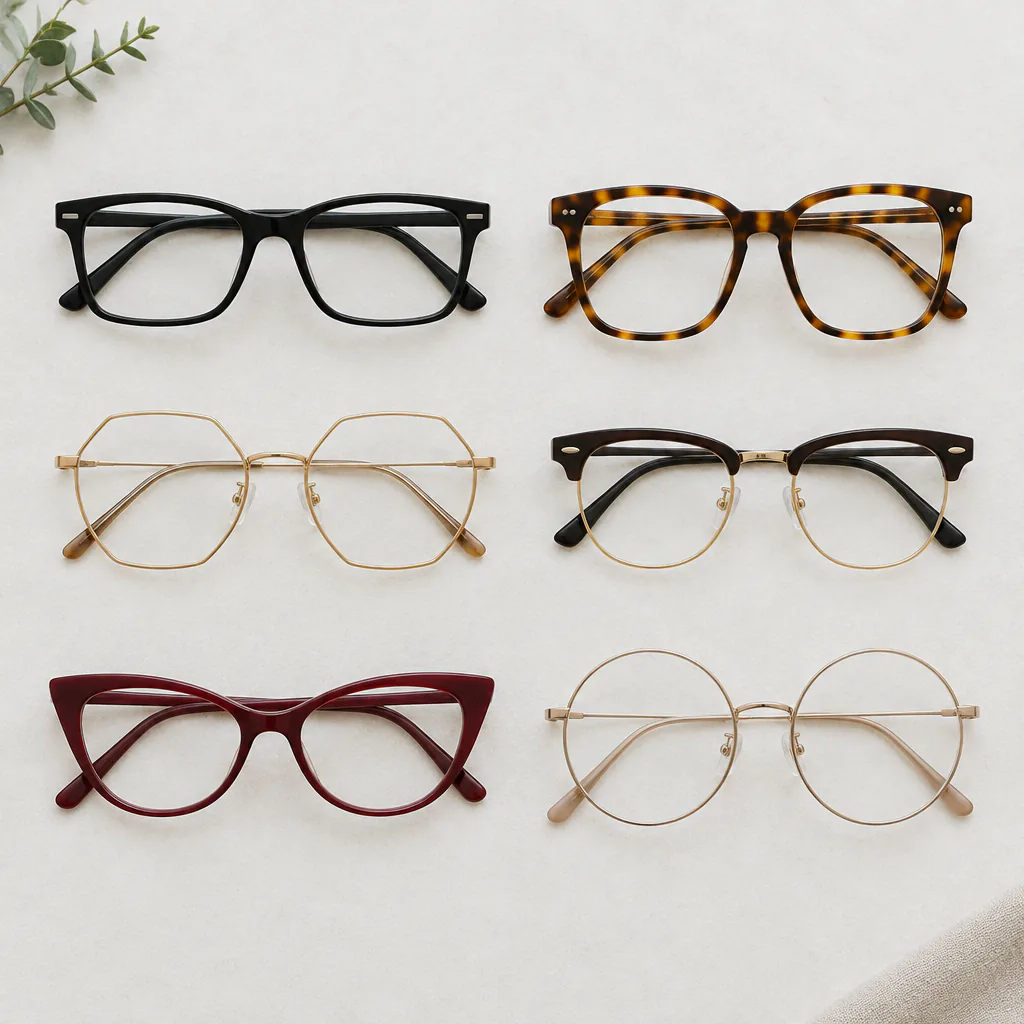
For a face with a soft jawline and fuller cheeks, angular glasses are a useful starting point. They are one styling option, not a requirement. The best glasses for a round face shape come down to two things working together. You want a frame shape that adds some angles, and a size that actually fits your head.
This guide covers:
- which frame shapes opticians commonly suggest
- which ones they warn against, and when you can ignore that warning
- how to read the numbers printed on every frame
- a simple routine for testing frames on your own face
First, Check That Your Face Is Actually Round
All About Vision describes a round face as having curved lines, with width and length in roughly the same proportions and no strong angles. In practice, that usually looks like this:
- Length and width look similar in a straight-on photo.
- The jawline and chin are soft and rounded, without a defined corner at the jaw.
- The cheeks are fuller, with few hard lines across the face.
There are two caveats. First, face shape categories are a styling shorthand, not an anatomical or medical classification. Different guides use different lists, and plenty of people sit between two shapes. You might be round with a slightly squarer jaw, or somewhere between round and oval.
Second, lighting, camera distance, hairstyle and even the angle of your chin all change how your outline reads in a photo. Treat round as your likely category rather than a fixed label.
A quick self-check helps:
- Pull your hair back.
- Stand about an arm’s length from a mirror.
- Notice where the outline of your face curves and where it turns a corner.
If it mostly curves, you are probably in round territory.
If you want a second opinion, Aura’s Face Shape Finder estimates your likely face shape and states how uncertain that call is. It also explains how your forehead, cheeks and jaw compare in proportion and suggests haircut and accessory options. It does not produce exact physical measurements. You upload a photo before signing up, and only a subjective styling-potential score is shown free; the face-shape findings remain locked. The full breakdown is part of Aura Pro ($9.99 a month or $49.99 a year).
The Principle Behind Every Recommendation: Contrast
Almost every frame suggestion for round faces comes from one idea. Put straight lines and corners next to soft curves.
- All About Vision notes that angular frames add definition and length.
- VSP explains that square and rectangular frames tend to be wider than a round face, which makes the face read slimmer and longer by comparison.
- Optometrists.org suggests bold, angular frames that rest just above the cheekbones.
To be clear about what this is: it is a design convention shared by opticians and the eyewear industry. The sources here offer styling guidance, not controlled evidence of a universally better appearance. No frame changes your bone structure. What a frame does change is which lines stand out and where someone’s eye lands first. That is a useful styling lever, not a rule you can fail.
It also means the goal is yours to choose. If you like your full cheeks and want to play them up, FramesDirect points out that round frames do exactly that. Contrast is the default advice because most people searching this topic want more definition. Roundness is not a flaw to hide.
The Best Frame Shapes for a Round Face
Rectangular frames
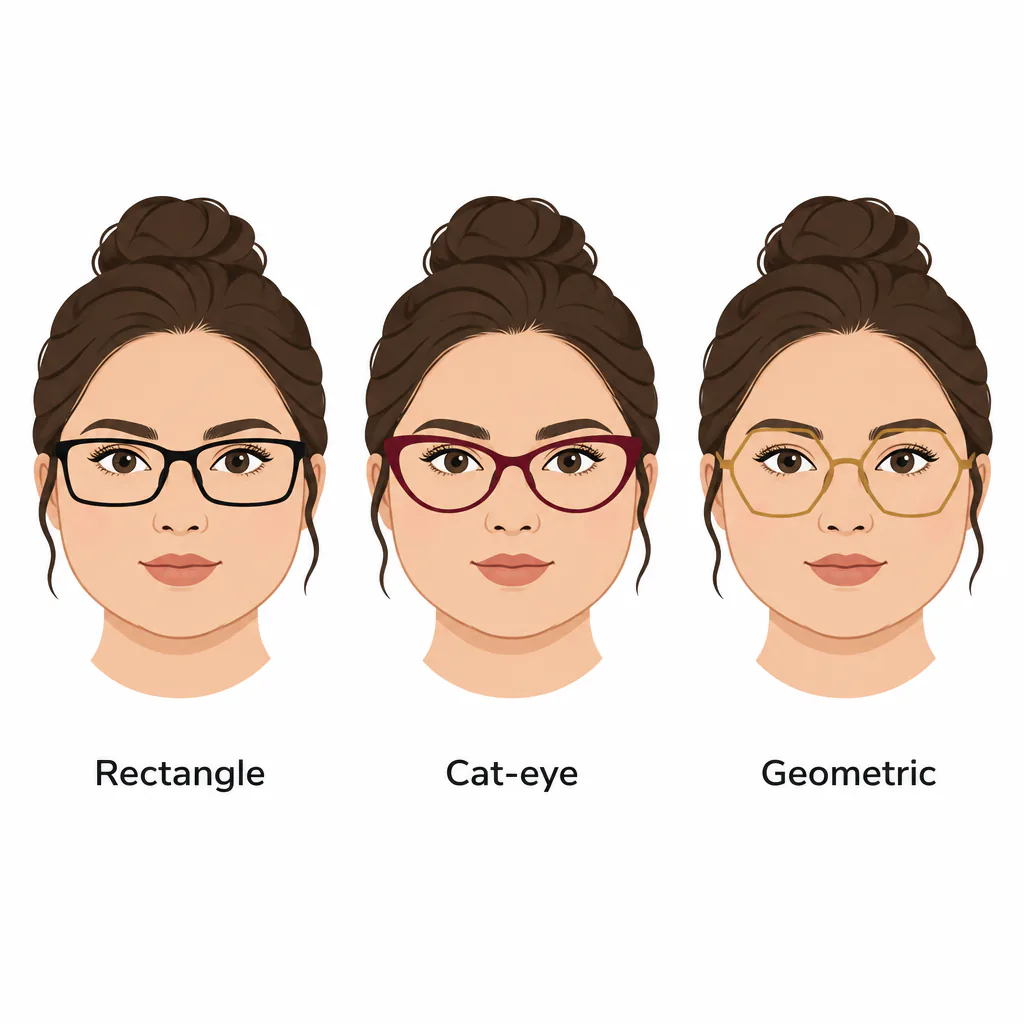
This is the most common recommendation. A rectangle that is wider than it is tall adds horizontal lines and clear corners. All About Vision specifically mentions wide rectangular frames as a good choice.
- Look for: lenses noticeably wider than they are deep, with defined corners. Slightly softened corners are fine. Fully circular ones are not.
- Works well for: a clean, understated pair you can wear anywhere.
Square frames
Squares follow the same logic with more emphasis. The corners are stronger and the silhouette is bolder. VSP lists square and rectangular frames together for round faces.
- Look for: a square that still matches your face width. A deep, chunky square can look heavy on a smaller face.
- Works well for: people who want their glasses to be a noticeable part of their look. If a full square feels like too much, a slightly shallower rectangle is a good middle ground.
Geometric frames
This group covers hexagons, octagons and other multi-sided shapes. Glasses.com notes that their unusual angles draw attention away from roundness.
- Look for: thin metal geometric frames if you want contrast without heavy rims. Acetate geometric frames read louder.
- Works well for: anyone who wants something more distinctive than a plain rectangle.
Browline frames
Browlines have a heavier bar along the top and a thin or minimal rim underneath. This puts visual weight along the brow area and creates a strong horizontal line in the upper half of the face. Heartland Optical includes browline frames in its round-face guidance.
- Fit check: the top bar should sit at or just below your natural brow line, not floating above it.
Cat-eye frames
Upswept outer corners add angle and a lifted line at the top outer edge. Heartland Optical lists cat-eye shapes alongside rectangular and square frames for round faces.
- Look for: a cat-eye with real width. Try two widths side by side and choose the upswept outline you prefer.
- Works well for: anyone who likes a vintage or more feminine look. Subtle, slim cat-eye shapes also suit people who don’t want anything dramatic.
Wayfarer-style frames
These have a trapezoid shape, slightly wider at the top, usually with a thicker rim. One optometry clinic describes them as bringing structure to a round face without looking too harsh.
- Works well for: a first pair when you’re unsure how bold to go. They sit comfortably between understated and statement.
Frames That Tend to Work Against a Round Face
Several sources agree on what to avoid:
- VSP names rimless, round and small frames as styles that accentuate roundness.
- Heartland Optical also advises against round frames.
- Glasses.com adds oval frames to the list.
Here is the reasoning behind each one:
- Round and oval frames repeat the curves that are already there, so there is no contrast.
- Small frames make the face around them look wider by comparison. EyeBuyDirect makes the same point, noting that a too-narrow frame makes the face look wider.
- Rimless frames add very little visible line, so they contribute almost no structure.
When to ignore this list
None of these frames are wrong. They just don’t add contrast.
If you love round glasses, Moss Park Opticians suggests choosing thin rims over thick, bulky ones, and going slightly larger. A thin, slightly oversized round metal frame looks deliberate. A small, thick round frame doubles down on roundness. Both are in the same shape category, but the results look very different.
Aviators are a judgment call. If you’re drawn to them, compare a teardrop shape with a flatter-bottomed version in the same photo and decide for yourself.
Fit Matters as Much as Shape
A perfect rectangle in the wrong size still looks off. This is the part most frame-shape articles skip.
Read the three numbers
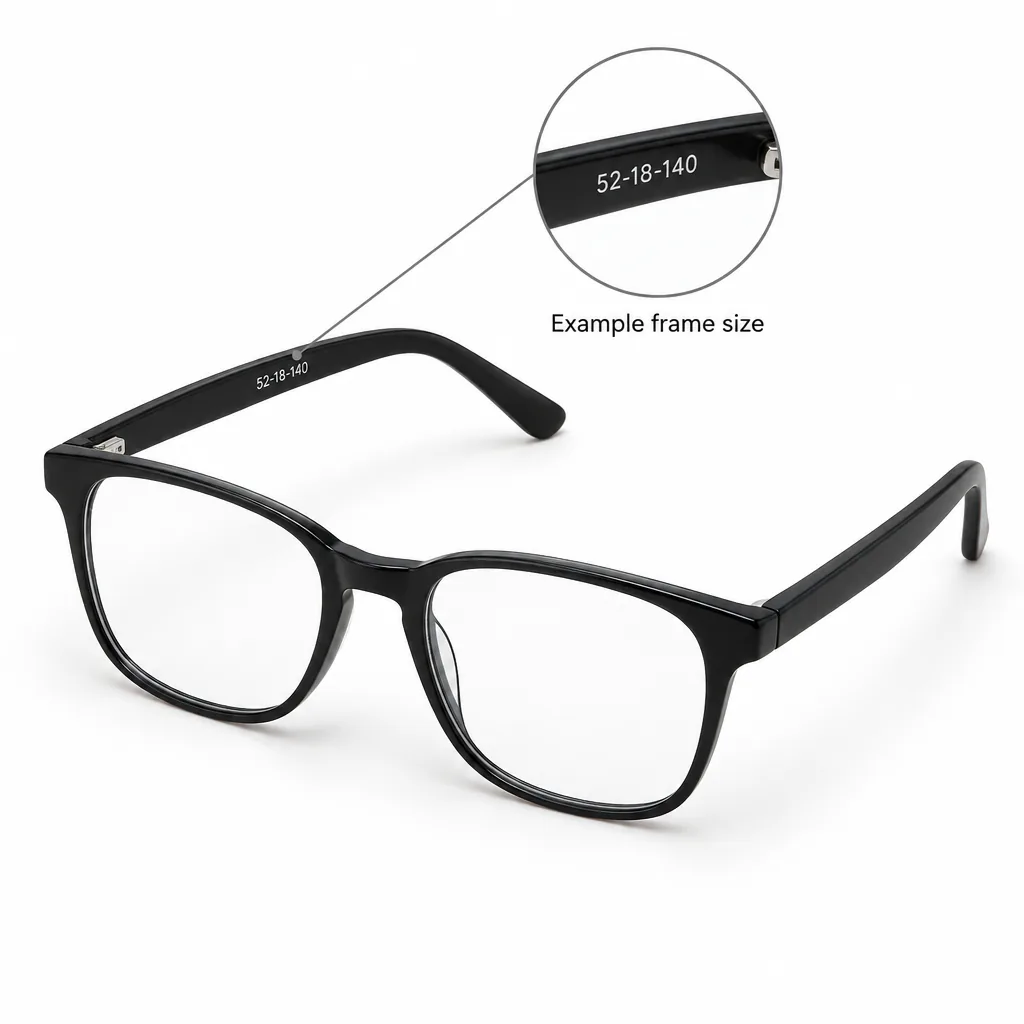
Most frames print three numbers on the inside of a temple arm, such as 49-17-140. Warby Parker suggests checking the inside of the left temple on your current glasses. According to Eyemart Express, those numbers are the lens width, bridge width and temple length, all in millimeters.
- Lens width (first number): the horizontal width of one lens.
- Bridge width (middle number): the gap between the lenses where the frame sits on your nose. It usually ranges from 14 to 24 mm. A bridge that is too tight pinches, and one that is too loose lets the glasses slip down your face.
- Temple length (last number): the arm, measured from hinge to tip. It is typically 120 to 150 mm.
If you already own a pair that feels comfortable, its numbers are your best starting point. The shape can change from pair to pair, but your head stays the same size.
Width: slightly wider, not much wider
EyeBuyDirect recommends a frame slightly wider than your face, with no more than a finger’s width between the temple arm and the side of your head. This fits the round-face advice neatly. Too narrow makes your face look wider. Too wide looks oversized in a way that rarely reads as intentional.
For total frame width, consult the retailer’s size diagram or ask an optician to compare the fit with your current pair. The three printed numbers are a starting point, not a guarantee that a different frame will fit.
Vertical position: brows and cheeks
A frame size guide from Feel Good Contacts says the top of the frame should sit no higher than your eyebrows. It also warns that if the bottom edge rests on your cheeks, the frame can rub or feel uncomfortable.
As an additional practical check, smile while wearing the frames. If they shift or touch your cheeks, ask an optician to assess the fit instead of guessing which dimension needs to change.
Rim thickness and color
Our styling suggestion: compare light and dark versions of the same shape and decide how noticeable you want the frame to be. These are visual preferences:
- Thicker, full rims draw clearer lines. Thin metal is quieter. Both work if the shape and width are right.
- Darker or saturated colors make the frame’s edges more visible. Clear or pale frames soften them. A clear rectangle is an easy option if you want angles without a heavy look.
A Practical Try-On Routine
Whether you shop in a store or order online, this routine keeps you from choosing on first impressions alone.
- Start from your numbers. Note the lens width, bridge and temple length of a pair that fits, and use those as a starting point when browsing.
- Pick three candidates. Choose a rectangle, a square or geometric frame, and one wildcard such as a cat-eye, browline or thin oversized round.
- Take consistent photos. Use the same lighting, face the camera straight on, hold it at arm’s length or further, and wear your hair the way you usually do. Treat photos as a comparison aid; perspective and camera settings can change how your face looks.
- Check fit before style. Run through these four checks:
- About a finger’s width at the temples.
- The top edge sits at or below your brows.
- The bottom edge stays off your cheeks when you smile.
- The bridge neither pinches nor slides.
- Compare the next day. Look at the photos side by side once the novelty has worn off. The pair you still like is usually the right one.
- Get the final fit checked. An optician can look at how the frame sits and make adjustments. If you have a strong prescription, ask them which frame sizes suit your lenses before you commit to a style.
Quick Reference
The contrast labels below are our editorial shorthand for the visible shapes, not measured scores or research findings.
| Frame style | Contrast level | Best if you want |
|---|---|---|
| Rectangular | Medium | A versatile everyday pair |
| Square | High | A bold, noticeable frame |
| Geometric | Medium to high | Something distinctive |
| Browline | Medium | Strong emphasis near the brows |
| Cat-eye | Medium | Lift and a vintage or feminine feel |
| Wayfarer-style | Medium | A safe first step into structure |
| Thin oversized round | Low | To keep round frames without the small, heavy look |
The short version: add angles if you want definition, choose a frame slightly wider than your face, keep it off your cheeks, and test the final candidates in photos rather than trusting a quick mirror glance. Shape advice gives you a starting shortlist. Fit and your own taste decide the rest.
Sources & further reading
Frequently asked questions
What are the best glasses for a round face shape? +
Rectangular and square frames are the most commonly recommended, followed by geometric, browline, cat-eye and wayfarer-style frames. They all add straight lines and corners that contrast with soft facial curves. Pick a frame slightly wider than your face so the shape works as intended.
Can I wear round glasses if I have a round face? +
Yes. Round frames repeat your face's curves rather than contrasting with them, so the effect is different, not wrong. If you like the look, thin rims and slightly larger sizing tend to read as deliberate, while small, thick round frames emphasize roundness more.
Should glasses be wider than a round face? +
Slightly. A common fitting guideline is no more than a finger's width between the temple arm and the side of your head. Frames that are too narrow make the face look wider, and frames that are much too wide look oversized.
How do I know my glasses size? +
Check the inside of a temple arm on a pair that fits you. The three numbers, such as 49-17-140, are lens width, bridge width and temple length in millimeters. Use them as your baseline when shopping for new frames.
How can I tell if my face is round or oval? +
Round faces have length and width that look about equal and a soft, rounded jaw. Oval faces are noticeably longer than they are wide. Many people fall between the two, so treat the label as a starting point and test frames on your own face.