 Aura: Looksmaxxing
Best Glasses for an Oblong Face: And What to Avoid
Frames that add width to a long face, the styles that stretch it further, where expert advice contradicts itself, and the measurements to check.
If your face is noticeably longer than it is wide, you have probably noticed that some glasses make it look even longer. Narrow frames can seem to stretch your features, and thin wire frames can almost vanish.
The good news is that eyewear guides largely agree on what works for a longer face. The less-good news is that they disagree on a few details, and most “top 10 frames” lists skip that part. This guide covers the shared principle, the styles that usually follow it, the places where advice conflicts, and the fit checks that matter more than any shape rule.
What Counts as an Oblong Face
All About Vision describes an oblong face as longer than it is wide, with a long, straight cheek line. In practice, that usually means:
- Length clearly exceeds width. The face reads as tall rather than balanced or broad.
- Fairly similar widths across the face. Your forehead, cheekbones and jaw don’t step in or out much from top to bottom.
- A straight side profile. The outline along the cheeks runs fairly straight rather than curving in sharply.
Why you shouldn’t treat your face shape as fixed
Face-shape categories are a styling shorthand, not an anatomical diagnosis. Real faces often sit between two categories, such as oblong and oval, or oblong and rectangular.
Even automated systems find this hard. A research paper on face-shape-based eyeglass recommendation reviews one earlier classification system that reported 70% accuracy. It also reviews a small virtual try-on test where only 3 of 11 users had a successful frame attachment. That doesn’t make face-shape advice useless. It means you should treat the label as a starting point and let the mirror make the final call.
If you want a second opinion before shopping, Aura’s Face Shape Finder gives your likely face shape with uncertainty rather than a single certain label. It explains your forehead, cheek and jaw proportions and suggests accessory and haircut options. It doesn’t produce calibrated measurements. You upload a photo before signing up. The free result is an on-device face-shape preview; the full breakdown is part of Aura Pro ($9.99 a month or $49.99 a year).
The Principle Behind Every Good Pick
Almost every reputable guide for oblong faces comes down to one idea: add visual width and interrupt the vertical line.
A long face draws the eye up and down. Glasses sit across the middle of the face, so they are one of the few accessories that can draw the eye sideways. All About Vision notes that bold, striking frames can help break up the length of your face. It also recommends frames slightly broader than your cheekbones to make the face look less narrow.
Kraywoods describes the same logic from a different angle. Frames with a contrasting shape, such as an added curve, an angular top bar or an upswept corner, pull the eye across the face rather than down it.
Three practical levers follow from this:
- Width. Choose a frame that reaches to or slightly past your cheekbones, not one that sits inside them.
- Visual weight. Thicker rims, darker or contrasting colours and a strong top line create a horizontal break.
- Enough depth. “Depth” means the vertical height of the lens opening. A frame that is too shallow adds little across the face.
Frame Styles That Usually Work on an Oblong Face
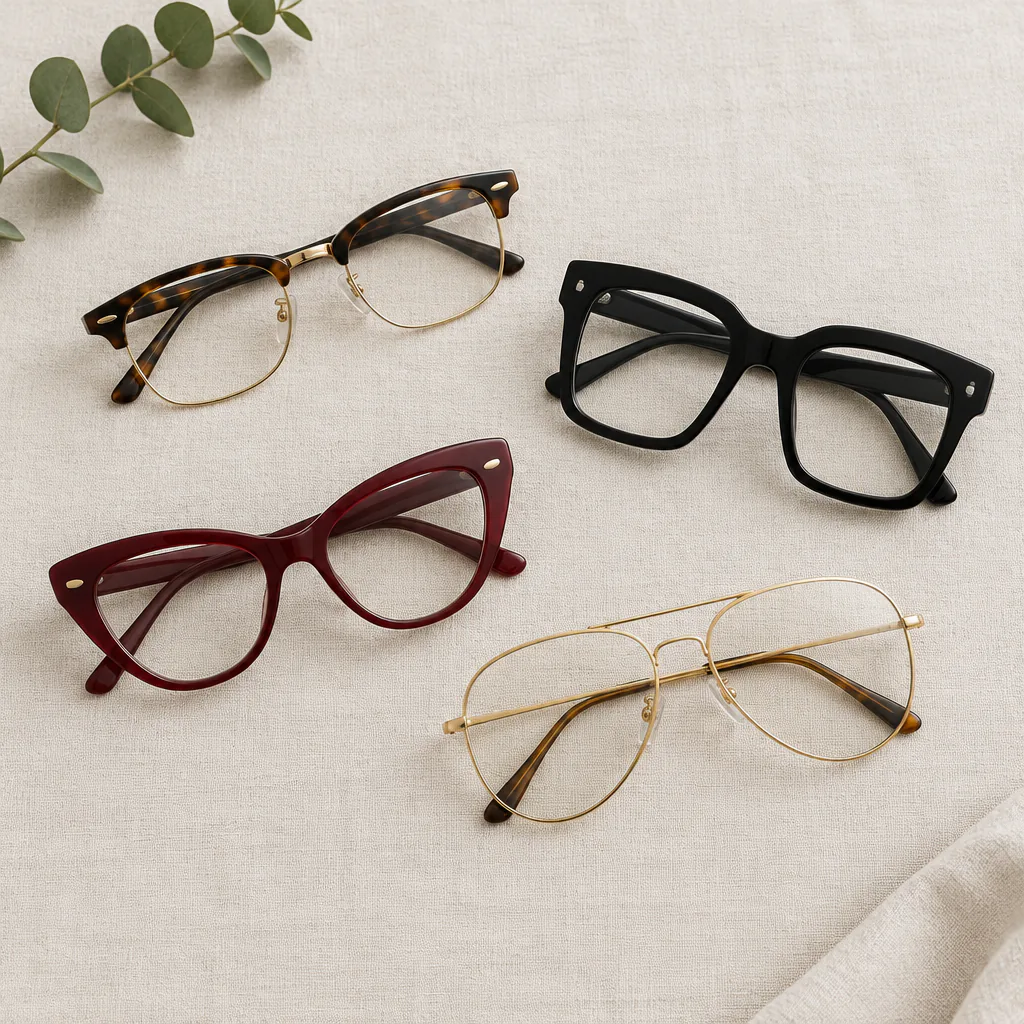
None of these is a guaranteed match. They are the styles that most often follow the principle above. Foster Grant lists tall frames, square frames, cat-eye glasses, aviators and club-style (browline) glasses as good options for this face shape. That list overlaps heavily with other guides.
Browline (club-style)
Browline frames have a heavy upper rim, often acetate, with a lighter lower rim or none at all. That bold top bar sits roughly along the brow and creates a strong horizontal line. Kraywoods calls browline the most consistently effective style for men with oblong faces. That is a retailer’s styling judgment rather than a measured result. Browlines work for women too, especially in tortoiseshell or softer colours.
Square and tall square
According to All About Vision, the sharp corners of square frames balance the elongation of an oblong face while complementing its narrow features. A tall square, with generous lens depth, works better than a squat one because it covers more of the mid-face. Thicker acetate makes the effect stronger. Thin metal makes it softer.
Wide rectangles
Rectangles can work well, but proportion is everything. Vision Center advises looking for rectangles where the width clearly beats the height. A rectangle that is wide but very slim can mimic a long face’s lines rather than interrupt them. Aim for clear width plus reasonable depth.
Cat-eye
Cat-eye frames sweep up at the outer corners, which pulls attention outward and upward toward the temples. Both Kraywoods and Foster Grant list cat-eye among their recommended shapes. They are a natural fit if you like a more feminine or retro look, but anyone can wear them. The wider the frame’s footprint, the more it adds across the face.
Aviators
Aviators are wide at the top and often have a double bridge (a second bar above the nose). That combination adds horizontal emphasis across the upper face. Foster Grant includes them in its list. Choose a metal aviator with a visible brow bar over a very thin, minimal one.
Round, with conditions
Round frames are where guides disagree most (more on that below). Retailers that recommend them add a size condition. Zeelool advises going slightly oversized for round frames. Mendeserve says round frames work only if they’re wide enough. Small round frames are on most “avoid” lists.
Details that add width
Shape isn’t the only lever. All About Vision notes that frames with decorative or contrasting temples also add width. The temples are the arms that run back to your ears. A contrasting colour, a metal accent or a bold hinge near the outer corners draws the eye sideways.
Frames That Usually Work Against You
The “avoid” list is fairly consistent across sources:
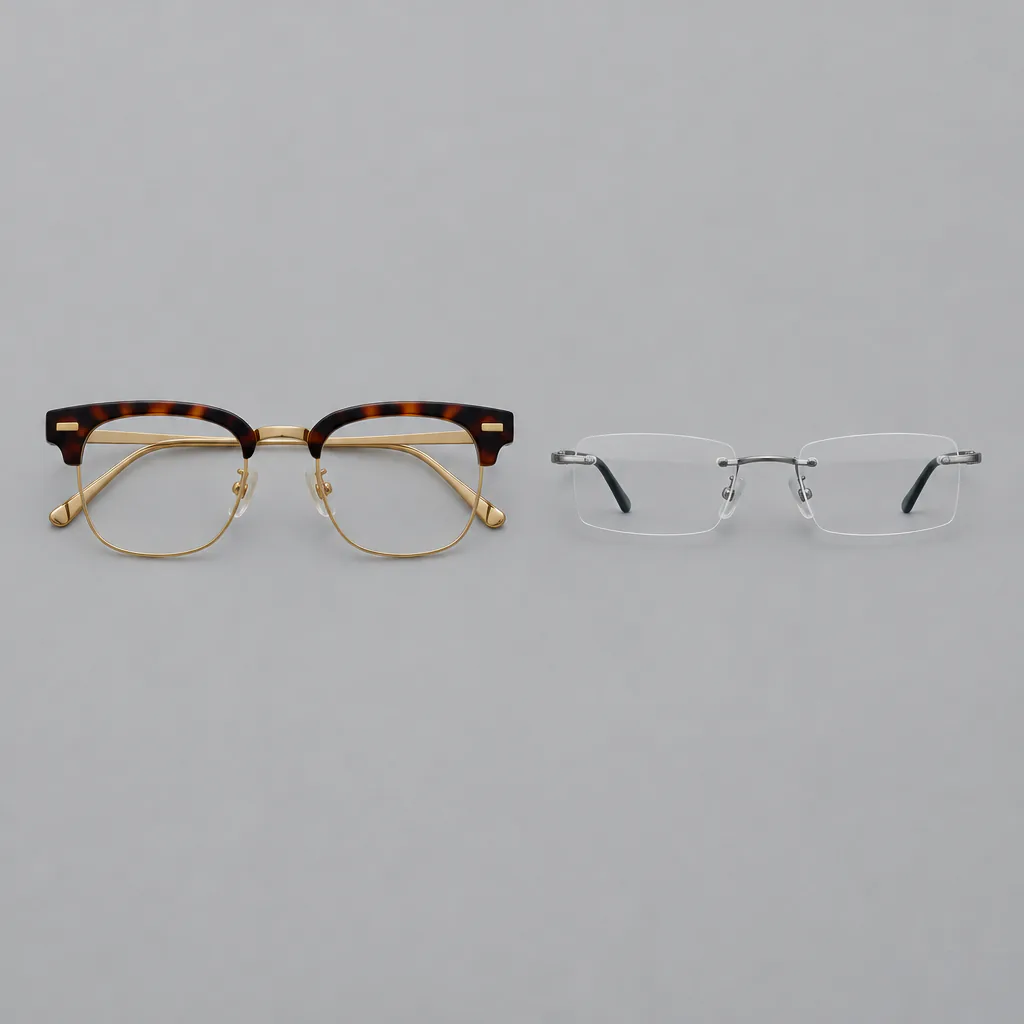
- Narrow or shallow frames. All About Vision says especially narrow frames, or frames without a lot of depth, can elongate the face even more.
- Rimless or thin semi-rimless frames. Vision Center explains that without a clear horizontal line across the face, the frame disappears against your features. The same page calls tiny circular frames the worst offender.
- Frames narrower than your face. If the outer edge sits well inside your cheekbones, the frame adds no width and can make the face look narrower.
None of these is banned. If you love a minimal rimless look, you can still wear it. Just know that it adds little visual width, so your haircut or other choices may have to provide that balance.
Where the Advice Disagrees
This is the part most guides leave out, and knowing it will save you from treating any single list as gospel.
Oversized and round frames
All About Vision suggests you may want to stay away from oversized glasses or very round ones, as these can take away from the face’s natural symmetry. Several retailers recommend slightly oversized or wide round frames, as covered above. One sensible reading is that moderately large works, extreme does not. A frame that roughly matches or slightly exceeds your face width is different from one that overwhelms it.
Depth versus width
All About Vision’s general face-shape page advises frames that have more depth than width to make an oblong face look shorter. Its dedicated oblong page and most other guides focus on width. Vision Center wants rectangles where width clearly wins. The middle ground most sources share is this: a frame that is clearly wide, with enough depth that it doesn’t look like a slim strip.
The outlier
YesGlasses takes the opposite position, saying wide frames tend to emphasize this face shape’s length. That view is unusual among the sources reviewed here. The takeaway isn’t that one side is right. Face-shape rules are styling conventions, not tested laws, and your own reflection is the deciding evidence.
Fit Beats Shape: The Checks That Matter Most
A well-chosen shape won’t help if the glasses fit badly. Fit is also the area with real research behind it.
A review in PubMed Central on facial measurements and frame design notes that interpupillary distance varies significantly across populations. Interpupillary distance is the distance between the centres of your pupils, and this variation matters for bridge width. The same review cites a study in which most participants were not looking through the optical centres of their lenses. It also states that discomfort from poorly fitting frames directly reduces how consistently people wear their glasses. The review focuses on African populations, but the basic point applies to everyone: frames that don’t fit get worn less and can work worse optically.
Poudre Valley Eye Care recommends matching three measurements: lens width, bridge size and temple length, usually printed on the inside of the temple arm. Use the numbers from a pair that fits you well as a reference when shopping.
Quick checks in the mirror (editorial suggestions, not clinical criteria):
- Bridge: The frame rests on your nose without pinching or sliding when you look down.
- Temples: The arms reach your ears without digging in behind them.
- Eye position: Your eyes sit roughly centred in each lens, not crowded toward the inner or outer edges.
- Cheeks: The bottom rim doesn’t press into your cheeks when you smile.
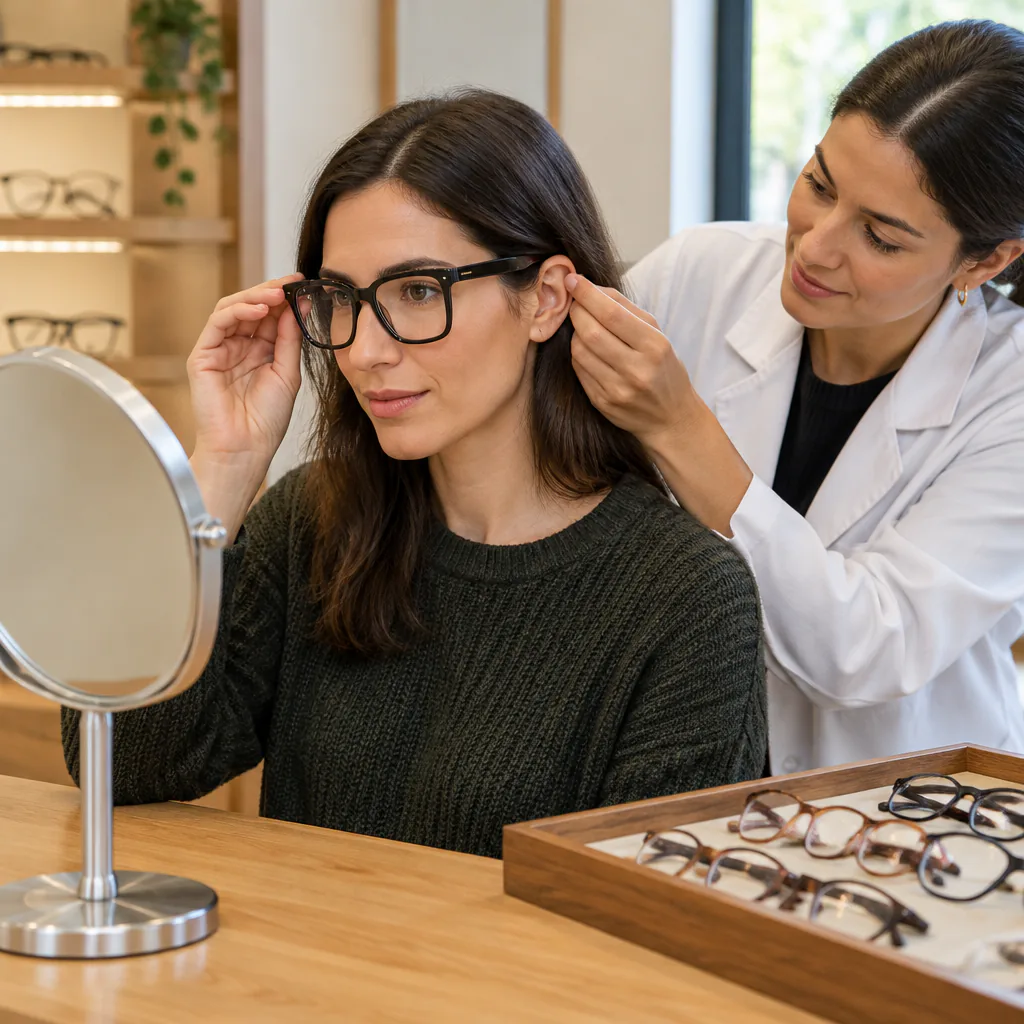
If you have a strong prescription or wear progressive lenses, ask an optician to check fit and lens centring. That matters more than any style rule.
A Practical Shopping Routine
Use this sequence to narrow choices without second-guessing every pair:
- Check your current pair. Note the three numbers on the inside of the temple and decide whether that frame feels too narrow, too wide or about right.
- Confirm your face shape loosely. In a front-facing photo with your hair pulled back, compare face length with the widths of your forehead, cheeks and jaw. If you could be oblong or oval, the width-first advice in this guide is still a safe place to start.
- Shortlist two or three styles. Pick from browline, tall square, wide rectangle, cat-eye or aviator based on your taste, not just the face-shape label.
- Test width first. In the mirror, the outer edges should reach to or slightly past your cheekbones.
- Then test depth. Make sure the lenses aren’t so shallow that the frame looks like a thin strip across your face.
- Compare photos, not just the mirror. Take straight-on photos in the same light for each pair. Differences that are hard to see in a mirror often show up side by side.
- Run the fit checks. A frame that passes the style test but slides or pinches will likely end up in a drawer.
- Consider your hair. Volume at the sides of a haircut adds width in the same way glasses do, while a lot of height on top adds length. Plan the two together.
Putting It Together
For an oblong face, the most reliable approach is simple: choose frames with real width and enough depth, give them some visual weight, and skip styles that disappear or mirror your face’s length. Browline, tall square, wide rectangle, cat-eye and aviator frames usually follow this principle well. Round and oversized frames can work if the proportions are right.
Treat face-shape advice as a map, not a verdict. The sources disagree in places, and classification itself is imprecise. Get the fit right, trust side-by-side photos, and pick the frame you’ll actually want to wear every day.
Sources & further reading
Frequently asked questions
What are the best glasses for an oblong face shape? +
Frames that add visual width and break the vertical line usually work best. Browline, tall square, wide rectangle, cat-eye and aviator styles are common recommendations, ideally reaching to or slightly past your cheekbones with enough lens depth.
Should people with oblong faces avoid round glasses? +
Not necessarily, though sources disagree. All About Vision suggests avoiding very round or oversized frames, while some retailers say round frames work if they are wide enough. Small round frames are the version most guides advise skipping.
Are rimless glasses bad for an oblong face? +
They are rarely the most flattering choice because they add no clear horizontal line, so the frame can disappear against your features. If you prefer a minimal look, a frame with a visible top bar is a reasonable compromise.
How do I know if my face is oblong or oval? +
An oblong face is clearly longer than it is wide, with a fairly straight cheek line and similar widths at the forehead, cheeks and jaw. Many faces sit between categories, and even automated classifiers are imperfect, so treat the label as a starting point and judge frames on how they look on you.
Does frame fit matter more than frame shape? +
For daily wear, fit is arguably more important. Research reviewed in PubMed Central links poorly fitting frames to discomfort and less consistent wear, and to lenses whose optical centres are misaligned with the eyes. Match lens width, bridge size and temple length to a pair that already fits well.