 Aura: Looksmaxxing
 Small Eyes Men: Are They Actually Attractive?
Small eyes in men can signal strength, intensity, and sharp bone structure. Learn why small eyes are attractive and how to enhance your look.
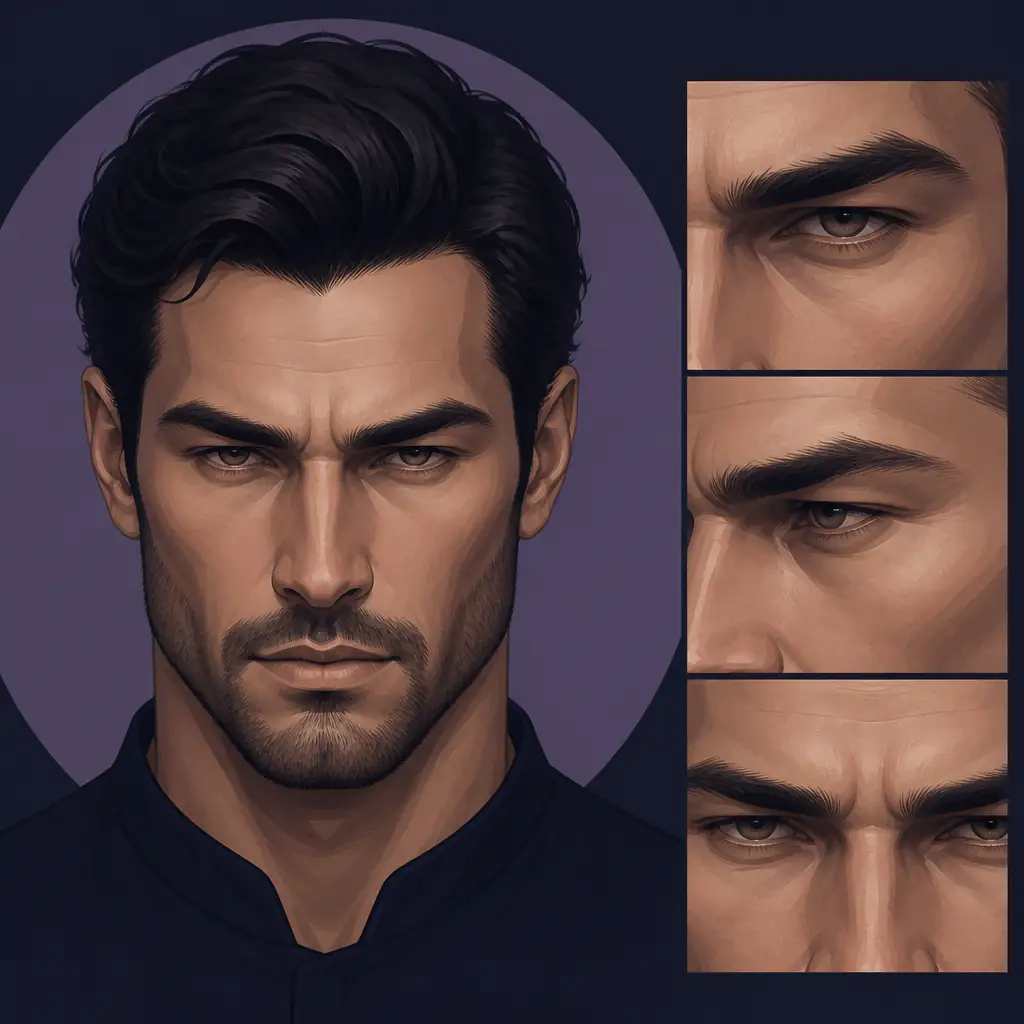
Small eyes get a bad reputation in online appearance discussions, but the reality is more nuanced than most people acknowledge. Several of the most recognized male faces in history had notably smaller, narrower eyes, and research on facial attractiveness consistently shows that eye shape and positioning matter far more than raw size. If you have small eyes as a man, you are not at a disadvantage by default. In many cases, the feature works in your favor.
This article breaks down the science and aesthetics behind small eyes in men, explains why the feature can be genuinely attractive, and gives you practical, honest guidance on maximizing what you have.
What Counts as “Small Eyes” in Men?
Before getting into attractiveness, it helps to define the term clearly. When people say a man has small eyes, they usually mean one or more of the following:
- Narrow vertical aperture: The eye opening has a short top-to-bottom distance.
- Almond or hooded shape: The upper eyelid partially or fully covers the iris (the colored part of the eye), reducing visible eye surface area.
- Deep-set placement: The eyes sit further back in the orbital socket, which creates shadowing and makes them appear smaller.
- Close-set or wide-set positioning: Either extreme can compress the perceived size of each eye.
None of these traits are inherently negative. In fact, several of them overlap directly with what the aesthetics community calls “hunter eyes,” a term for eyes with a slight downward or neutral canthal tilt and a low, flat brow that creates an intense, sharp expression.
The Hunter Eye Advantage
The concept of hunter eyes versus prey eyes comes from the observation that predatory animals tend to have forward-facing, narrow eyes, while prey animals have wide, rounder eyes positioned on the sides of the skull. Applied loosely to human faces, men with smaller, more hooded eyes are often perceived as more dominant, intense, and serious.
Why This Reads as Masculine
Wider, rounder eyes with a large visible sclera (the white of the eye) are statistically more common in children and are associated with youth, vulnerability, and approachability. Research in face perception suggests that neotenous (child-like) features are often read as more feminine. A narrower eye with less visible sclera tends to read as more mature, assertive, and masculine.
This is not about one look being superior. It is about understanding what signals different features send. For men specifically, the hunter eye configuration tends to align with cultural and evolutionary cues for dominance and competence.
The Role of the Brow Ridge and Orbital Bone
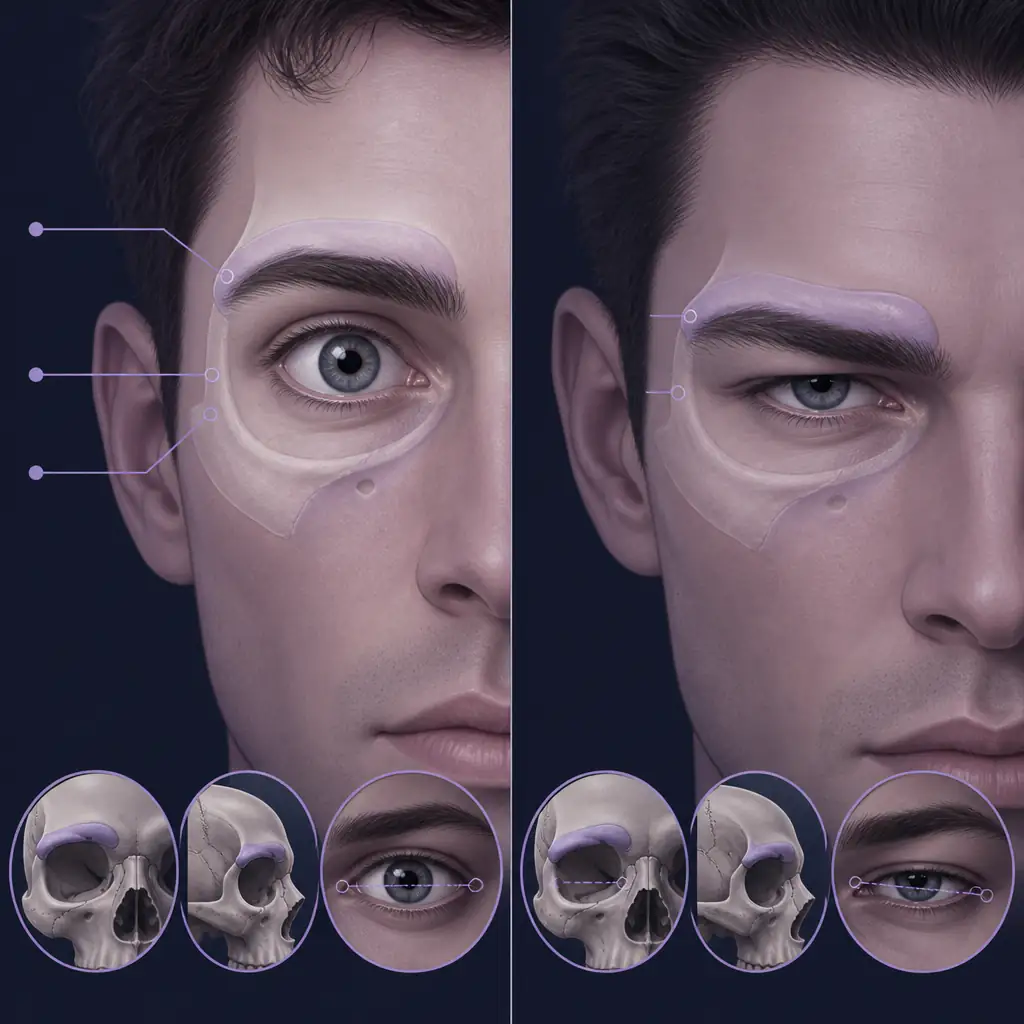
Small eyes in men are often paired with a pronounced brow ridge and strong orbital bones. These structural elements cast subtle shadows over the eyes, compressing their apparent size. The result is an intense, defined look that communicates strong bone structure, which is independently considered a marker of facial attractiveness in men across multiple cultures.
If your small eyes come with a heavy brow, a sharp orbital rim, or deep-set placement, those structural features are doing significant aesthetic work in your favor.
What Research Says About Eye Size and Attractiveness
Facial attractiveness research does not consistently penalize small eyes in men. A few key findings worth understanding:
- Studies on sexual dimorphism (the degree to which male and female faces differ) consistently find that more masculine-appearing male faces, which include features like heavier brows and smaller relative eye size, are rated as more physically dominant, even when preferences for those faces vary by context.
- Research published in peer-reviewed evolutionary psychology journals suggests that women in contexts where they prioritize physical protection or genetic quality often prefer more masculinized male faces, which tend to include narrower eyes.
- Eye expression and intensity have been shown to influence attractiveness ratings more than eye size alone. A small eye that appears focused and alert can outscore a large eye that appears flat or disengaged.
The takeaway is not that small eyes are always preferred. It is that size is not the determining variable. Proportion, structure, and expression carry more weight.
Famous Examples of Men with Small Eyes
Looking at well-known male faces is useful because it grounds the conversation in reality rather than abstraction. Many men widely considered attractive or striking have notably small or narrow eyes. The commonality among them is rarely the eyes in isolation. It is how the eyes interact with a strong jawline, prominent cheekbones, and a defined brow.
The pattern is consistent: small eyes embedded in a face with strong underlying bone structure tend to create a more memorable, intense look than large eyes sitting in an undefined face. Size becomes almost irrelevant when the surrounding structure is doing its job.
The Areas Where Small Eyes Can Be Challenging
Being honest matters here. Small eyes do come with some genuine aesthetic considerations:
- Tired or unexpressive appearance: If the eye aperture is very narrow and the canthal tilt is neutral or slightly downward, some people read the expression as flat or fatigued, even when the person is alert.
- Harder to read emotionally: Wider eyes signal emotion more visibly. Men with very small eyes sometimes come across as unreadable, which can read as cold in social contexts, even if that is not the intent.
- Grooming missteps amplify the issue: Thick, unkempt eyebrows sitting low over small eyes can make the face look heavy and tired rather than intense and sharp.
These are real considerations, but they are also largely manageable with the right grooming habits and lifestyle choices.
Practical Ways to Make Small Eyes Work for You
The goal here is not to make your eyes look bigger. That tends to backfire on men and often produces a less masculine result. The goal is to sharpen the features around your eyes so the overall impression is intentional and defined.
1. Groom Your Eyebrows Precisely
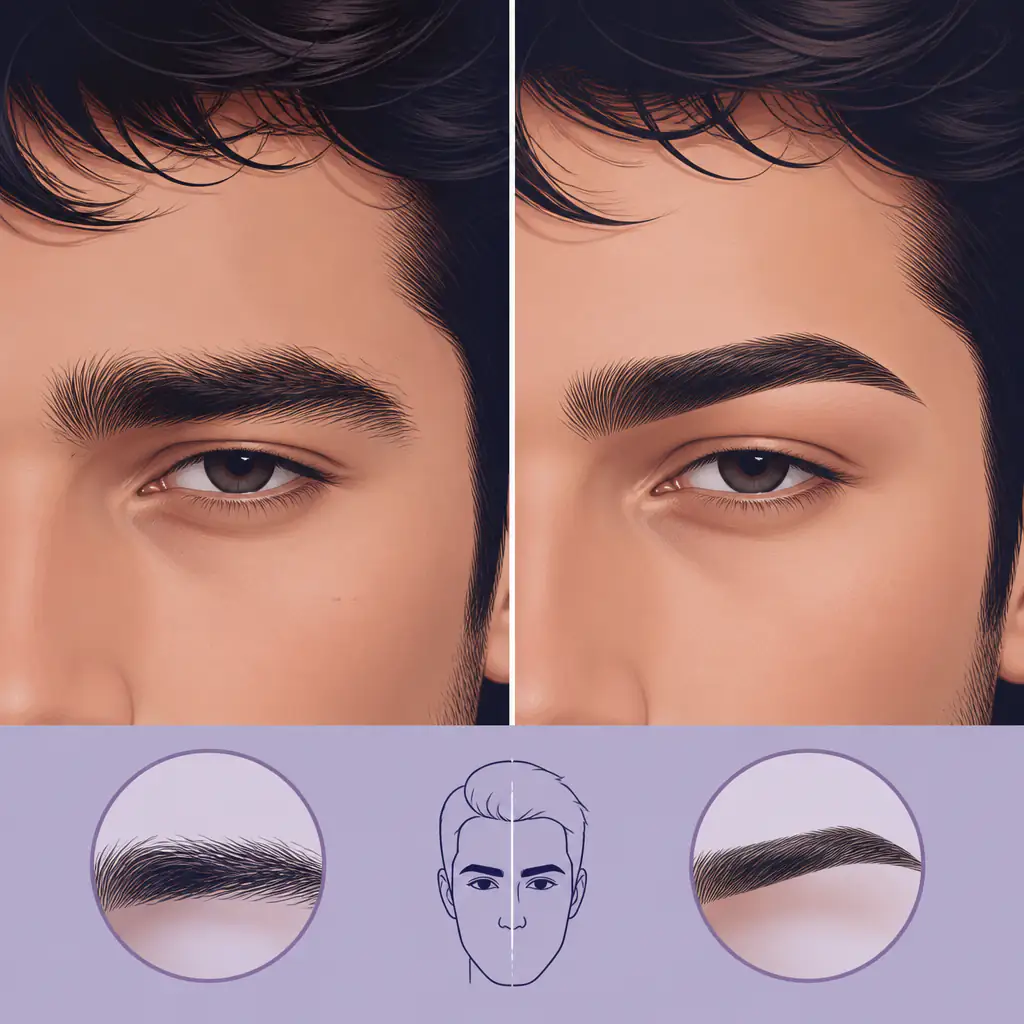
Your eyebrows frame your eyes more than any other feature. For men with small eyes, the priority is to lift and clean up the brow without thinning it dramatically. Specifically:
- Remove stray hairs below the brow tail to lift the outer corner slightly.
- Clean the unibrow area without creating an obviously shaped brow.
- Keep the arch subtle. A hard arch on a man looks unnatural. A clean, slightly lifted tail is enough.
2. Prioritize Sleep and Hydration
Small eyes already have a reduced margin for error when it comes to puffiness and dark circles. A single poor night of sleep can push a sharp, defined look into a tired, swollen one. Adequate sleep (most adults function best with seven to nine hours), consistent hydration, and low sodium intake may help keep the periorbital area (the skin around the eye) tight and defined.
3. Reduce Body Fat if Applicable
Fat deposits around the eyes and in the cheeks can compress and further reduce the apparent size of small eyes in a way that reads as unflattering rather than sharp. Leaning out, even modestly, tends to improve the definition of the orbital area and makes the bone structure around the eyes more visible. Research suggests that facial adiposity (fat levels) is one of the stronger visual cues humans use to assess health.
4. Train Your Resting Expression
This sounds unusual, but expression habits are real. Men with small eyes who default to a slightly squinted, focused resting expression often read as more intense and sharp rather than tired or flat. Consciously relaxing the brow and holding a neutral, slightly engaged expression, rather than a wide-eyed or slack-jawed default, tends to improve how small eyes land in person and in photos.
5. Use Lighting and Photography Angles Strategically
Small eyes photograph differently depending on lighting. Overhead or slightly elevated light sources cast a shadow downward from the brow ridge, which can actually deepen and intensify the look. Flat, front-on lighting tends to flatten any eye shape. If you are working on profile photos, experiment with slight overhead lighting and a slight downward chin tilt to see the difference.
If you want an objective read on how your eye shape, bone structure, and overall facial balance are actually landing, Aura provides AI-based analysis including hunter-eye detection and a breakdown of your orbital area relative to your other features. It gives you a starting point grounded in specific measurements rather than general impressions.
When to Consider Professional Options
Some men with very hooded eyes or significant ptosis (drooping of the upper eyelid caused by a weak levator muscle) find that the condition genuinely impairs their vision or creates a look they find distressing. In those cases, options exist.
- Blepharoplasty (eyelid surgery) can address excess upper eyelid skin.
- Canthoplasty or canthopexy procedures adjust the canthal tilt of the outer eye corner.
- Ptosis correction specifically addresses the levator muscle when the drooping has a functional cause.
These are surgical procedures with real recovery times and risks. Talk to a qualified, board-certified oculoplastic or plastic surgeon before considering any of them. The bar for pursuing surgery should be high, and a thorough consultation should precede any decision.
Putting It Together
Small eyes in men are not a flaw that needs correcting. They are a feature that interacts with the rest of your face, your grooming habits, your body composition, and your expression. When those surrounding variables are working well, small eyes frequently read as intense, masculine, and defined rather than as a deficiency.
The most useful frame is this: stop trying to make your eyes look larger, and start making sure everything around them is sharp, clean, and intentional. That approach produces a better result almost every time.
For a detailed, personalized breakdown of how your specific eye shape fits into your overall facial profile, Aura can provide an AI-generated assessment covering your orbital structure, PSL scoring, and targeted improvement suggestions based on your actual measurements.
Frequently asked questions
Are small eyes attractive on men? +
Yes, small eyes can be attractive on men, particularly when they are paired with a strong brow ridge, prominent cheekbones, and defined bone structure. Research on facial masculinity suggests that narrower eyes with less visible sclera often read as more dominant and mature, both of which are considered attractive traits in male faces.
What are hunter eyes and do small eyes qualify? +
Hunter eyes refer to a narrow, slightly hooded eye shape with a neutral or downward canthal tilt, giving an intense, focused expression. Many men with small eyes naturally have hunter-eye characteristics, especially when the eyes are deep-set or partially covered by the upper eyelid. This configuration is generally considered more masculine than wide, round eyes.
Can grooming actually improve how small eyes look? +
Yes, grooming makes a meaningful difference. Cleaning up the brow tail to slightly lift the outer corner, removing excess brow bulk without over-thinning, and managing puffiness through sleep and hydration can all sharpen the appearance of small eyes. The goal for men is definition and intensity, not making eyes look larger.
Do I need surgery to improve the appearance of small eyes? +
Most men with small eyes do not need surgery. Lifestyle factors like body composition, sleep quality, and grooming habits account for a large portion of the impression your eyes make. Surgery such as blepharoplasty or canthopexy is relevant mainly in cases of functional ptosis or significant structural concerns. Always talk to a qualified professional before considering any procedure.