 Aura: Looksmaxxing
 Softmaxxing vs Hardmaxxing: What's the Difference?
Softmaxxing vs hardmaxxing explained: learn what each approach involves, who each suits, and how to build a practical plan that fits your goals.
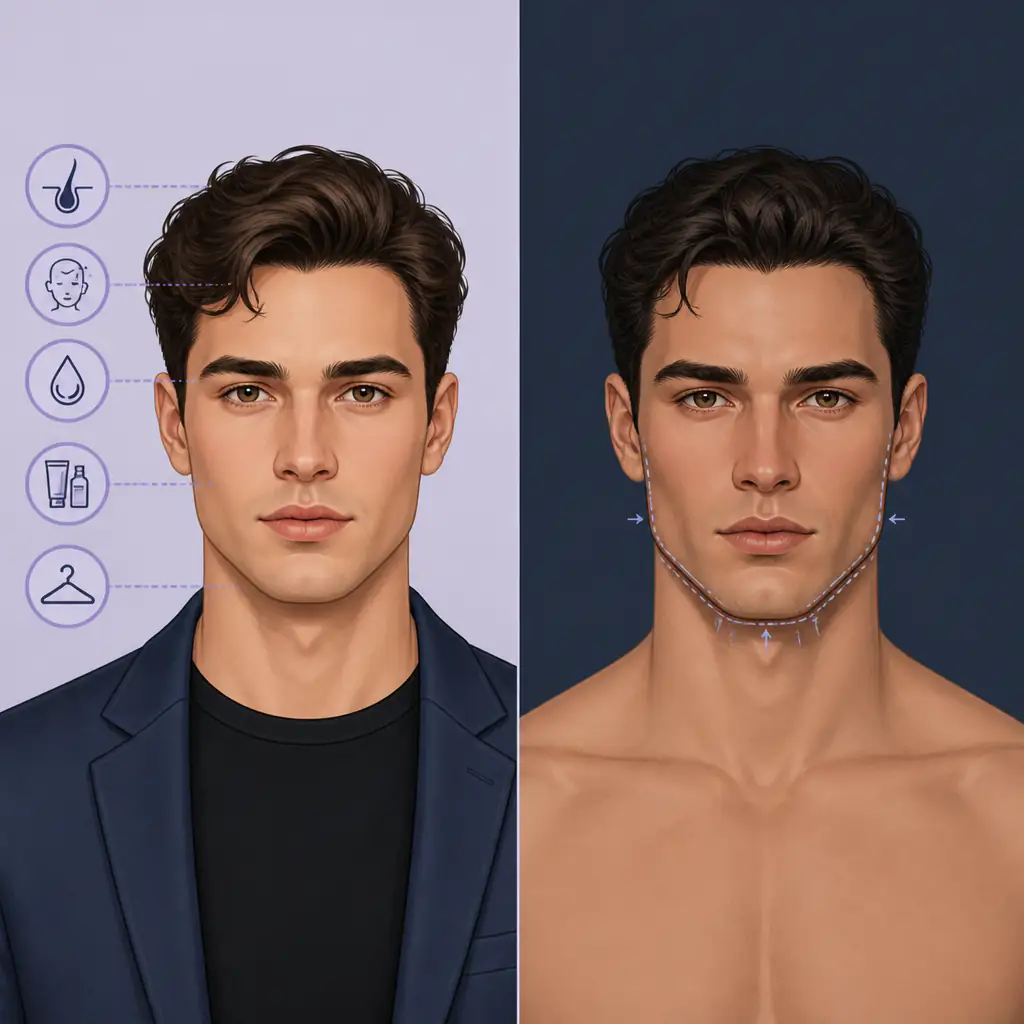
If you have spent any time in the looksmaxxing space, you have heard both terms. Softmaxxing and hardmaxxing sit at opposite ends of a spectrum, but most people are fuzzy on exactly where the line is, which one is right for them, and whether the two can coexist. This article breaks both concepts down clearly, compares them side by side, and gives you a practical framework for deciding where to start.
What Is Softmaxxing?
Softmaxxing refers to appearance improvements that do not involve surgery, prescription treatments, or any intervention that permanently alters bone or tissue structure. The changes are reversible, low-risk, and largely within anyone’s reach regardless of budget.
Common softmaxxing strategies include:
- Skincare: Building a routine around cleansing, moisturizing, sun protection (SPF), and targeted treatments like retinoids or niacinamide.
- Haircut and styling: Choosing a cut that complements your face shape, maintaining density and cleanliness, and styling in a way that frames your features.
- Body composition: Reducing body fat to sharpen facial structure (the jaw, cheekbones, and orbital area become more visible at lower body fat percentages) and building muscle for overall frame.
- Grooming: Eyebrow shaping, beard management, dental hygiene and whitening, and nail care.
- Fashion and fit: Wearing clothes that fit your actual body, not a generic size, and selecting styles that suit your coloring and proportions.
- Posture and facial posture: Correcting forward head posture and practicing proper tongue posture (mewing) to support jaw alignment over time.
- Sleep and hydration: Both directly affect skin quality, periorbital (under-eye) darkness, and facial puffiness.
Softmaxxing is not about dramatic transformation. It is about removing noise, the distractions that prevent your actual features from being perceived at their best.
What Is Hardmaxxing?
Hardmaxxing involves interventions that change the underlying physical structure of the face or body, or that produce results no lifestyle adjustment can replicate. These are typically permanent or semi-permanent, and they carry real costs and real risks.
Common hardmaxxing strategies include:
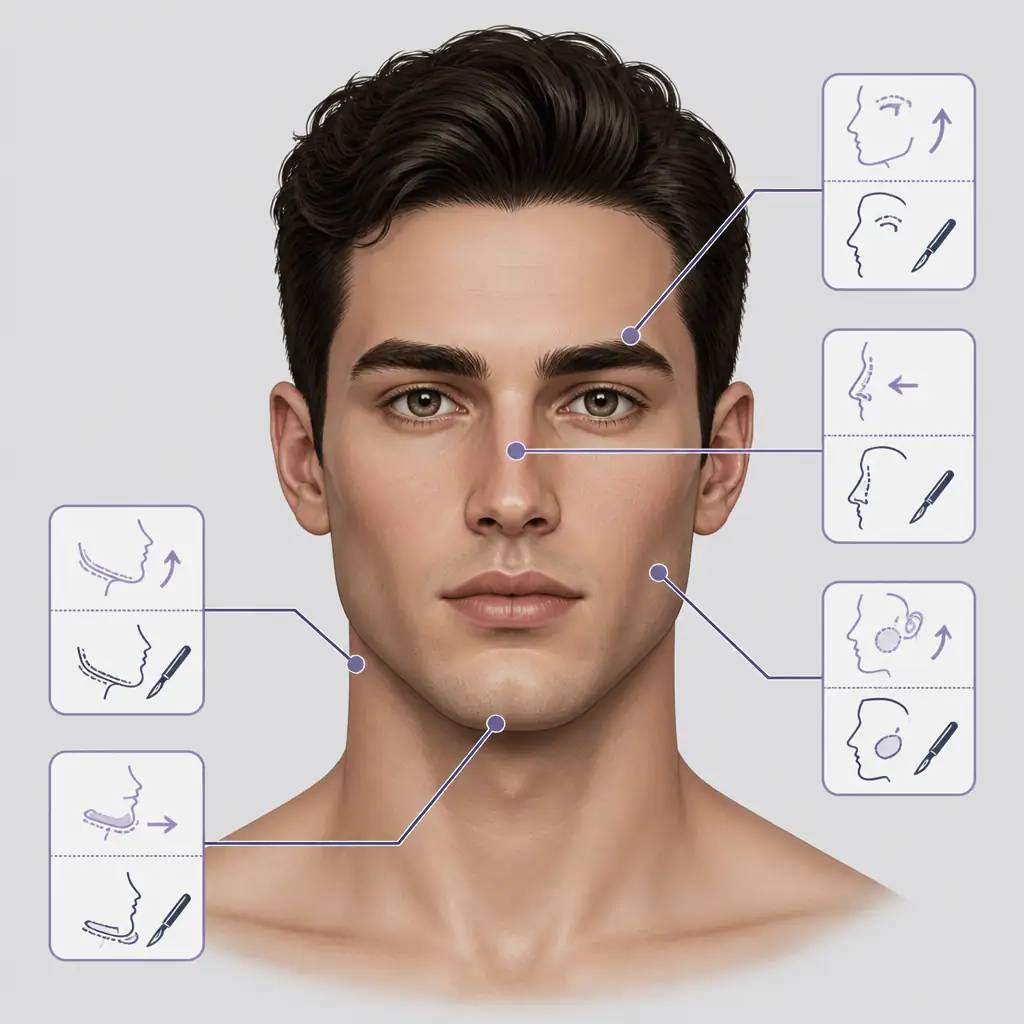
- Orthognathic surgery: Jaw repositioning procedures that affect bite alignment and facial projection.
- Rhinoplasty: Surgical reshaping of the nose to improve facial harmony.
- Genioplasty or chin implants: Procedures that alter chin projection and lower-face balance.
- Brow bone or orbital rim procedures: Surgeries that affect the supraorbital ridge (the bony shelf above the eye socket), which influences how deep-set and hunter-like the eyes appear.
- Dermal fillers and neuromodulators (e.g., Botox): Semi-permanent injectables that add volume or reduce dynamic wrinkles. These sit on the softer end of hardmaxxing since effects fade over months.
- Hair transplantation: Surgical redistribution of hair follicles to address hairline recession or thinning.
- Lefort osteotomies and BIMAX procedures: More complex maxillofacial surgeries that reposition the entire upper or lower jaw, affecting midface projection and airway structure.
Important disclaimer: Any surgical or medical procedure carries significant risks including infection, nerve damage, asymmetry, and outcomes that may differ from expectations. Talk to a qualified, board-certified surgeon and, where relevant, a maxillofacial specialist or orthodontist before considering any of these interventions. This article is informational only.
The Core Differences at a Glance
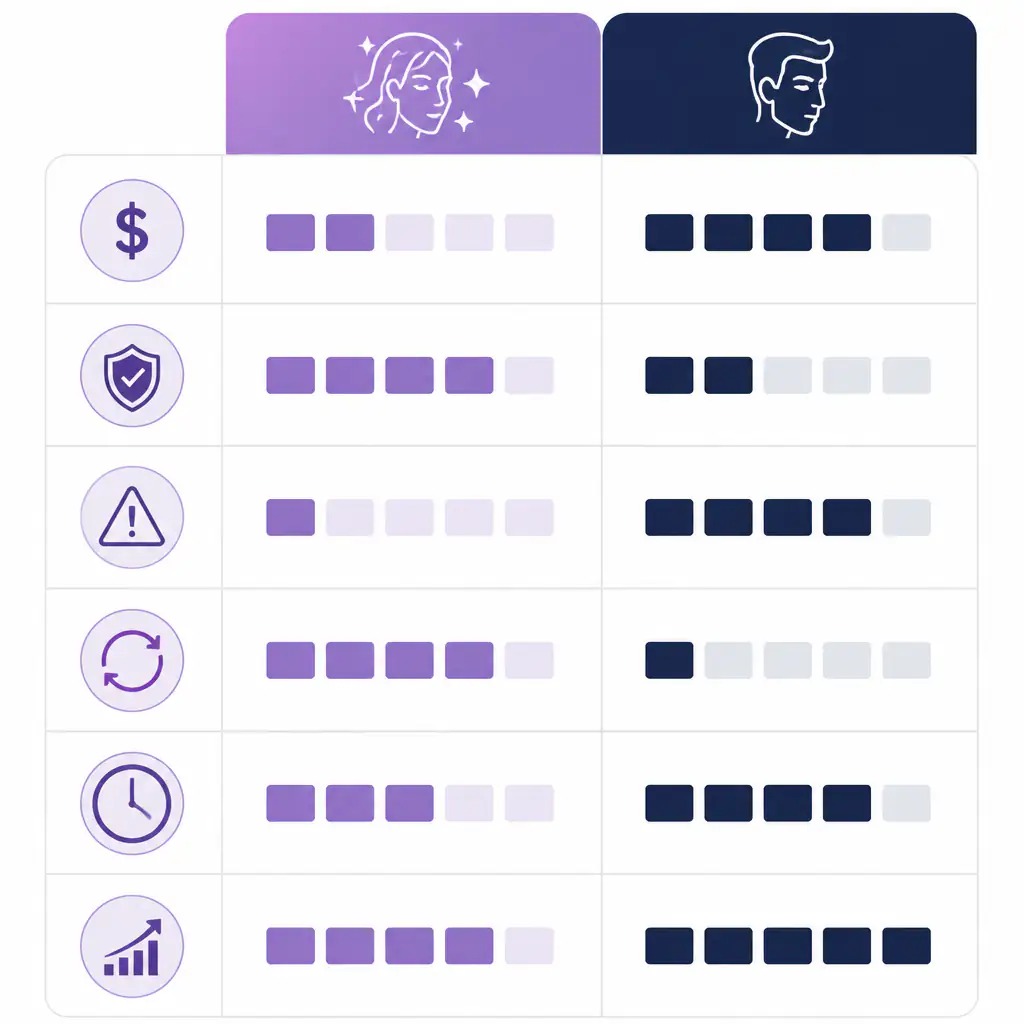
Here is a direct comparison across the dimensions that matter most:
| Factor | Softmaxxing | Hardmaxxing |
|---|---|---|
| Reversibility | Fully reversible | Permanent or semi-permanent |
| Cost | Low to moderate | Moderate to very high |
| Risk | Minimal | Real medical risk |
| Ceiling | Limited by genetics and bone structure | Can exceed genetic baseline |
| Time to results | Weeks to months | Immediate post-recovery or months |
| Accessibility | Available to almost everyone | Requires medical access and budget |
| Commitment | Ongoing habits | Single interventions (mostly) |
Neither approach is objectively superior. They serve different purposes and suit different people at different stages.
Who Should Start With Softmaxxing?
The honest answer is: almost everyone. Even people who eventually pursue surgical options tend to get better outcomes when they show up to those procedures in good baseline health, with optimized skin, at a reasonable body fat percentage.
Softmaxxing makes sense as a first step if:
- You are under 25 and still developing facially (bone structure continues maturing into the mid-twenties).
- You have not yet optimized lifestyle fundamentals like sleep, diet, training, and skincare.
- You want to assess your genuine baseline before making any permanent decisions.
- Budget or access to qualified surgeons is limited right now.
- You are uncertain whether your concerns are structural or presentation-based.
A useful exercise before committing to any strategy is getting an objective read on your current facial structure. Tools like Aura can provide AI-based analysis of features like jaw definition, eye area, facial symmetry, and overall harmony, which can help you distinguish between what soft changes might fix and what is genuinely structural.
Who Might Consider Hardmaxxing?
Hardmaxxing is appropriate for people who have genuinely maxed out what lifestyle and grooming changes can accomplish and who have a specific, documented structural concern they want to address. It is not a shortcut past the fundamentals.
Valid reasons someone might explore hardmaxxing:
- Functional and aesthetic overlap: A recessed jaw (retrognathia) affects both breathing (and sometimes sleep quality) and facial appearance. Corrective surgery addresses both.
- Post-softmax plateau: Someone who has dieted down, optimized grooming, trained for years, and still has a specific feature they find significantly limiting.
- Documented asymmetry: Significant facial asymmetry that goes beyond normal variation.
- Hairline recession that does not respond to medication: Hair transplantation may be appropriate once medical options (like finasteride or minoxidil) have been assessed with a dermatologist.
The motivations matter here. Pursuing hardmaxxing from a place of general dissatisfaction rather than a specific, realistic goal tends to produce worse psychological outcomes regardless of how the procedure goes technically.
How Softmaxxing and Hardmaxxing Work Together
These two approaches are not mutually exclusive. In practice, the most effective looksmaxxing trajectories tend to follow a sequence:
- Establish baselines. Understand what you are working with using honest self-assessment or an objective tool.
- Implement soft changes first. Get body composition, skincare, grooming, and sleep dialed in. This takes months, not weeks, if done properly.
- Reassess. After 6 to 12 months of consistent softmaxxing, you will have a clearer picture of what remains genuinely structural versus what was presentation-based noise.
- Research hard interventions selectively. If there are still specific concerns, research procedures carefully, consult multiple qualified professionals, and think in terms of long-term outcomes rather than immediate changes.
- Maintain soft habits regardless. Surgical results deteriorate faster in people who neglect skin, diet, and sleep. Soft habits are the foundation that preserves hard results.
Practical Tips for Building Your Plan
Starting Your Softmaxx Routine
If you are new to this, prioritize in this order:
- Body fat: Get to a body fat percentage where your facial bone structure is visible. For most men this is somewhere in the 10 to 15 percent range; for women the equivalent visibility tends to occur around 18 to 22 percent. The jawline, cheekbones, and orbital area all become more defined as subcutaneous facial fat decreases.
- Skincare basics: SPF every morning (this is consistently one of the highest-return skin interventions), a gentle cleanser, and a moisturizer. Add a retinoid (start low: 0.025 to 0.05 percent tretinoin or an over-the-counter retinol) once your skin has adjusted.
- Hair: See a barber who will be honest about what suits your face shape. Clean, well-maintained hair at any length almost always reads better than neglected hair.
- Grooming specifics: Eyebrow shaping (particularly cleaning up the unibrow area and arch), teeth (whitening strips or professional cleaning if needed), and beard maintenance if applicable.
Approaching Hardmaxxing Responsibly
- Research the specific procedure, not just the category. Rhinoplasty has dozens of variants; chin implants versus sliding genioplasty produce different results and carry different risks.
- Consult at least two board-certified surgeons who specialize in the area you are considering. Compare their assessments.
- Look at before/after portfolios for patients with similar baseline features, not the best-case examples.
- Understand recovery timelines. Swelling after jaw surgery, for example, can take 12 to 18 months to fully resolve. Final results are not visible immediately.
- Be specific about your goal. “I want to look better” is not a useful surgical goal. “I want to increase chin projection by approximately 5mm to improve lower-face balance” is.
How to Assess Where You Currently Stand
Before spending money or time on either approach, knowing your starting point matters. An objective assessment helps you prioritize, which is easy to get wrong when you are judging your own face.
Aura provides AI-driven analysis covering features like jawline definition, hunter-eye scoring (the degree to which the orbital rim shadows and frames the eye), facial symmetry, and a PSL score with a personalized improvement plan. It is a practical starting point for identifying whether your highest-leverage changes are likely to come from soft or hard interventions.
The goal of any assessment is not to generate anxiety. It is to focus your effort where it will actually matter.
Common Mistakes in Both Camps
Softmaxxing mistakes:
- Jumping between products and routines before giving anything time to work (most skincare changes take 8 to 12 weeks to show measurable effects).
- Ignoring body composition while optimizing everything else.
- Over-focusing on grooming while neglecting sleep and stress, which affect skin and facial puffiness significantly.
Hardmaxxing mistakes:
- Pursuing surgery before exhausting soft options.
- Choosing a surgeon based on price rather than specialization and track record.
- Expecting surgery to resolve psychological dissatisfaction that is not actually rooted in the feature being changed.
- Not understanding that fillers in the wrong hands can reduce facial harmony rather than improve it.
The Bottom Line
Softmaxxing and hardmaxxing are not competing philosophies. They are tools with different risk profiles, cost structures, and appropriate use cases. Most people will get the most value from committing seriously to softmaxxing first, treating it as a complete discipline rather than a quick pre-surgery checklist, and only considering hard interventions if there are specific, realistic goals that soft changes genuinely cannot address.
Start with what you can control, assess honestly, and make decisions from a place of clarity rather than urgency.
Frequently asked questions
Can softmaxxing actually make a significant difference, or is it just surface-level? +
Softmaxxing can produce more visible change than most people expect, particularly body composition shifts, which affect how the jaw, cheekbones, and eye area read at different body fat levels. Grooming and skincare improvements are less dramatic structurally but significantly affect perceived attractiveness and grooming perception. The ceiling is real, but most people have not come close to hitting it before considering hard options.
Is hardmaxxing dangerous? +
All surgical procedures carry risk, including infection, asymmetry, nerve damage, scarring, and outcomes that differ from what was expected. The level of risk varies considerably by procedure type, the surgeon's experience, and individual health factors. Consulting with a qualified, board-certified specialist is essential before considering any surgical intervention.
At what age is it appropriate to consider hardmaxxing? +
Most surgeons prefer that the facial skeleton has finished developing before performing structural procedures. For most people this is around age 18 to 21, though some maxillofacial specialists recommend waiting until the mid-twenties for complex jaw procedures. Age alone is not the deciding factor; having exhausted soft options and having a specific, realistic goal matters more than hitting a particular number.
How do I know if my concerns are softmaxxable or require a hard intervention? +
A useful starting point is to get an objective assessment of your facial structure to separate presentation issues from structural ones. If a concern is still present at low body fat, with optimized grooming and skin, and it relates to bone projection or proportional balance rather than surface texture or hair, it may be structural. Consulting a maxillofacial surgeon or plastic surgeon for an opinion (without committing to anything) is a reasonable next step.