 Aura: Looksmaxxing
 How to Fix Asymmetrical Eyebrows: A Practical Guide
Learn how to fix asymmetrical eyebrows with shaping, filling, and grooming techniques that create a balanced, natural look without surgery.
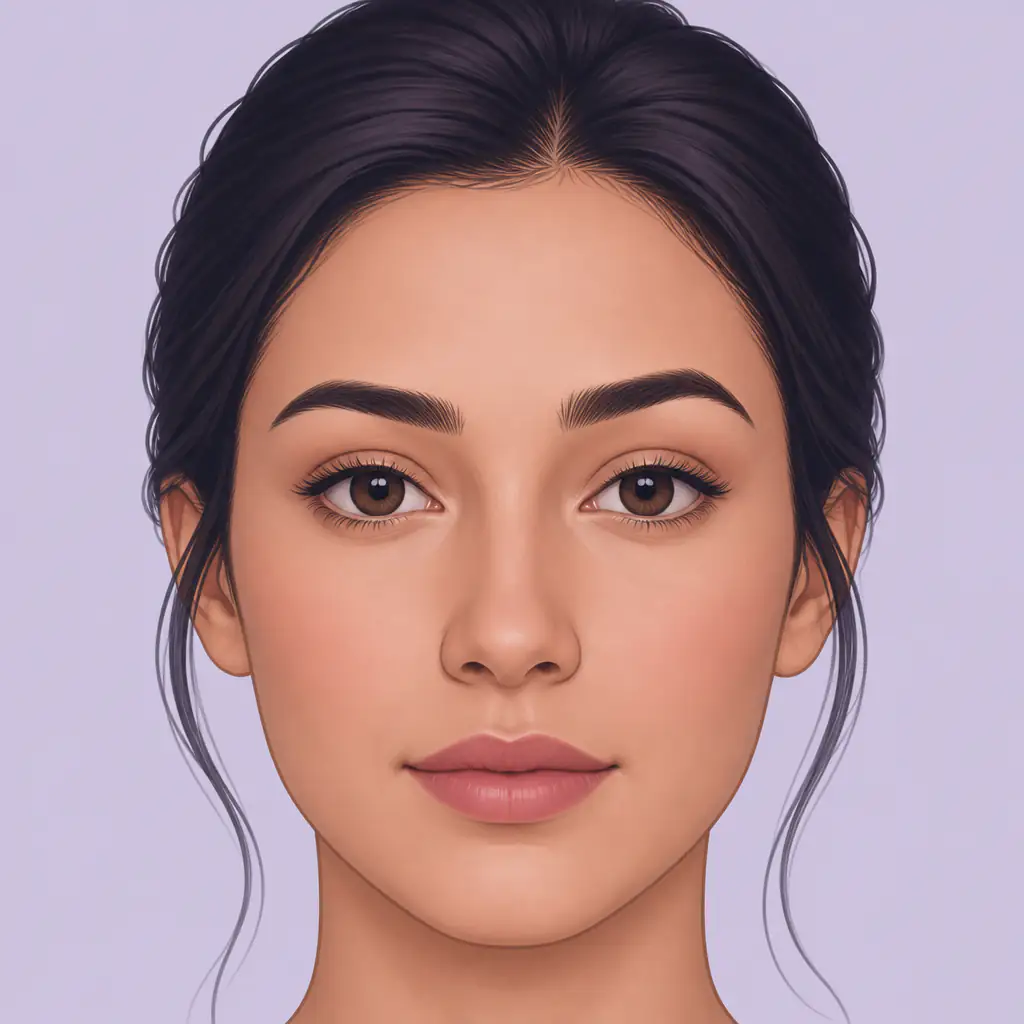
Almost no one has perfectly symmetrical eyebrows. Your face is not a mirror image of itself, and your brows sit over muscles, bones, and soft tissue that differ slightly from side to side. That said, there is a meaningful difference between natural variation and asymmetry that genuinely throws off your facial balance. If you have noticed one brow sitting higher, one tail drooping, or one arch being fuller than the other, this guide will walk you through exactly how to fix asymmetrical eyebrows using practical, low-risk techniques.
Why Eyebrow Asymmetry Happens
Before trying to correct something, it helps to understand what is causing it. Eyebrow asymmetry typically falls into a few categories:
- Bone structure differences. The underlying orbital bones (the bony rims around your eye sockets) are rarely identical. One side may sit slightly higher or protrude more, which lifts or depresses the brow above it.
- Muscle dominance. The frontalis muscle (the broad muscle across your forehead) often contracts more strongly on one side. If you tend to raise one eyebrow when you talk or react, that side may creep higher over time.
- Previous waxing or threading. Over-removal on one side, even years ago, can leave one brow thinner or with a different shape that has not yet grown back symmetrically.
- Facial fat distribution. Subtle differences in how soft tissue sits under the skin can affect how a brow appears at rest.
- Habits and sleep position. Consistently sleeping on one side, or resting your face on your hand, may contribute to asymmetry over time, though research on this is limited.
Knowing the cause matters because it determines which fixes are realistic. Bone structure asymmetry is not something grooming alone will fully correct. Muscle-driven asymmetry can sometimes be reduced with conscious habit changes. Most waxing and threading damage, fortunately, can be addressed cosmetically.
Start with an Honest Assessment
The most common mistake people make when trying to fix their brows is working by feel rather than by measurement. You need an objective view before picking up a pencil or tweezers.
Step 1: Photograph Your Face Head-On
Stand in front of a well-lit mirror or take a straight-on photo with your phone at eye level. Do not tilt your chin up or down. Natural, diffused lighting works best because harsh side lighting casts shadows that exaggerate asymmetry.
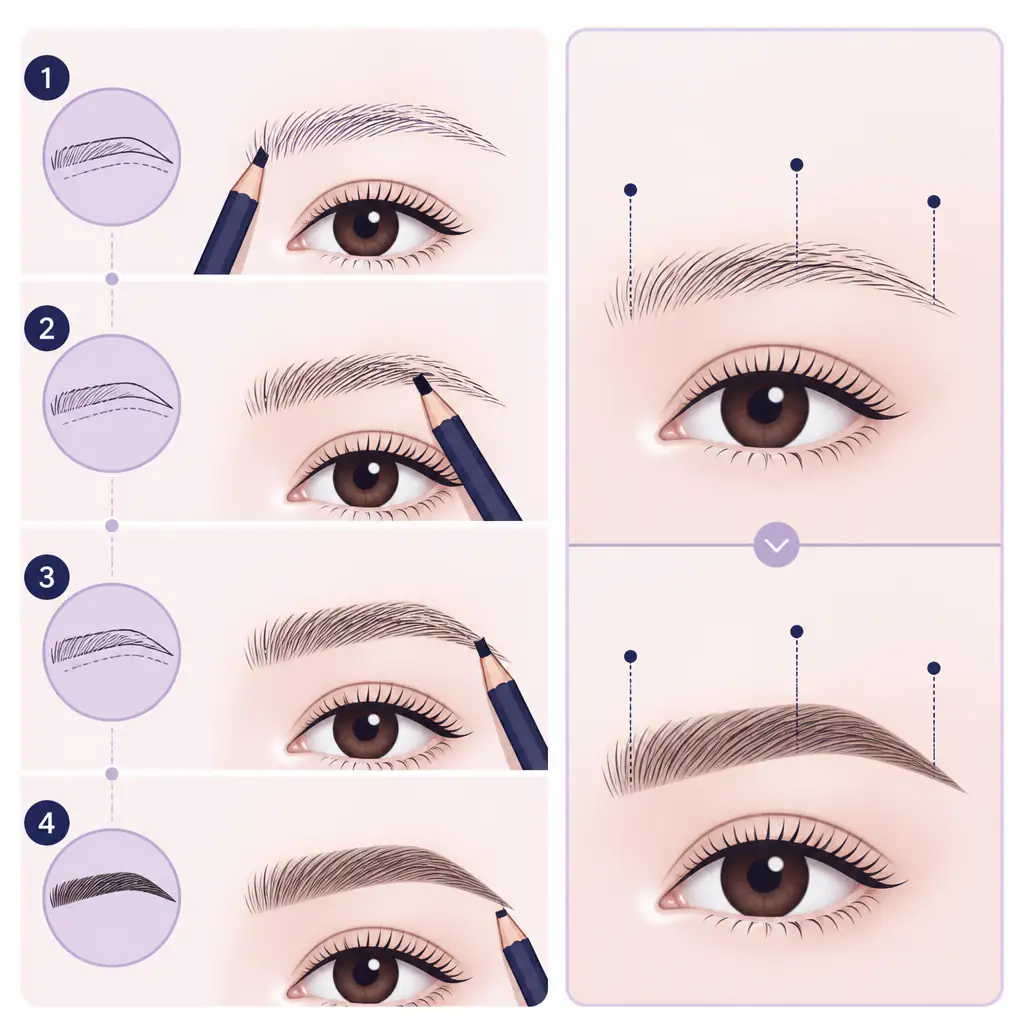
Step 2: Map Three Reference Points Per Brow
For each eyebrow, identify:
- The head (inner start of the brow, above the inner corner of the eye)
- The arch (the highest point of the brow curve, roughly above the outer edge of the iris)
- The tail (where the brow ends, roughly in line with the outer corner of the eye and the outer edge of the nostril)
Using a thin makeup brush or a pencil held vertically and horizontally, compare these three points on both sides. Note which is higher, which is lower, and by how much. Even 2 to 3 millimeters can look significant at close range.
Step 3: Determine Which Brow Is the Reference
Rather than trying to fix both brows simultaneously, pick the brow that looks better shaped as your target, and work the other toward it. Do not try to split the difference.
If you want a more data-driven baseline, Aura can analyze your facial symmetry from a photo and flag specific asymmetries, including brow positioning, as part of its overall face assessment. It is a useful starting point before committing to any grooming changes.
Fixing Asymmetry with Grooming Alone
For most people, smart grooming can close a significant portion of visible asymmetry. This approach carries no risk and is fully reversible.
Tweezing and Trimming
- Remove from the lower edge of the fuller or higher brow. Plucking a few hairs from underneath the dominant brow can bring it closer to the level of the weaker one. Work in small increments, one or two hairs at a time, stepping back to check after each removal.
- Never over-pluck the top edge. The top edge of the brow defines its position. Removing from the top raises the apparent brow position; removing from the bottom lowers it.
- Trim long hairs on the fuller side. Overly long brow hairs add visual bulk. Combing hairs upward and trimming to a uniform length on the denser side can reduce its dominance without removing follicles.
- Do not try to pluck the lower brow into symmetry with the higher one. You will usually just end up with two thin, mismatched brows. Work toward the stronger shape.
Filling and Shaping with Makeup or Tinted Products
Filling is often more effective than removal for fixing asymmetry because it is additive and reversible.
Tools that work well:
- A brow pencil with a fine tip for hair-like strokes
- A tinted brow gel for adding density to sparse areas
- A flat angled brow brush with a powder that matches your hair color
Technique:
- Use a brow pencil to sketch the desired shape on your weaker or lower brow first. Draw the arch slightly higher if that side sits lower.
- On the same side, fill sparse sections with light, feathered strokes following the direction of hair growth.
- Compare both sides. Use a clear or tinted setting gel to brush the fuller brow’s hairs upward, which can give more height and open the arch visually.
- If one brow’s tail droops, extend it very slightly upward and outward with a pencil. Even a millimeter of extension changes the apparent angle.
- Use a small amount of concealer just below the arch of the lower brow to create a crisper edge, which optically lifts it.
Using Eyebrow Grooming Styles to Mask Asymmetry
Your overall brow style choice affects how noticeable the asymmetry is.
- Bolder, fuller brows (brushed-up, soap brows) tend to hide asymmetry better than thin, drawn-on brows because the texture breaks up the clean lines that make differences obvious.
- Strong arches on both sides can actually highlight height differences. A softer arch with a more gradual curve may be more forgiving.
- Avoiding very precise, tattooed-looking brows is wise if your asymmetry is significant. Highly defined edges on both sides make any height mismatch immediately visible.
When to Consider Semi-Permanent or Professional Options
If grooming and filling get you 80 percent of the way there but you still feel the asymmetry is significant, some semi-permanent and professional options are worth considering. These carry more commitment and some risk, so approach them carefully.
Microblading and Powder Brows
Microblading uses a fine blade to deposit pigment in hair-like strokes under the skin, creating the illusion of fuller, shaped brows that last roughly one to two years before fading. A skilled technician can deliberately design one brow’s arch higher or its head slightly more inward to correct visible differences.
The key word is skilled. An inexperienced technician can make asymmetry worse. Look for a portfolio that specifically shows before-and-after correction work, not just shape additions.
Brow Lamination
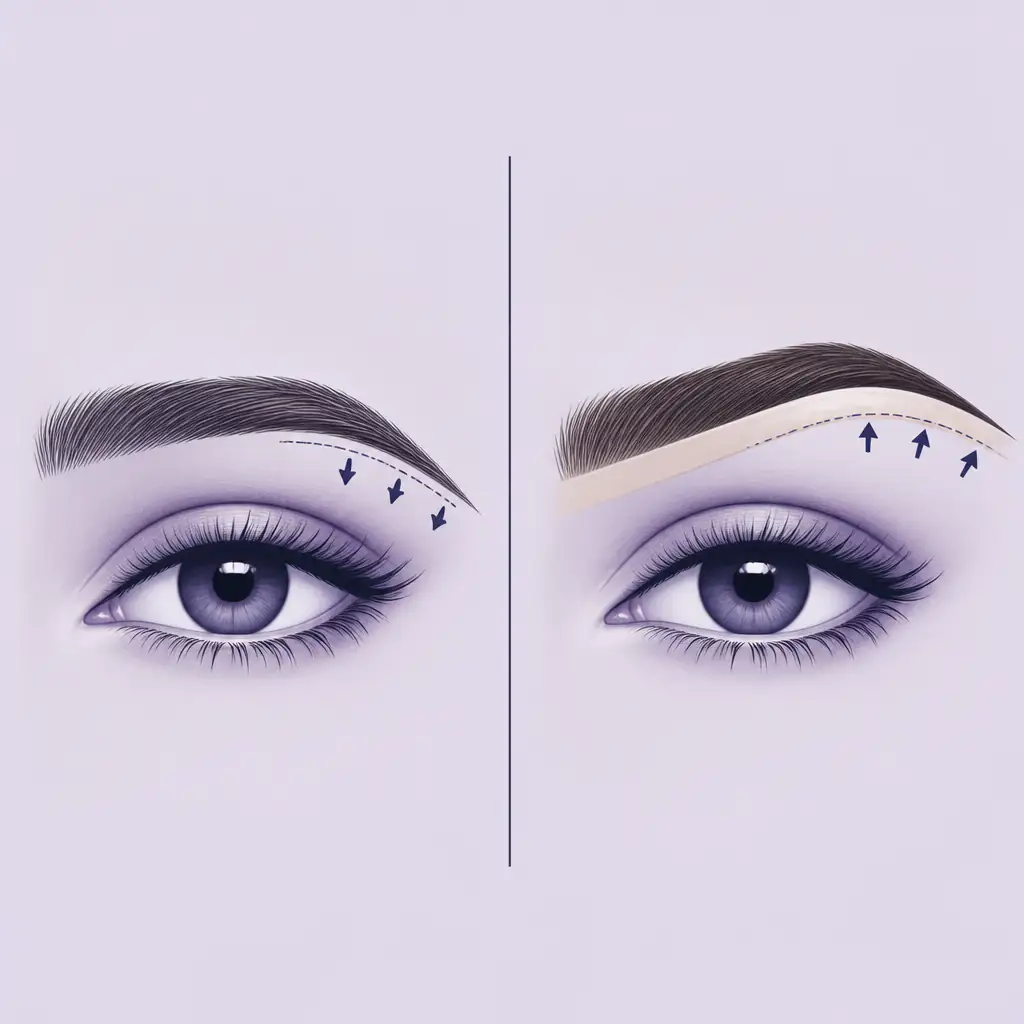
Brow lamination is a chemical process that restructures brow hairs to lie in a uniform direction, typically brushed upward. It can make flat, downward-growing hairs on one side appear fuller and more arched without removing or adding anything. Results last roughly six to eight weeks.
Botox for Brow Position
If your asymmetry is driven by muscle imbalance rather than shape, a small amount of botulinum toxin injected into the frontalis or procerus muscle on the dominant side can relax that side’s lift, bringing the higher brow down. Conversely, injecting the depressor supercilii on the lower side may allow that brow to sit higher.
This requires a qualified medical professional, ideally a dermatologist or plastic surgeon with facial anatomy expertise. Results last three to four months. Talk to a qualified professional before considering any injectable treatment. Results vary, and injecting the wrong area can temporarily affect eyelid position.
Daily Habits That Support Long-Term Improvement
Beyond direct correction, some habits may help prevent asymmetry from worsening over time.
- Be aware of facial expressions. If you habitually raise one brow, consciously practice keeping both brows level. This is more useful for people whose asymmetry is clearly muscle-driven.
- Sleep on your back when possible. Pressing one side of your face into a pillow for hours each night may gradually affect soft tissue distribution, though the evidence here is anecdotal.
- Avoid over-grooming. Many cases of stubborn asymmetry come from years of uneven plucking. Letting your brows fully grow in for several weeks and starting fresh often reveals a more even baseline than expected.
- Use a brow serum consistently on the sparser side. Products containing peptides or biotin may support hair density over time, though individual results vary.
If you want to track your progress with an objective metric rather than relying on bathroom mirror checks, running a fresh photo through Aura periodically can help you see how changes in brow shaping affect your overall facial balance score.
What Results Are Realistic
Honesty matters here. Grooming and filling can correct perceived asymmetry for most people with mild to moderate differences, meaning differences of two to four millimeters in arch height or tail position. If your asymmetry is driven by a notable bone structure difference, cosmetic grooming will reduce how visible it is but will not eliminate it entirely.
The goal is not a mathematically perfect face. It is a face that reads as balanced and intentional at normal conversational distance, which is an achievable target for the vast majority of people using the techniques above.
FAQ
Q: Can asymmetrical eyebrows be fixed permanently without surgery? A: Semi-permanent options like microblading can last one to two years and create a more symmetrical appearance, but they are not truly permanent. They fade and need to be maintained. For a lasting structural correction, surgical options exist but are rarely necessary for brow-level asymmetry.
Q: Is it possible to fix eyebrow asymmetry by filling only one brow? A: Yes, and this is often the most effective approach. Identify the better-shaped brow, then use a pencil or powder to bring the weaker brow’s arch height, head position, and tail length closer to it. You do not need to alter the stronger brow at all.
Q: How long does it take for over-plucked brows to grow back and even out? A: Most brow hairs grow in full cycles of roughly four to six months. Growing out an over-plucked brow to its full density typically takes three to six months, though this varies significantly by individual. Brow serums with peptide ingredients may support the process.
Q: Can Botox really fix uneven eyebrow height? A: In the right hands, yes. A small amount of botulinum toxin can relax the muscle pulling one brow upward or allow a depressed brow to lift slightly. The effect is temporary, lasting about three to four months, and must be performed by a qualified medical professional. Talk to a qualified professional before considering this option to understand whether it suits your specific anatomy.
Frequently asked questions
Can asymmetrical eyebrows be fixed permanently without surgery? +
Semi-permanent options like microblading can last one to two years and create a more symmetrical appearance, but they are not truly permanent. They fade and need to be maintained. For a lasting structural correction, surgical options exist but are rarely necessary for brow-level asymmetry alone.
Is it possible to fix eyebrow asymmetry by filling only one brow? +
Yes, and this is often the most effective approach. Identify the better-shaped brow, then use a pencil or powder to bring the weaker brow's arch height, head position, and tail length closer to it. You do not need to alter the stronger brow at all.
How long does it take for over-plucked brows to grow back and even out? +
Most brow hairs complete a full growth cycle in roughly four to six months. Growing out an over-plucked brow to its full natural density typically takes three to six months, though this varies by individual. Brow serums with peptide ingredients may support the process for some people.
Can Botox really fix uneven eyebrow height? +
In the right hands, yes. A small amount of botulinum toxin can relax the muscle pulling one brow upward or allow a depressed brow to sit slightly higher. The effect is temporary, lasting about three to four months, and must be performed by a qualified medical professional. Talk to a qualified professional before considering this option to understand whether it suits your specific anatomy.