 Aura: Looksmaxxing
 How to Thicken Eyebrows for Men: A Complete Guide
Learn how to thicken eyebrows men's style with proven methods, from grooming habits to serums and microblading. Practical, honest advice.

Thick, well-defined eyebrows frame the face in a way that subtly shifts how people read your features. They give the brow ridge more visual weight, make the eyes appear more defined, and add a sense of structure to the upper third of the face. If yours are sparse, patchy, or over-trimmed from years of barbershop work, you are not stuck with them.
This guide covers the full spectrum of options, from the basics you can start tonight to longer-term approaches that require more commitment. No filler, no overselling. Just what actually works.
Why Men Lose Eyebrow Density
Before fixing the problem, it helps to understand it. Eyebrow thinning in men comes from a few common sources:
- Over-grooming over time. Years of tweezing, waxing, or shaving too close to the brow body can gradually reduce follicle activity. The hair follicles do not necessarily die, but repeated trauma may slow their growth cycles.
- Age-related changes. Testosterone levels shift as men get older, and androgenic changes can thin body and facial hair in some areas while increasing it in others. Eyebrow thinning often starts subtly in a man’s thirties and accelerates later.
- Nutritional deficiencies. Low levels of biotin, iron, zinc, or protein may contribute to slower, thinner hair growth across the body, including the brows.
- Skin conditions. Conditions like alopecia areata (an autoimmune condition that targets hair follicles), eczema around the brow area, or hypothyroidism (low thyroid function) are all known to reduce eyebrow density. If your thinning is sudden or patchy in unusual ways, see a dermatologist before trying cosmetic fixes.
- Genetics. Sometimes sparse brows are simply the hand you were dealt. That does not mean they cannot be improved.
Step 1: Stop Making Them Thinner
This sounds obvious, but it is the most overlooked step. Before adding anything to your routine, audit what you are currently doing.
Grooming Habits to Audit
- If you tweeze stray hairs, pull only from well below the main brow body. Avoid removing hairs from the top arch or the tail without a clear plan.
- If a barber trims your brows regularly, ask them to go conservative. A common mistake is thinning the brow body with scissors when only length needs addressing.
- Give your brows a full growing period of at least eight to twelve weeks before making any shaping decisions. What looks patchy at week two often fills in by week ten.
Step 2: Optimize Your Nutrition
Hair growth, including brow hair, is downstream of what you eat. This does not mean popping a biotin gummy and expecting miracles, but foundational nutrition matters.
Key nutrients to prioritize:
- Protein: Hair is made of keratin, a structural protein. Men eating low-protein diets often see diffuse thinning across all body hair. Aim for adequate daily protein from whole food sources.
- Biotin (Vitamin B7): Research on biotin supplementation is mixed for people who are not deficient, but deficiency is clearly linked to hair loss. If your diet is varied, you are likely getting enough. If not, a standard B-complex supplement may help.
- Iron and zinc: Both are critical cofactors in the hair growth cycle. Low ferritin (stored iron) in particular is associated with diffuse hair thinning.
- Omega-3 fatty acids: Found in fatty fish, walnuts, and flaxseed, these may support scalp and follicle health.
If you suspect a deficiency is driving your thinning, a basic blood panel from your doctor will confirm it. Targeted correction of a real deficiency tends to produce more noticeable results than supplementing nutrients you already have enough of.
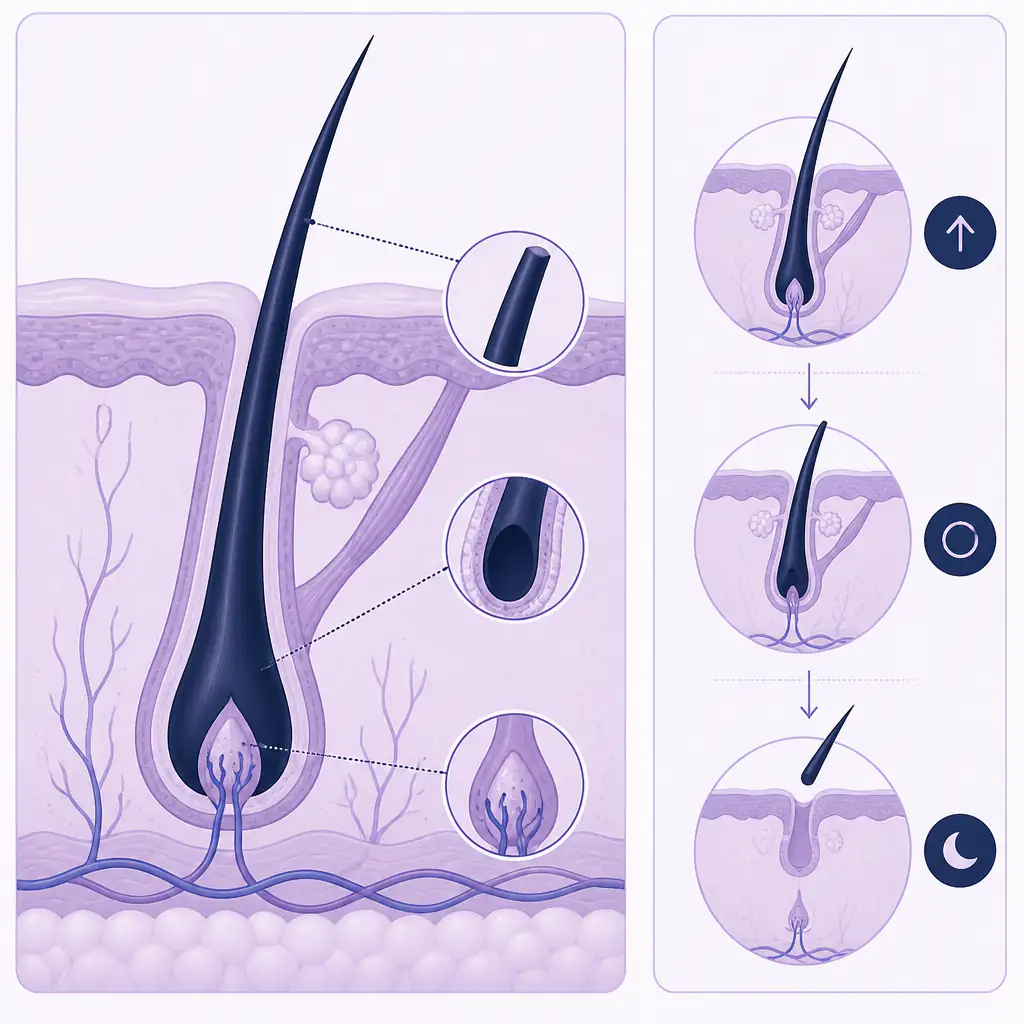
Step 3: Use a Brow Growth Serum
This is where most men see the clearest cosmetic improvement in the short to medium term. Brow serums are topical products applied directly to the brow area, typically nightly.
What to Look For in a Serum
Peptide-based serums are the most widely available and lowest-risk option. They typically contain signal peptides that may stimulate follicle activity and extend the anagen (active growth) phase of the hair cycle. Results take time. Most users report visible improvement after two to four months of consistent nightly use.
Bimatoprost-based products (the active ingredient in prescription treatments like Latisse) were originally developed as glaucoma medication and were later found to significantly increase eyebrow and eyelash density. These require a prescription in most countries. Some compounding pharmacies offer lower-concentration topical bimatoprost for brow use. Talk to a qualified professional before considering prescription-strength treatments, as they carry potential side effects including skin discoloration around the application area.
Castor oil is a popular DIY option. The evidence base is thin, but it is inexpensive, low-risk, and some users report modest improvement in brow thickness with consistent nightly application. It may work partly by conditioning existing hairs and reducing breakage rather than stimulating new growth.
How to Apply Brow Serum Correctly
- Clean your face thoroughly before application.
- Use the applicator (or a clean spoolie for oils) to apply a thin layer along the brow, following the direction of hair growth.
- Apply at night, before sleep, so the product absorbs without exposure to sun or sweat.
- Use consistently. Missing applications frequently will slow any results.
- Avoid getting product into the eyes.
Step 4: Brush and Train Your Brows
This step is free and takes thirty seconds a day. A spoolie brush (the small wand applicators sold at any drugstore) used to brush brow hairs upward and outward each morning does two things:
- It trains the hairs to lie in a direction that creates a fuller appearance.
- Light mechanical stimulation of the follicle area may have a mild circulation benefit, though this effect is minor.
Brushing also reveals what you actually have. Many men are surprised to find they have more hair than they thought once it is all pointing the same direction.
Step 5: Fill In While You Grow
There is nothing wrong with using a brow product to fill in sparse areas while your natural brows are thickening. Men’s grooming has normalized this significantly. The goal is to look like you have naturally thick brows, not to look like you are wearing makeup.
Best options for men:
- Brow pomade or wax: Denser products that fill gaps and hold shape simultaneously. Good for brows with some structure that just needs density added.
- Micro-fill brow pens: Fine-tip pens with hair-stroke applicators. Allow you to draw individual hair-like strokes in sparse areas for a very natural result. Match to your natural brow color.
- Brow powder: Applied with an angled brush, powder fills the brow with a softer, less defined look. Harder to misapply than pens. Good for beginners.
The key is color matching. Go one shade lighter than your brow hair if you are dark, and match exactly or go one shade darker if you are fair. Apply with a light hand. You can always add more.
Before starting any filling routine, it is worth getting an objective look at your face structure. Aura gives you an AI-based analysis of your facial features, including brow area scoring, which can help you understand which specific parts of your brow are affecting your overall look most.
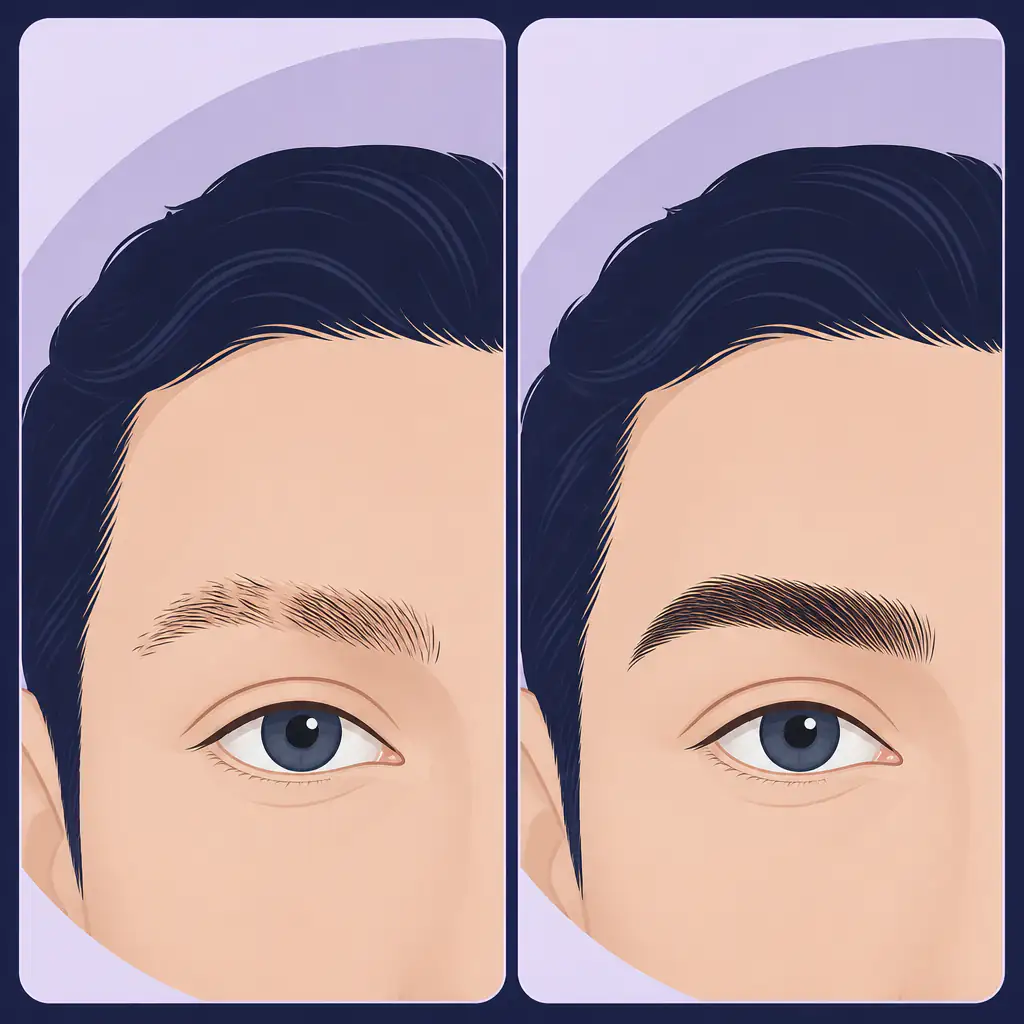
Step 6: Consider Professional Options
If you have tried the above for several months and are not satisfied, there are professional procedures worth knowing about.
Microblading and Powder Brow Tattoos
Microblading is a semi-permanent tattooing technique where a technician uses a small blade to deposit pigment in hair-stroke patterns into the skin. Results typically last one to two years before fading. Powder brows achieve a similar effect with a softer, more diffuse look using a machine rather than a blade.
Both are increasingly common for men, particularly those with significant symmetry issues or very sparse brows. The risk is getting a shape that looks unnatural, so choosing an experienced technician whose portfolio includes men’s brows is critical.
PRP (Platelet-Rich Plasma) Injections
PRP treatments use your own blood, spun to concentrate growth factors, then injected into the brow area. Some dermatologists offer this for brow thinning. Research suggests it may stimulate follicle activity, but evidence is still emerging and results vary considerably.
Talk to a qualified dermatologist before considering any injections or semi-permanent procedures. These carry real risks and costs that need to be weighed against your expectations.
Putting It Together: A Practical Timeline
Here is a realistic sequence for approaching this systematically:
Weeks 1 to 4:
- Stop all unnecessary grooming. Let brows grow fully.
- Start a nightly brow serum.
- Begin brushing each morning with a spoolie.
- Audit your nutrition and address any obvious gaps.
Weeks 4 to 12:
- Start filling in sparse areas with a brow pen or pomade if needed.
- Continue serum consistently.
- Take a photo at week four and again at week twelve to compare objectively.
Month 3 and beyond:
- Assess what you actually have. Many men are satisfied at this point.
- If not, consult a dermatologist to rule out underlying causes and discuss prescription topicals or professional procedures.
Using Aura to get a baseline facial analysis before you start gives you a reference point. Tracking changes to your brow area over time is easier when you have a scored starting point rather than relying only on memory.
Common Mistakes to Avoid
- Shaping too early. Shaping sparse brows often just removes what little you have. Wait until you have density to work with.
- Using the wrong color. Dark brow products on light brows, or vice versa, look unnatural even at a glance.
- Expecting fast results. The anagen (growth) phase of brow hair cycles is slower than scalp hair. Three to six months is a realistic timeline for meaningful change from serums.
- Ignoring symmetry. Both brows are not identical in most men, but significant asymmetry in shape matters more than density alone. Address shape before volume.
- Over-applying products. More serum does not mean faster results. Follow dosing guidance on whatever product you use.
Frequently asked questions
How long does it take to thicken eyebrows for men naturally? +
Most men see meaningful improvement in brow density after two to four months of consistent effort, including stopping over-grooming and using a growth serum nightly. The brow hair growth cycle is slower than scalp hair, so patience is required. Taking photos every four weeks helps you track real progress without relying on day-to-day perception.
Do brow growth serums actually work for men? +
Peptide-based brow serums may help extend the active growth phase of hair follicles, and some users report noticeable density improvements after consistent use over several months. Prescription bimatoprost has the strongest evidence base but requires medical supervision. Over-the-counter serums vary widely in quality, so look for products with clinical ingredient evidence rather than marketing claims.
Can over-plucked eyebrows grow back for men? +
In most cases, yes. Hair follicles that have been tweezed repeatedly are often dormant rather than permanently destroyed, and they can recover with time. A full twelve-week no-tweeze period is a good test of your follicle health. If significant gaps remain after that period, a dermatologist can assess whether follicle damage is permanent.
Is microblading a good option for men with thin eyebrows? +
Microblading can be an effective option for men with very sparse brows or significant asymmetry that does not respond to topical approaches. The results look most natural when performed by a technician experienced with men's brow proportions, which tend to be flatter and less arched than women's. Talk to a qualified professional before booking any semi-permanent procedure to understand the risks and realistic outcomes.