 Aura: Looksmaxxing
 Clean Shaven vs Stubble: Which Look Works for You?
Clean shaven vs stubble: discover which style suits your face shape, skin, and goals with practical tips backed by research and expert guidance.
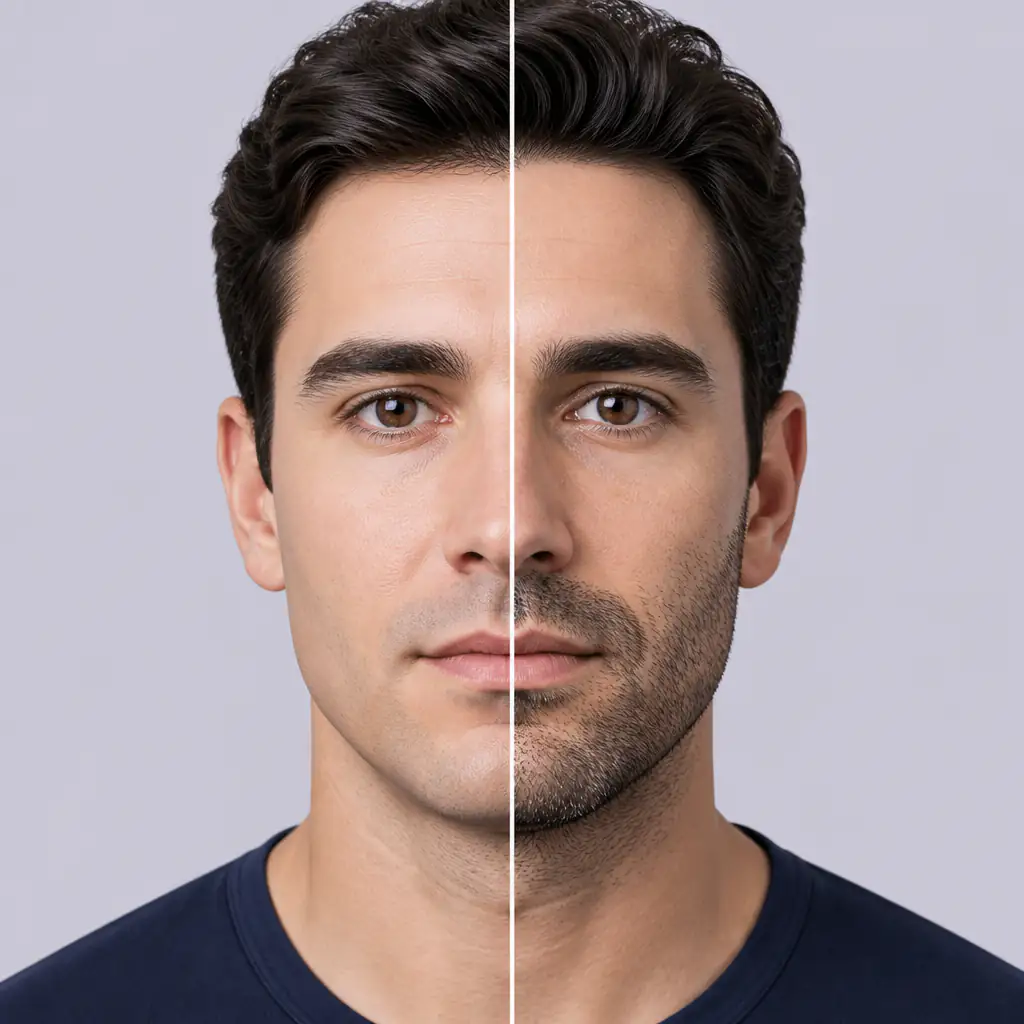
The choice between clean shaven and stubble is one of the most debated grooming decisions men face. It sounds simple, but the right answer depends on your face shape, skin texture, jawline definition, and even your social context. Neither option is universally superior. Both have real, documented effects on how others perceive masculinity, age, and attractiveness.
This guide breaks down the evidence, the practical considerations, and the specific scenarios where each style wins.
What the Research Actually Says
Several perception studies have looked at how women and men rate attractiveness across different facial hair lengths. The findings are nuanced, but a few patterns hold up consistently.
Heavy stubble (around 10 days of growth) tends to receive the highest attractiveness ratings in studies focused on short-term and long-term partner preference. Light stubble, full beards, and clean-shaven faces all perform differently depending on what is being evaluated.
Some key findings worth knowing:
- Dominance and masculinity are rated highest for heavy stubble and full beards
- Clean-shaven faces are often rated as more approachable, younger-looking, and hygienic
- Light stubble (3 to 5 days) tends to score in the middle across most categories
- Ratings shift depending on the rater’s own hormone levels and relationship context
The takeaway is not that stubble always wins. It is that each style communicates something specific, and you should understand what yours is communicating.
How Face Shape Changes the Equation
Your underlying bone structure plays a significant role in which style looks better on you. This is where grooming decisions get specific.
Square and Rectangular Faces
Men with strong, wide jawlines (square or rectangular facial morphology) often look good clean shaven because the jaw definition speaks for itself. Stubble can add bulk to an already wide lower face, which may work in some cases but can also make proportions feel heavy.
Oval and Oblong Faces
Oval faces are considered the most versatile and tend to work well with both styles. Oblong faces (longer than they are wide) can benefit from stubble along the jaw and chin, as the added visual weight shortens the perceived length of the face.
Round Faces
This is where stubble often wins clearly. A rounded face with softer features benefits from the angular definition that stubble provides. Clean shaven on a round face can emphasize the lack of jaw angularity. A short, well-groomed beard or heavy stubble can create the illusion of a sharper, more defined lower third.
Weak or Receding Chins
For men whose chin projects less than ideal (technically, reduced chin projection relative to the nasion-pogonion line), stubble and short beards can add forward mass and visual balance. This is one area where growing facial hair offers a genuine structural illusion.
If you are unsure how your face shape and jawline are being perceived, Aura provides jawline analysis and face-scoring tools that give you an objective read on your current structure before making grooming changes.
Skin Type and Grooming Reality
Attractive stubble in theory and maintained stubble in practice are two different things. Your skin and hair type affect how achievable each look actually is.
When Clean Shaven Is Easier to Maintain
- Patchy growth patterns: If your beard grows unevenly, with sparse areas on the cheeks or disconnected patches, clean shaven eliminates the problem entirely
- Sensitive or acne-prone skin: Stubble can trap bacteria, sweat, and sebum against the skin. For men with inflammatory acne (acne vulgaris), a clean shave may reduce irritation
- Very coarse hair: Coarse beard hair can look unkempt at the stubble stage and may benefit from either going fully clean or growing past the rough phase
When Stubble Is the Smarter Choice
- Frequent razor bumps (pseudofolliculitis barbae): This condition, more common in men with tightly coiled hair, involves ingrown hairs triggered by shaving. Maintaining stubble rather than shaving to the skin can reduce flare-ups significantly
- Dry or flaky skin: Shaving strips the skin of moisture and can worsen dryness. Stubble acts as a mild barrier
- Fast-growing hair: If you are back to visible shadow within a day of shaving, maintaining a consistent stubble length is less work than daily shaving
Clean Shaven vs Stubble: Side-by-Side Comparison
Here is a direct breakdown across the factors that matter most.
| Factor | Clean Shaven | Stubble |
|---|---|---|
| Perceived attractiveness | Moderate, context-dependent | Higher in most attraction studies |
| Perceived dominance | Lower | Higher |
| Perceived approachability | Higher | Moderate |
| Best for round faces | No | Yes |
| Best for square faces | Yes | Can work |
| Maintenance frequency | Daily or every other day | Every 2 to 4 days |
| Skin irritation risk | Higher (razor contact) | Lower (if trimmed, not shaved) |
| Professional environments | More universally accepted | Accepted in most fields |
| Acne risk | Lower surface bacteria | Can trap oil and bacteria |
The Age Factor
Age interacts with both styles in ways worth considering.
If you look younger than your age, clean shaven may reinforce that perception, which can undermine authority in professional settings. Stubble adds perceived age and gravitas. Research suggests men with stubble are rated as slightly older and more mature, which is advantageous for younger men seeking to project confidence.
If you already look older than your age, clean shaven can reduce perceived age by a few years. Heavy stubble and full beards can add to the appearance of age, which may or may not be what you want.
Practical Grooming Tips for Each Style
Maintaining Clean Shaven Properly
- Shave with the grain first, then across the grain on a second pass. Going against the grain on a first pass is the primary cause of razor bumps and ingrown hairs
- Use a sharp blade. A dull razor requires more pressure and causes more irritation. Replace blades every 5 to 7 shaves
- Prep the skin with warm water or a hot shower beforehand to soften the hair follicle
- Apply a post-shave moisturizer with ingredients like niacinamide or ceramides to restore the skin barrier
- If you have dark hair and light skin, the shadow from the follicle itself will still be visible no matter how close you shave. This is normal and not something topical products can fix
Maintaining Stubble Properly
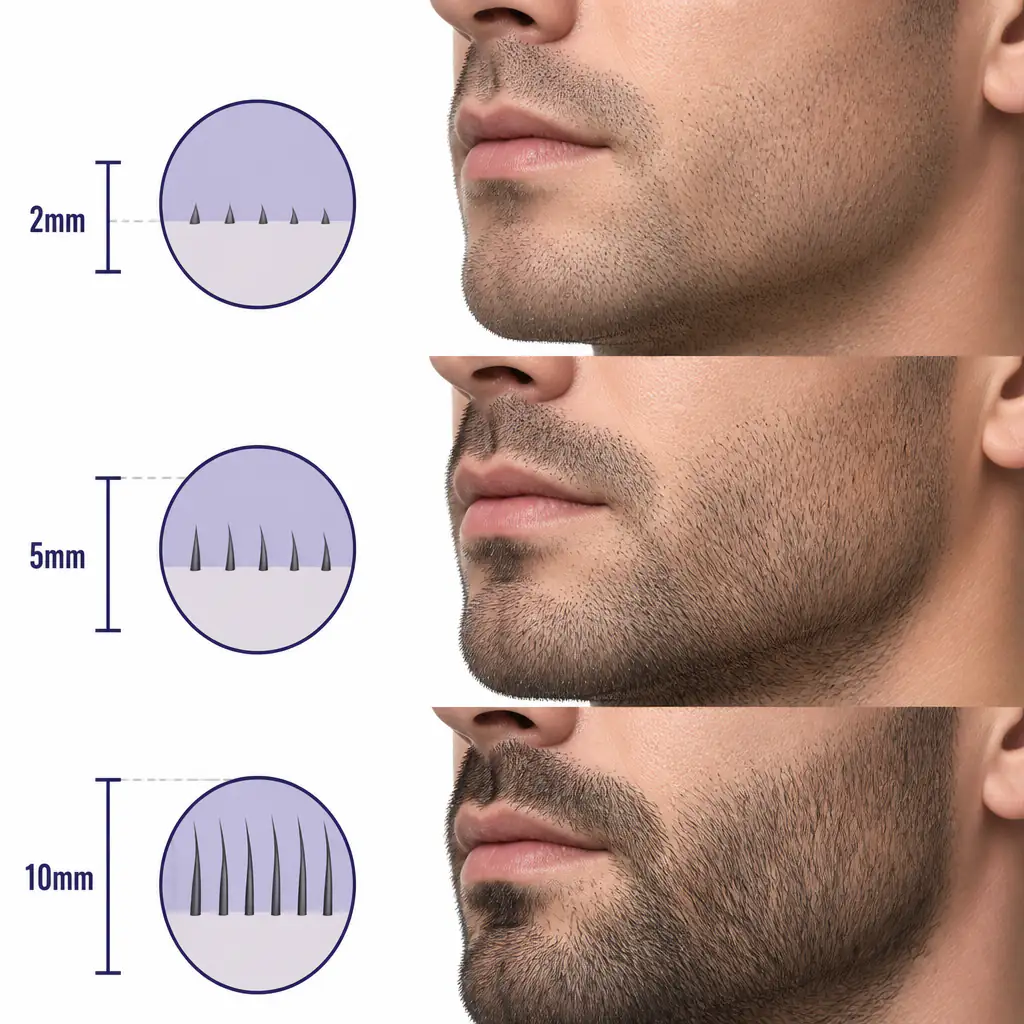
- Invest in a quality trimmer with length guards. The difference between attractive stubble and an unkempt look is usually just a millimeter
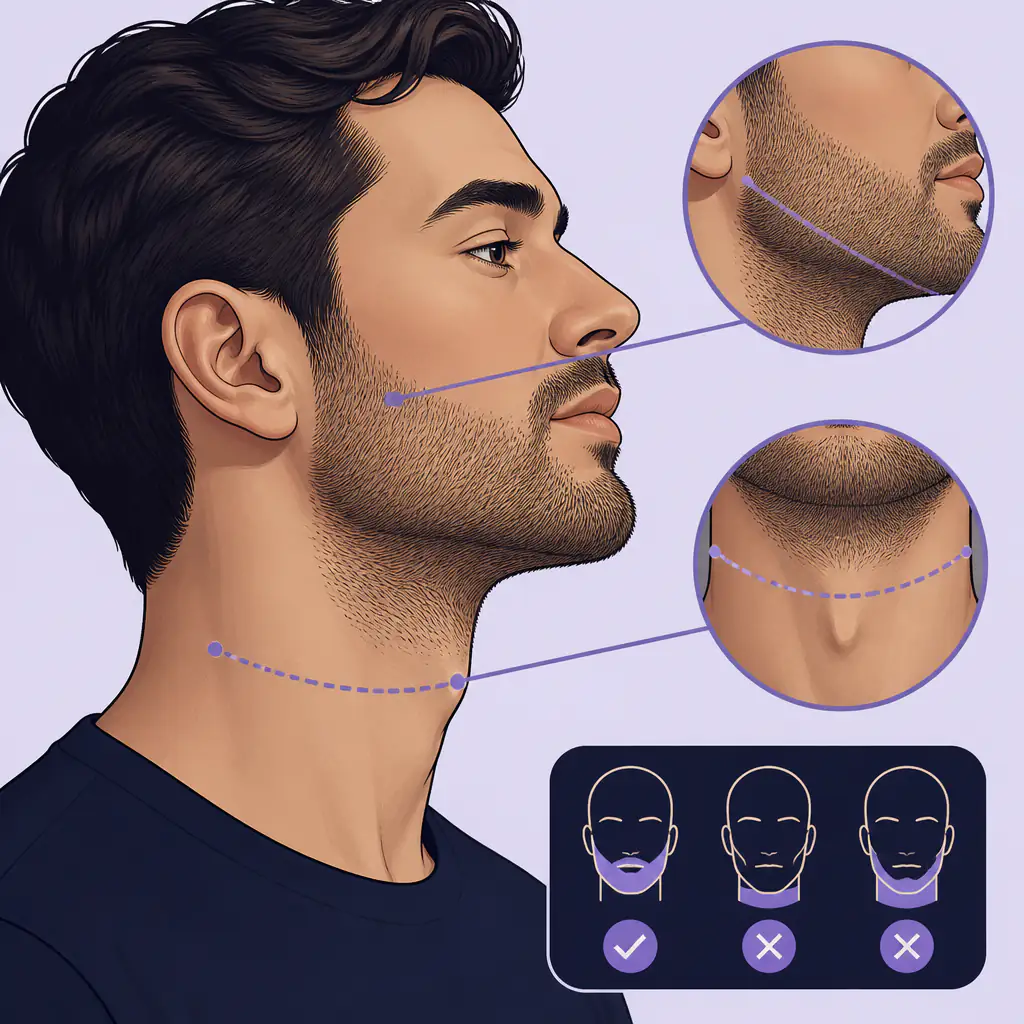
- Define the neckline at or slightly above the Adam’s apple. Neck stubble below this line reads as ungroomed even if the rest is clean
- Clean up the cheek line slightly. You do not need a hard edge, but stray hairs high on the cheek reduce the polish of the overall look
- Trim every 2 to 3 days to keep a consistent length. Most men find that 3mm to 5mm (light to medium stubble) or 8mm to 10mm (heavy stubble) are the most flattering ranges
- Moisturize the skin underneath. Dry skin flakes visibly through short beard hair, which undercuts the look entirely
Context and Social Environment
Grooming does not happen in a vacuum. The same style reads differently depending on where you are and what you are doing.
Professional settings: Clean shaven remains the safest option in conservative industries like finance, law, and corporate management. However, tech, creative fields, and startups have largely normalized well-groomed stubble. The key word is well-groomed. Patchy, uneven, or borderline stubble reads as neglect rather than intention.
Social and dating contexts: Stubble generally has an edge here, supported by the perception research above. It signals that you are physically mature and reasonably attentive to grooming without appearing overly manicured.
Athletic and physical environments: Clean shaven can be more practical for men who sweat heavily or wear equipment that touches the face.
How to Actually Decide
The honest answer is that you may need to try both and assess with fresh eyes, ideally with objective feedback rather than guessing.
A few questions that narrow it down:
- Does your beard grow evenly? Patchy growth points toward clean shaven or a longer beard that covers gaps
- Is your jaw angular or soft? Soft jaw benefits more from stubble
- Do you get razor bumps regularly? Stubble is likely better for your skin
- What is your professional environment? Be realistic about context
- Are you trying to look younger or older? Clean shaven skews younger
If you want a data-backed starting point, running your photos through Aura can identify how your facial features are currently reading and whether your lower face structure would benefit more from added visual mass (stubble) or clean definition.
The Bottom Line
There is no single correct answer in the clean shaven vs stubble debate. Stubble has a measurable advantage in attraction research and face-shape correction, particularly for round or soft-featured faces. Clean shaven is more practical for patchy growers, sensitive skin, and certain professional contexts.
The most important factor is execution. Well-maintained clean shaven beats unkempt stubble every time. Intentional, groomed stubble beats careless clean shaving. Whatever you choose, maintain it consistently and with purpose.
Frequently asked questions
Does stubble actually look more attractive than clean shaven? +
Research suggests heavy stubble tends to receive higher attractiveness ratings on average, particularly for short-term attraction and perceived masculinity. However, clean shaven scores higher for approachability and perceived hygiene. The best choice depends on your specific face shape, context, and how well you maintain either style.
How long does it take to grow attractive stubble? +
Light stubble appears after about 3 to 5 days of growth for most men. Heavy stubble, which research suggests is the most attractive range, typically takes 7 to 10 days. Growth rate varies significantly between individuals based on genetics and hormone levels.
Can stubble help if I have a weak jawline? +
Yes, stubble and short beards can add visual mass to the lower third of the face, which may improve the perceived projection and definition of a softer or less angular jaw. This is a surface-level illusion rather than a structural change, but it can make a noticeable difference in how your face reads overall.
Is clean shaven better for acne-prone skin? +
It depends on the type of acne. For inflammatory acne (acne vulgaris), clean shaven removes a surface that can trap oil and bacteria. However, for men prone to razor bumps (pseudofolliculitis barbae), maintaining stubble rather than shaving to the skin may reduce irritation. If acne is a persistent issue, a dermatologist can help identify the better approach for your specific skin.