 Aura: Looksmaxxing
 How to Mog Someone: The Complete Guide
Learn how to mog someone by improving your facial aesthetics, posture, grooming, and presence. Practical steps backed by real principles.

If you’ve spent any time in male self-improvement spaces, you’ve encountered the word “mog.” It sounds aggressive, maybe even juvenile at first. But strip away the slang and what you’re really talking about is the study of how physical presence, facial structure, and grooming combine to make one person stand out in a room.
This guide breaks down what mogging actually means, what drives it, and the concrete steps you can take to raise your own ceiling. No empty motivation. No promises of overnight transformation. Just a clear-eyed look at what works.
What Does “Mog” Actually Mean?
The term comes from “to mog” or “mogging,” which refers to one person visually or socially overshadowing another. If someone “mogs” you, it means they are, in some objective or perceived way, more physically imposing or aesthetically dominant in a given context.
The phrase has roots in online self-improvement communities and borrows loosely from the idea of social dominance hierarchies observed in group animals, where one individual’s sheer physical presence affects the behavior of others nearby.
In practical human terms, mogging breaks down into three overlapping categories:
- Physical aesthetics (facial structure, body composition)
- Grooming and presentation (hair, skin, hygiene, style)
- Behavioral presence (posture, eye contact, vocal tone, movement)
All three matter. Optimizing only one while neglecting the others leaves a lot on the table.
The Anatomy of a Strong Facial Impression
Facial aesthetics drive first impressions faster than most people realize. Research in social psychology suggests that judgments about attractiveness, competence, and dominance form within the first few hundred milliseconds of seeing a face. That isn’t a reason to despair if your genetics weren’t perfect. It’s a reason to understand which features carry the most weight.
The Features That Matter Most
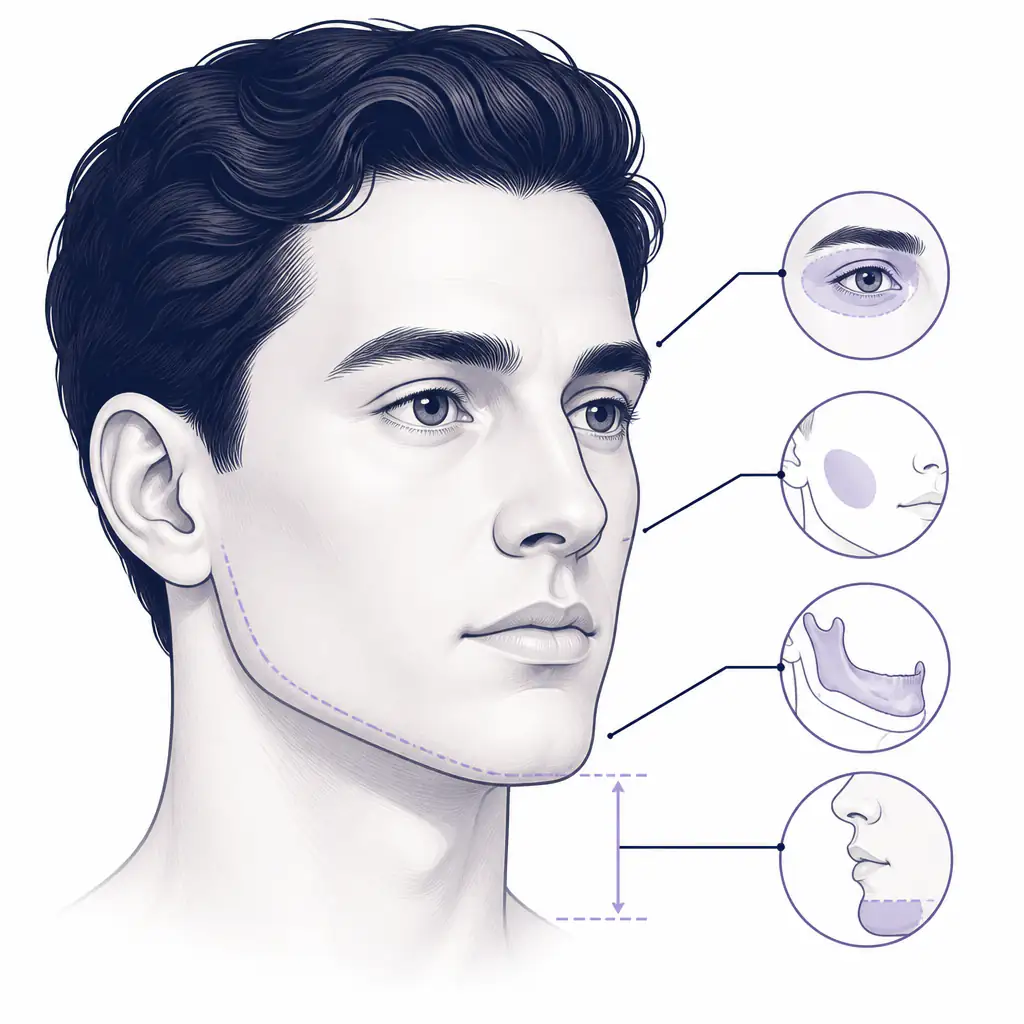
Jawline and mandible definition. A well-defined jaw creates visual contrast between the face and neck. This contrast reads as masculine and structurally “complete.” Factors like body fat percentage, masseter muscle development (from chewing habits and jaw exercises), and overall facial leanness all affect how the jaw appears.
Orbital area and eye positioning. What gets called “hunter eyes” in self-improvement circles refers to eyes that are slightly deep-set with a horizontal or slightly downward-tilting lower eyelid. This contrasts with “prey eyes,” which are rounder and more exposed. The periorbital area (the bone and tissue around the eye socket) shapes this heavily. While bone structure is fixed without intervention, reducing periorbital puffiness through sleep quality and sodium intake can make a measurable visual difference.
Midface ratio. The distance from the bottom of the nose to the chin (the lower third) relative to the rest of the face affects perceived masculinity and attractiveness. A strong chin projection improves this ratio without any structural change to the upper face.
Facial symmetry. Perfect symmetry doesn’t exist, but large asymmetries are noticeable and distracting. Chewing predominantly on one side, carrying tension in one side of the jaw, and habitual head tilting can all create or worsen asymmetry over time.
Before you invest time or money into any of these areas, it helps to get an honest baseline. Aura uses AI to analyze your facial structure across these dimensions, including jawline definition, hunter-eye scoring, and overall facial harmony, so you know exactly where to focus your effort.
Body Composition and Physical Frame
Face aside, your body is visible in almost every social context. A lean, proportional physique contributes to mogging in ways that are hard to overstate.
Target Body Fat First
Lowering body fat percentage sharpens every facial feature. The face loses fat in the buccal fat pad area (cheeks), under the chin, and around the neck first for most people. Getting from 20% to 12-14% body fat can visually alter the jaw, cheekbones, and orbital area without any other change.
The practical path here isn’t complicated, even if it’s effortful:
- Caloric deficit of 300-500 calories per day is sustainable and preserves muscle
- High protein intake (0.7-1g per pound of bodyweight) reduces muscle loss during a cut
- Resistance training maintains and builds the muscular frame that creates a strong silhouette
Shoulder-to-Waist Ratio
The shoulder-to-waist ratio (sometimes called the “V-taper”) is one of the most consistent predictors of perceived male attractiveness across cultures. Prioritizing lateral deltoid development and keeping the waist lean creates this shape even at moderate overall muscle mass.
Compound lifts (overhead press, pull-ups, rows) hit the relevant muscles efficiently. You don’t need to be in the gym for two hours. Consistent, progressive overload three to four days a week moves the needle.
Grooming: The Highest-ROI Category
If physical structure is a long-term project, grooming is where you can improve your standing in a room this week. Most men significantly underinvest here.
Skin
Skin quality is one of the first things people register about a face. Acne, uneven texture, and dullness all reduce the visual “cleanliness” of your features.
A basic evidence-supported routine:
- Cleanser (gentle, non-stripping): morning and night
- Retinoid (retinol OTC, or tretinoin with a prescription): increases cell turnover, reduces texture and fine lines. Start low and slow to avoid irritation.
- Niacinamide: reduces redness, minimizes pores, brightens skin tone
- SPF 30-50 daily: UV exposure accelerates skin aging faster than almost any other factor
Always consult a dermatologist before starting prescription treatments or if you have active skin conditions.
Hair
Your haircut frames your face. A style that doesn’t complement your facial shape actively works against your aesthetics. A few principles:
- Square and rectangular faces tend to suit softer styles with volume on top
- Round faces benefit from height at the crown and tighter sides
- Oval faces are the most versatile
Find a barber who asks about your face shape, not just what style you want. The difference between a haircut that works for your face and one that doesn’t is not a minor detail.
Facial Hair
Light stubble (around 1-3mm) has been shown in multiple studies to increase perceived masculinity and attractiveness for most men. A full, well-maintained beard can mask a weak chin and jawline. Clean-shaven works best when the underlying bone structure is strong.
The key word is maintained. Ungroomed facial hair does the opposite of what you want.
Posture, Movement, and Behavioral Presence
You can have strong facial structure and a lean physique and still mog nobody if your presence communicates low status. Behavioral presence is real and learnable.
Posture
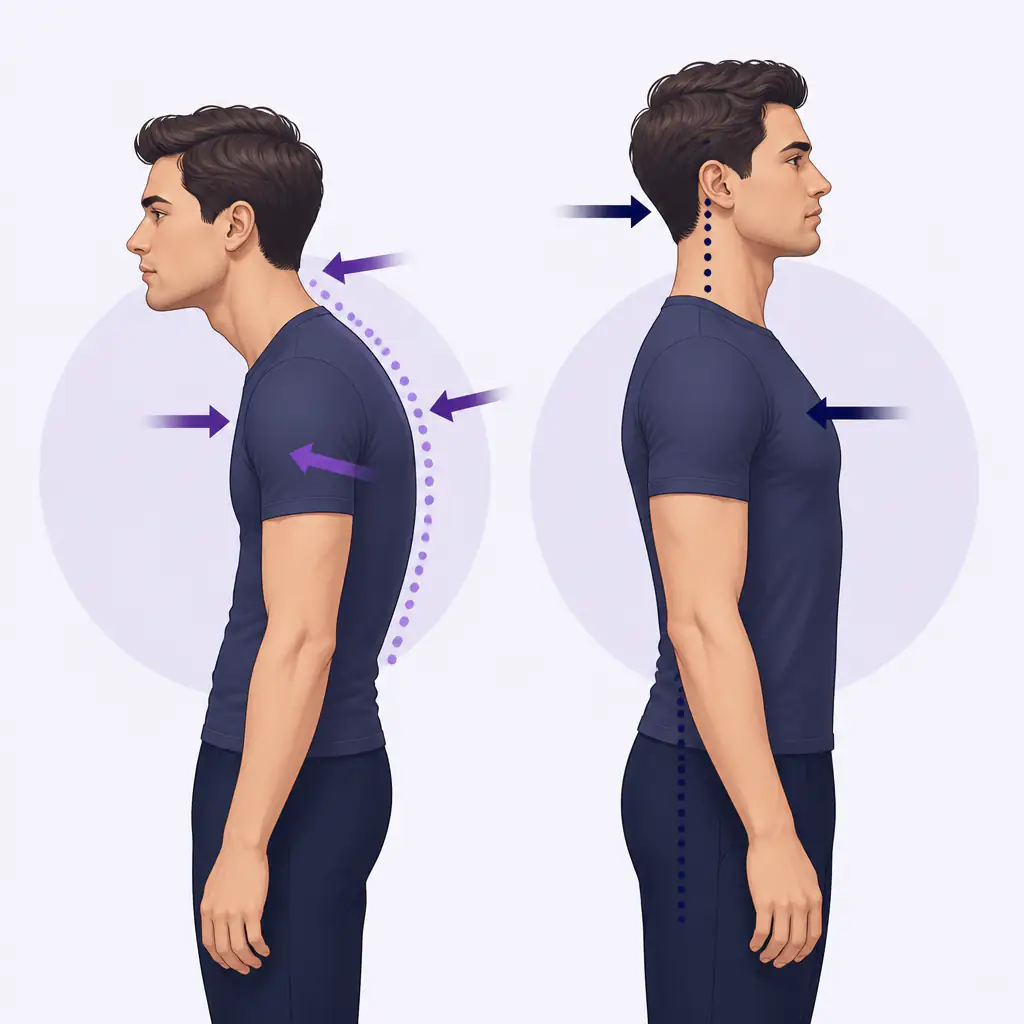
Forward head posture (chin jutting forward, neck angled ahead of the shoulders) is extremely common and actively worsens your visual profile. It compresses the neck, reduces chin projection, and signals stress or submission.
Targeted work:
- Deep cervical flexor exercises (chin tucks, neck retraction drills)
- Thoracic mobility work (foam rolling the upper back, thoracic extensions)
- Strengthening the mid and lower traps to pull the shoulders back
These adjustments, done consistently, change how you carry yourself in every room you enter.
Eye Contact and Gaze
Direct, steady eye contact is one of the most immediate signals of confidence and social presence. Breaking eye contact first, looking down, or avoiding gaze reads as avoidant and subservient. This doesn’t mean staring aggressively. It means holding eye contact comfortably through conversations without darting away.
This is a trainable behavior. Most people who struggle with it are simply unfamiliar with the discomfort of direct gaze, not incapable of it.
Vocal Tone and Pacing
A deeper, slower speaking voice consistently gets rated higher on dominance and attractiveness in perception research. You can’t change your fundamental vocal pitch much, but you can:
- Speak from the diaphragm, not the throat
- Slow your pace deliberately, especially when you’re nervous
- Eliminate filler words that signal uncertainty
Putting It Together: A Practical Priority Stack
If you’re starting from scratch, the order of operations matters. Here’s how to stack your efforts for maximum return:
- Get a baseline assessment. Know your starting point across facial structure, body composition, and grooming. Aura provides a detailed AI-generated facial analysis including PSL scoring and specific structural feedback, which gives you a data point rather than a guess.
- Lower body fat. This affects your face, your silhouette, and your energy levels simultaneously. It’s the single highest-leverage physical change for most men.
- Build a grooming routine. Skin, hair, and facial hair combined take 10-15 minutes a day once they’re established. The gap between a man who does this and one who doesn’t is visible immediately.
- Fix posture. Daily mobility work and targeted strengthening pays off in weeks, not months.
- Train behavioral presence. Eye contact, vocal pacing, and deliberate movement are free and available in every social interaction you have.
- Address structural gaps long-term. Masseter development, body recomposition, and other longer-arc changes layer on top of the foundation.
What Mogging Is Not
It’s worth being clear about this. Mogging is not about humiliating other people, creating enemies, or treating every social situation as a competition you need to win.
The people who become genuinely magnetic are those who have invested in themselves because they wanted to, not because they were trying to diminish someone else. The framing of “overpowering” others is a mental model for motivation, not a guide to how to treat people.
Improve for yourself. The social effects follow naturally.
FAQ
What does it mean to mog someone?
To mog someone means to visually or socially overshadow them through superior physical presence, aesthetics, or demeanor. The term is used in self-improvement communities to describe the experience of one person standing out clearly compared to another in a shared environment.
Can you learn how to mog someone without changing your bone structure?
Yes. While bone structure contributes to facial aesthetics, a large portion of perceived presence comes from body fat percentage, grooming, posture, and behavioral confidence. Many men significantly improve their visual impact by focusing on these controllable factors alone.
How long does it take to notice results from looksmaxxing?
Grooming improvements are visible immediately. Skin quality changes noticeably within four to eight weeks of a consistent routine. Body composition shifts at meaningful scale over three to six months of consistent training and diet. Posture improvements can be felt in days and visible to others within a few weeks of targeted work.
Is mogging related to the PSL scale?
Yes. The PSL (Pua, Sluthate, Lookism) scale is a facial attractiveness rating system used in some self-improvement communities to quantify perceived attractiveness from 1 to 10. Mogging in this context often refers to one person scoring significantly higher on this scale than another. Apps like Aura provide AI-based PSL scoring as part of a broader facial analysis.
Frequently asked questions
What does it mean to mog someone? +
To mog someone means to visually or socially overshadow them through superior physical presence, aesthetics, or demeanor. The term is used in self-improvement communities to describe one person standing out clearly compared to another in a shared environment.
Can you learn how to mog someone without changing your bone structure? +
Yes. While bone structure contributes to facial aesthetics, a large portion of perceived presence comes from body fat percentage, grooming, posture, and behavioral confidence. Many men significantly improve their visual impact by focusing on these controllable factors alone.
How long does it take to notice results from looksmaxxing? +
Grooming improvements are visible immediately. Skin quality changes noticeably within four to eight weeks of a consistent routine. Body composition shifts at meaningful scale over three to six months of consistent training and diet. Posture improvements can be felt in days and visible to others within a few weeks of targeted work.
Is mogging related to the PSL scale? +
Yes. The PSL scale is a facial attractiveness rating system used in some self-improvement communities to quantify perceived attractiveness from 1 to 10. Mogging in this context often refers to one person scoring significantly higher on this scale than another. Apps like Aura provide AI-based PSL scoring as part of a broader facial analysis.