 Aura: Looksmaxxing
 PSL Scale Explained: Ratings, Scores & What They Mean
Learn what PSL means, how PSL ratings work, and how the scale is used to assess facial attractiveness. A clear, grounded breakdown of PSL slang and scores.
If you have spent any time in male self-improvement spaces online, you have probably seen the term PSL thrown around. People use it to rate faces, discuss attractiveness, and set benchmarks for physical improvement. But the slang moves fast, the scale is often misunderstood, and the practical value of it is easy to miss under layers of online noise.
This article breaks down what PSL actually means, how the rating scale works, what separates one score from another, and how you can use the framework as a useful, grounded tool rather than a source of anxiety.
What Does PSL Mean?
PSL is an acronym that stands for Puahate, Sluthate, and Looksmax, three online communities that helped develop and popularize a structured way of discussing male physical attractiveness. The term is now used broadly to refer to the entire framework these communities built: a numerical rating scale for facial attractiveness, along with a vocabulary of specific terms for facial features.
When people ask what PSL means in casual conversation, they are usually referring to this rating system as a whole. In practice, “PSL” has become shorthand for any structured, criteria-based assessment of a person’s looks.
PSL as Slang
PSL slang includes a wide range of terms that describe specific facial traits, genetic advantages or disadvantages, and self-improvement strategies. Some common examples:
- Looksmaxxing: Taking deliberate steps to improve your appearance.
- Mogging: When one person’s looks visually dominate another’s in a given context.
- Ascension: A significant improvement in perceived attractiveness over time.
- Subhuman / Gigachad: Terms at the extreme low and high ends of the rating scale.
- Softmax vs. hardmax: The distinction between non-invasive improvements (grooming, diet, posture) and surgical or medical interventions.
This vocabulary can feel impenetrable at first, but most of it maps onto real concepts in facial aesthetics and social dynamics.
How the PSL Rating Scale Works
The PSL rating scale runs from 1 to 10, similar to conventional attractiveness ratings, but with more defined criteria at each level. It is not purely subjective. The framework draws on measurable facial traits: symmetry, bone structure, skin quality, facial thirds proportions, and specific feature evaluations like jawline definition and eye area.
Breakdown of PSL Scores
| Score | Description |
|---|---|
| 1–2 | Severe facial flaws, significant social disadvantages in dating contexts |
| 3–4 | Below average, noticeable weaknesses in multiple areas |
| 5 | Average. Neutral facial appearance with no standout positives or negatives |
| 6 | Above average. One or more strong features with reasonable overall harmony |
| 7 | Attractive. Consistently noticed positively, high dating market value |
| 8 | Very attractive. Strong bone structure, minimal flaws, broad appeal |
| 9–10 | Exceptional. Rare combination of ideal facial metrics across all categories |
Most people score in the 4 to 6 range. A true 8 or above is uncommon. The scale is also context-sensitive: a 6.5 in one environment might be perceived as a 7.5 in another depending on local competition, style, and presentation.
What the Scale Actually Measures
PSL ratings are not based on vibes alone. Experienced raters look at specific anatomical markers:
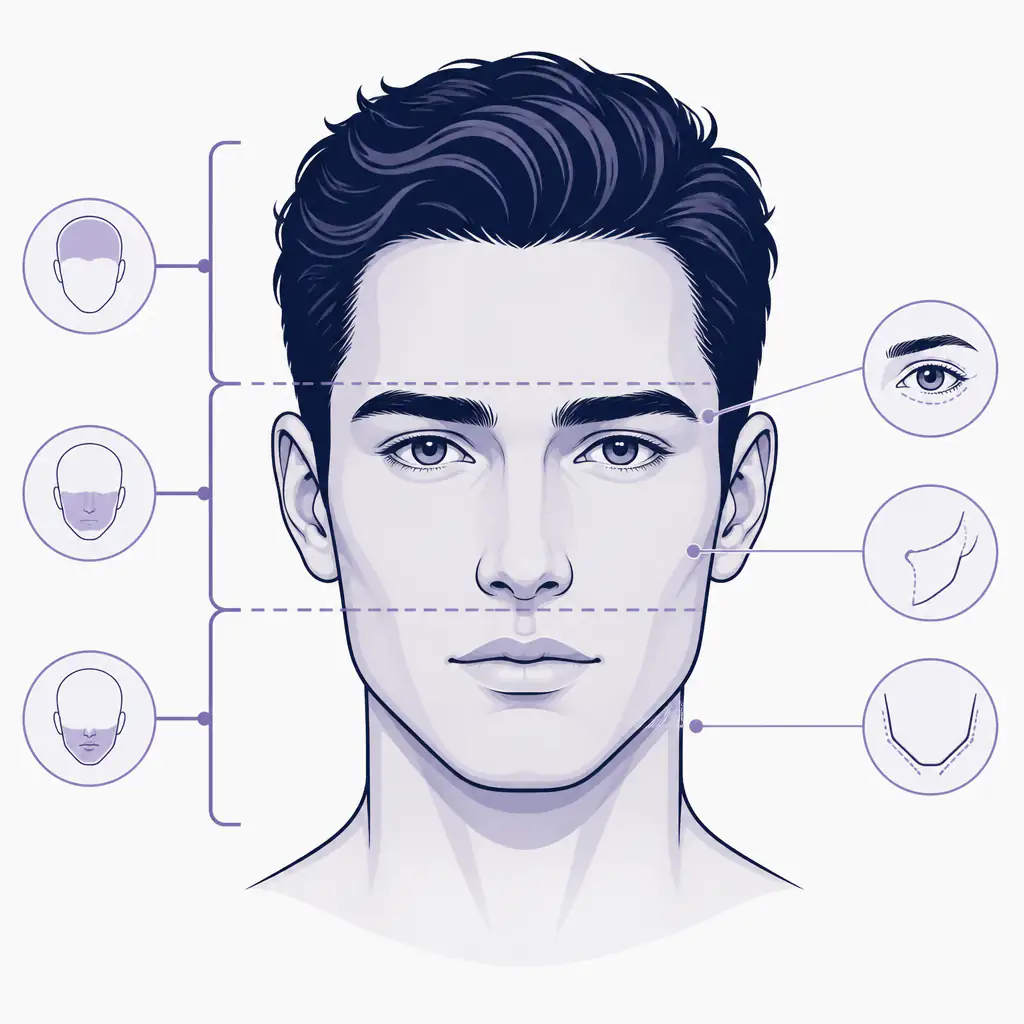
- Facial thirds: The face is divided horizontally into thirds (forehead, midface, lower face). Equal thirds are generally considered proportional.
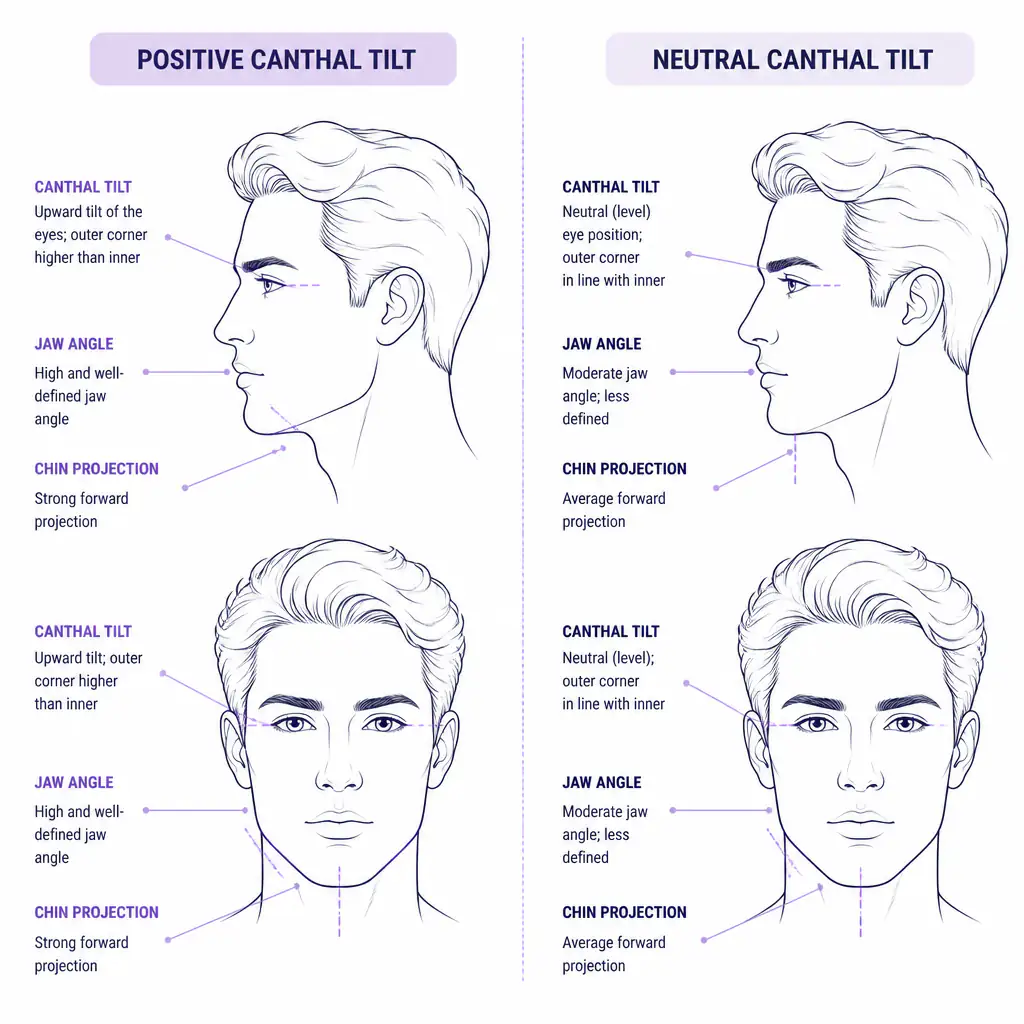
- Canthal tilt: The angle of the outer corner of the eye relative to the inner corner. A positive canthal tilt (outer corner higher) is associated with a more assertive, attractive look.
- Jawline definition: Mandibular angle prominence and overall jaw width contribute heavily to lower-face scores.
- Zygomatic width: Cheekbone prominence adds to midface structure.
- Facial symmetry: Significant asymmetry reduces scores, though perfect symmetry is rare and not strictly required for high ratings.
- Skin quality: Texture, clarity, and consistency affect overall impression significantly.
PSL Ratings vs. Conventional Attractiveness Ratings
You might wonder how a PSL score differs from someone just saying “you’re a 7 out of 10.”
The core difference is specificity and reproducibility. A casual rating is based entirely on gut feel. A PSL rating attempts to decompose attractiveness into its component parts, score each one, and arrive at a total that can be discussed and compared.
This makes PSL ratings more useful for improvement purposes. If you know your lower face scores well but your midface is weak, you have a clearer direction for where to focus. If your skin is dragging your score down but your bone structure is solid, you know that skincare and grooming could move your number meaningfully without any drastic intervention.
That said, no rating system, PSL or otherwise, captures the full picture. Personality, presence, voice, style, and body language all contribute to how attractive someone appears in real life. The PSL framework is best understood as a structural snapshot, not a complete verdict on your social or romantic potential.
Inter-Rater Variability
One known limitation of PSL ratings is that different people will give different scores. A panel of ten raters might score the same face anywhere from 5.5 to 7.5 depending on individual taste, cultural background, and familiarity with the framework. For this reason, aggregate ratings and AI-based assessments tend to be more reliable than a single person’s opinion.
Tools like Aura use AI to analyze facial features objectively, offering a PSL-informed score along with specific breakdowns of jawline, eye area, and overall facial harmony. This removes the emotional bias that often skews manual ratings in either direction.
The Most Important Facial Traits in PSL Analysis
Some traits carry more weight than others in PSL scoring. Here is a closer look at the ones that move the needle most.
Hunter Eyes
“Hunter eyes” is one of the most discussed traits in PSL communities. The term refers to eyes with a positive canthal tilt, deep orbital sockets, and a slightly hooded or compact upper eyelid. The look is associated with intensity and dominance. The opposite, “prey eyes,” describes rounder, more wide-open eyes with a neutral or negative canthal tilt.
Hunter eyes are largely genetic but can be partially influenced by body fat percentage (lower fat reduces puffiness around the orbital area) and, in more extreme cases, surgical options like canthoplasty.
Jawline and Chin Projection
The mandible is probably the single most discussed structure in PSL analysis. A defined, wide jaw with a square or slightly rounded angle reads as masculine and structurally strong. Chin projection, the forward positioning of the chin relative to the rest of the face, contributes to profile attractiveness and is closely linked to overall facial balance.
Skin
Skin is sometimes underweighted in PSL discussions because it feels less “structural,” but its impact on scores is substantial. Clear, even-toned, smooth skin can raise a perceived score by half a point or more. Conversely, severe acne scarring or rough texture can suppress an otherwise strong face.
Frame and Overall Proportions
The skull shape, brow ridge prominence, and overall facial width-to-height ratio all feed into the “frame” of the face. A broader, more robust frame generally scores higher in male PSL ratings.
How to Use PSL Ratings Productively
The PSL framework is a tool. Like any tool, its value depends on how you use it.
Used well, PSL analysis helps you:
- Identify your strongest features and build confidence around them.
- Pinpoint specific areas where targeted improvement is possible.
- Prioritize your time and money on changes with the highest return.
- Track progress objectively over a looksmaxxing journey.
Used poorly, it becomes a source of comparison, obsession, and distorted self-perception. A number on a scale does not determine your worth, your outcomes, or your ceiling.
A practical first step is getting a reliable baseline score before making any changes. Subjective self-assessment is notoriously inaccurate. You might overrate or underrate yourself significantly based on good or bad days, recent comparisons, or simply not knowing what raters are actually looking for. Getting an objective outside assessment, whether from a trusted group or an AI tool, gives you a more accurate starting point.
Softmaxxing First
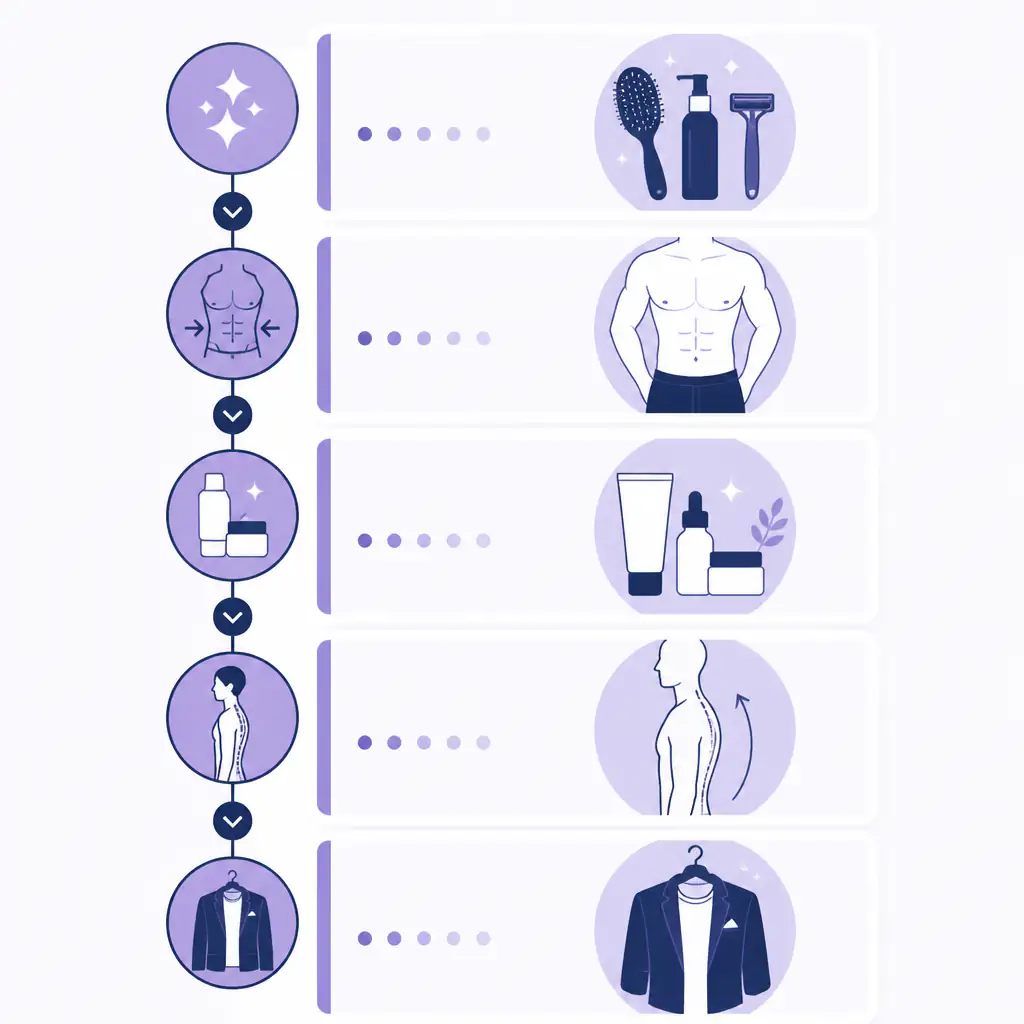
Before considering anything invasive or expensive, most people have significant room to improve through softmaxxing: changes that require no medical procedures.
- Grooming: Haircut, facial hair styling, and eyebrow shaping can alter perceived facial structure.
- Body fat: Losing excess fat sharpens the jawline, defines the cheekbones, and improves orbital area appearance.
- Skincare: A consistent routine (cleanser, moisturizer, SPF) improves skin quality over weeks and months.
- Posture and neck training: A stronger, more upright neck improves the overall silhouette and how your face reads in photos and in person.
- Style: Clothing, fit, and color choices affect first impressions before anyone has assessed your face in detail.
Many people who feel stuck at a 5 or 5.5 have not yet optimized the basics. The ceiling from softmaxxing alone is higher than most people expect.
When to Consider Professional Input
For those interested in more significant changes, such as orthodontics, dermal fillers, or surgical procedures, always consult a qualified medical professional before making any decisions. The PSL community discusses these interventions extensively, but online opinion is not a substitute for professional evaluation. A maxillofacial surgeon, dermatologist, or board-certified plastic surgeon can assess your specific anatomy and advise on what is appropriate and realistic for you.
If you want to understand exactly where your face sits before taking any steps, Aura provides a detailed AI-based facial analysis including PSL scoring, hunter-eye detection, jawline assessment, and a personalized improvement plan based on your specific features.
Common Misconceptions About PSL
“PSL is just cope or obsession.” The framework gets dismissed because of how it is sometimes used online. But the underlying concepts, facial symmetry, proportions, feature strength, are studied in academic research on attractiveness. The tool itself is neutral.
“Your PSL score is fixed.” This is false. Softmaxxing can realistically move someone from a 5 to a 6.5. Significant body composition changes, skincare, and grooming combined can have a measurable effect on perceived attractiveness.
“Only high scorers benefit from looksmaxxing.” The opposite is often true. People in the 4 to 6 range tend to see the most proportional gain from targeted improvements because they start with more room to improve.
“PSL scores are universal.” Attractiveness standards vary across cultures and contexts. The PSL framework reflects particular aesthetic preferences that are not globally uniform.
Frequently Asked Questions
The FAQ section below covers the most common questions about PSL ratings, PSL slang, and how the scale works in practice.
Frequently asked questions
What does PSL stand for? +
PSL stands for Puahate, Sluthate, and Looksmax, three online communities that developed a structured framework for rating and discussing facial attractiveness. Today the term is used broadly to refer to the rating scale and vocabulary those communities popularized.
What is a good PSL score? +
Most people fall between 4 and 6 on the PSL scale. A score of 5 represents average attractiveness, while 6 to 7 is considered above average and genuinely attractive. Scores of 8 and above are rare and indicate exceptionally strong facial structure and features.
Can you improve your PSL rating without surgery? +
Yes, and often significantly. Reducing body fat, improving skin quality, optimizing grooming, and correcting posture can realistically add half a point to a full point to someone's perceived score. These softmaxxing approaches are the recommended starting point before any invasive consideration.
How accurate are online PSL ratings? +
Manual ratings from individuals vary considerably based on personal taste and rater experience. Aggregate ratings from multiple people, or AI-based assessments trained on large datasets, tend to be more consistent and less biased than a single person's opinion.